Aruba’s climate is semi-arid, but cloudy afternoons and blustery days still happen. When they do, you have plenty of things to do in Aruba that don’t depend on a perfect beach day. This guide covers indoor and sheltered options, outings that are actually better in the wind, and how to rearrange your plans when the weather turns, with hours and prices where we could confirm them.
Quick answer: things to do in Aruba when it’s cloudy or windy
- Cloudy: explore Oranjestad’s museums and Fort Zoutman, take an island sightseeing tour, climb the Casibari boulders, or visit Arikok’s caves.
- Very windy: head for the sheltered west and south coasts, visit the Butterfly Farm or the animal sanctuaries, or watch the surf crash on the north coast from a safe distance.
- Rain shower: wait it out. Aruba’s meteorological department says showers usually fall in the early morning, and during the rainy season sometimes in the evening.
- When it happens most: the rainy season runs roughly September to January, per the Departamento Meteorologico Aruba. Weather Spark ranks October as the cloudiest month and June as the windiest.
What “bad weather” means in Aruba
A gray day in Aruba usually isn’t a washout. The island has a semi-arid climate, and the Departamento Meteorologico Aruba places its rainy season from September to January. Even then, showers usually fall in the early morning, and during the rainy season sometimes in the evening. The meteorological department describes steady easterly winds of moderate to fresh strength. Weather Spark’s averages show the windier stretch running from December through August, peaking in June at about 21 mph. October is the calmest month, at around 16 mph, but also the cloudiest.
What this means in practice:
- Keep beach plans flexible rather than cancelling them, since a gray morning doesn’t have to mean a gray day.
- Strong wind makes the north and east coasts rougher, while the west coast stays more sheltered.
- Don’t skip sunscreen just because it’s gray. In Aruba, choose a reef-safe, oxybenzone-free sunscreen, because Aruba has penalized the import, sale and production of sunscreen containing oxybenzone since July 2020.
For a month-by-month breakdown, see our best time to visit Aruba guide.
Things to do in Aruba on a cloudy day

1. Spend the day in Oranjestad
The capital makes a strong bad-weather fallback, because you can duck into shops whenever a shower passes. History stops worth knowing about:
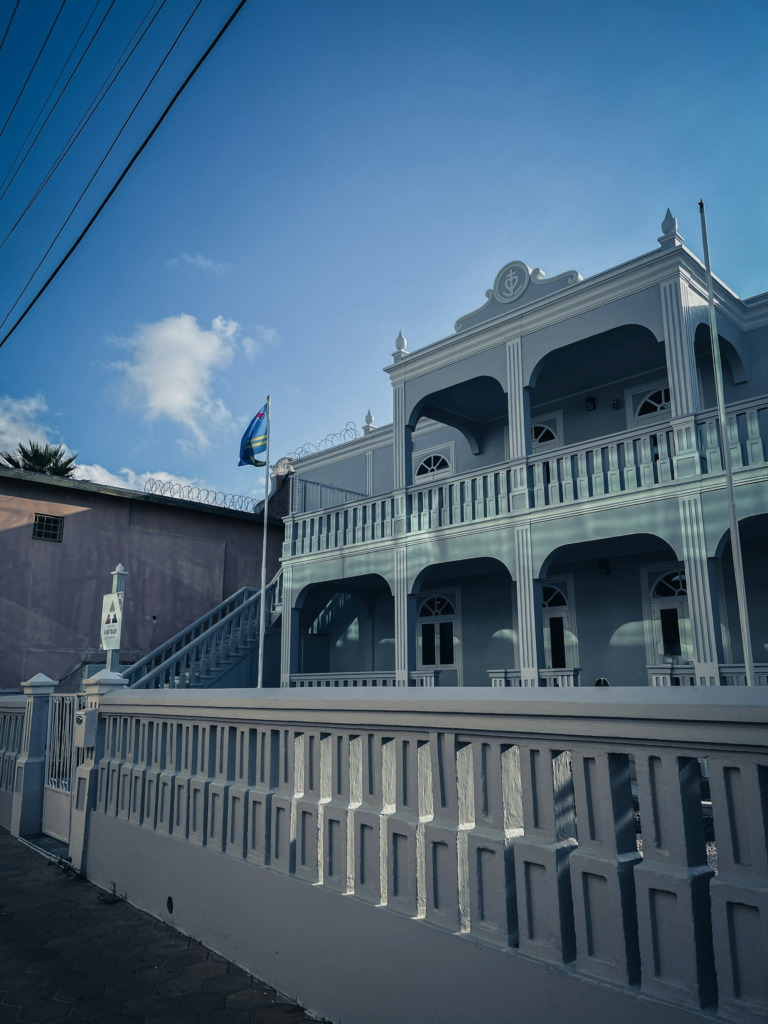
- Fort Zoutman: completed in 1798 and described as the oldest structure on Aruba. Its Willem III Tower was added in 1868. The fort and tower reopened in 1983 as the Historical Museum of Aruba. Check current opening hours before you go.
- National Archaeological Museum Aruba: the Frommer’s guide highlights this downtown Oranjestad museum, set in a historic building. Check current hours before you go.
Our guide to Oranjestad in a day lays out a walking route.
2. Take an island sightseeing tour
The landmarks don’t need blue skies. The California Lighthouse, Alto Vista Chapel, the Bushiribana gold mill ruins and the Baby Bridge on the north coast are all worth seeing on a gray day. The lighthouse is open 9:00 AM to 7:00 PM daily, with a $5 admission to climb (as of October 2026, Aruba Tourism Authority). Check current status before you go. Read what you’ll see on an Aruba island tour for the stop-by-stop route. Letting someone else drive also means you don’t have to worry about wet dirt roads.
3. Explore the caves in Arikok National Park
Arikok’s caves keep you out of the sun and the wind. Fontein Cave has pictographs attributed to the Arawak and can be entered only with park staff. Rangers are stationed at the cave entrances to explain the drawings. Practical details, as of October 2026, from the Aruba Conservation Foundation:
- Conservation pass: $22 per adult, free for visitors under 17.
- Visitor Center at San Fuego: open daily 8:00 AM to 3:30 PM.
- Passes are sold at the San Fuego and Vader Piet entrances. Vader Piet closes at 3:00 PM.
Park visitor guidance also says flashlights aren’t allowed in Quadirikiri Cave, because they disturb the bats.
4. Climb the Casibari or Ayo rock formations
On a hot, bright day these boulder piles bake in the sun. Under cloud cover they’re far more pleasant. Casibari’s tonalite boulders have trails and carved steps up to a 360-degree view, and Ayo has Arawak rock art. Check current hours and any fees before you go. Rock can get slippery after rain, so wear shoes with grip.
Things to do in Aruba on an extra-windy day

5. Visit the Butterfly Farm
The Butterfly Farm, on J.E. Irausquin Boulevard in the Palm Beach area, offers guided tours of about 20–25 minutes, and the farm says you won’t wait more than 15 minutes for one. Admission includes a return pass for the rest of your vacation, so you can come back on a sunnier morning, the time to see butterflies that have just emerged making their first flights. Check the farm’s current hours before you go.
6. Meet the animals
- Donkey Sanctuary (Bringamosa, near Santa Cruz): VisitAruba’s guide (last updated October 2023) lists entry as free, with donations welcome. Published hours vary between sources, so confirm before you go.
- Ostrich Farm: guided tours here last about 20 minutes, according to the Frommer’s guide, and Aruba’s tourism authority lists a monthly farmers market there. Confirm hours before you go.
For more animal spots, see our Aruba wildlife guide.
7. Watch the surf on the north coast, from a safe distance
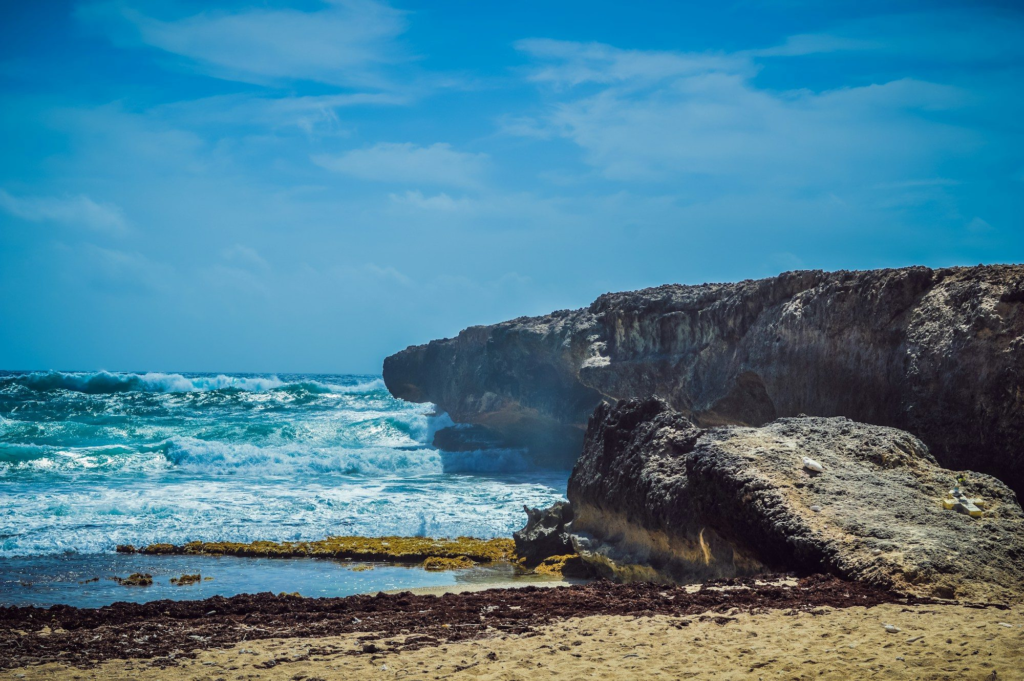
The north and east coasts take the brunt of the wind, and watching the surf there is impressive. Just keep your distance from the edge. Swimming at Boca Prins is strictly prohibited, and park visitor guidance strongly discourages swimming in Arikok’s bays because of the currents.
8. Move to the sheltered side, or use the wind
Aruba’s prevailing winds are easterly, so the west and south coasts are generally more sheltered than the north and east. Calm, shallow Baby Beach in the south is a good bet. See our Baby Beach guide. If you’d rather use the wind, a windsurfing or kitesurfing lesson is a way to make the most of a gusty afternoon. Our windsurfing and kitesurfing guide explains where to go. Note that kitesurfing is prohibited within Parke Marino Aruba, the protected marine park.
9. Plan a long lunch
Bad weather is a good excuse to eat well. Swap the beach for a long local lunch. Our best restaurants in Aruba guide helps you choose.
10. Wander San Nicolaas
Aruba’s tourism authority features a peacock mural in the southern town of San Nicolaas, and our San Nicolas street art guide covers more of the town’s walls. Street art doesn’t need sunshine.

Quick planner: match the weather to the activity
| Weather | Good choices | Consider postponing |
|---|---|---|
| Overcast, dry | Island tour, Casibari/Ayo, Oranjestad, ranger hike | Sunset photoshoot (if heavy cloud) |
| Passing showers | Museums, Butterfly Farm, long lunch, caves | Rock scrambles right after rain |
| Very windy | Sheltered west/south beaches, animal sanctuaries, windsurf lessons, north coast viewpoints (from a safe distance) | Snorkeling at exposed spots, small-boat trips |
| Clearing late afternoon | Lighthouse climb, sunset sail | Nothing. Get outside. |
What about boat trips and snorkeling?
If your boat trip is scheduled for a blustery day, ask what the policy is for weather cancellations or rescheduling. Two of the sunset sail listings we reviewed (October 2026) offered free cancellation, so check the cancellation terms when you book. Booking water activities early in your trip leaves time to move them if needed.
FAQ
What is there to do in Aruba when it rains?
Visit Oranjestad’s museums and Fort Zoutman, the Butterfly Farm, or Arikok’s caves, or settle in for a long lunch. According to Aruba’s meteorological department, showers usually come in the early morning, and sometimes in the evening during the rainy season.
When is the rainy season in Aruba?
The Departamento Meteorologico Aruba places the rainy season from September to January, with a dry season from roughly February to June. Weather Spark ranks November as the wettest month, averaging about 1.6 inches of rain.
What is the windiest month in Aruba?
According to Weather Spark, June is the windiest month, averaging about 21 mph, and October is the calmest, at around 16 mph.
Can you still go to the beach in Aruba when it’s windy?
Yes. Choose the more sheltered west and south coast beaches, such as Baby Beach. Avoid swimming on the rough north and east coasts, where swimming at Boca Prins is prohibited.
Do I need sunscreen on a cloudy day in Aruba?
Yes, don’t skip it just because it’s gray. Use a reef-safe, oxybenzone-free sunscreen, because Aruba has penalized the import, sale and production of sunscreen containing oxybenzone since July 2020.
Sources
- Climate of Aruba – Departamento Meteorologico Aruba
- Climate and average weather year-round in Oranjestad – Weather Spark
- Fort Zoutman – Wikipedia
- Along the Northwest Coast in Aruba – Frommer’s
- California Lighthouse – Aruba Tourism Authority
- Experiences, Parke Nacional Arikok and Parke Marino Aruba – Aruba Conservation Foundation
- Aruba Conservation Foundation – visitor center hours
- Arikok National Park in Aruba, An Introduction – Boardwalk (Feb 2025)
- Guide to Arikok National Park – Lonely Planet
- Casibari Rock Formations – Aruba Tourism Authority
- Ayo Rock Formations – Wikipedia
- FAQ about visiting the farm – The Butterfly Farm
- Butterfly Farm – Aruba Tourism Authority
- 6 places to celebrate World Animal Day in Aruba – VisitAruba
- Baby Beach – Aruba Tourism Authority
- Aruba officially bans plastics and oxybenzone – VisitAruba