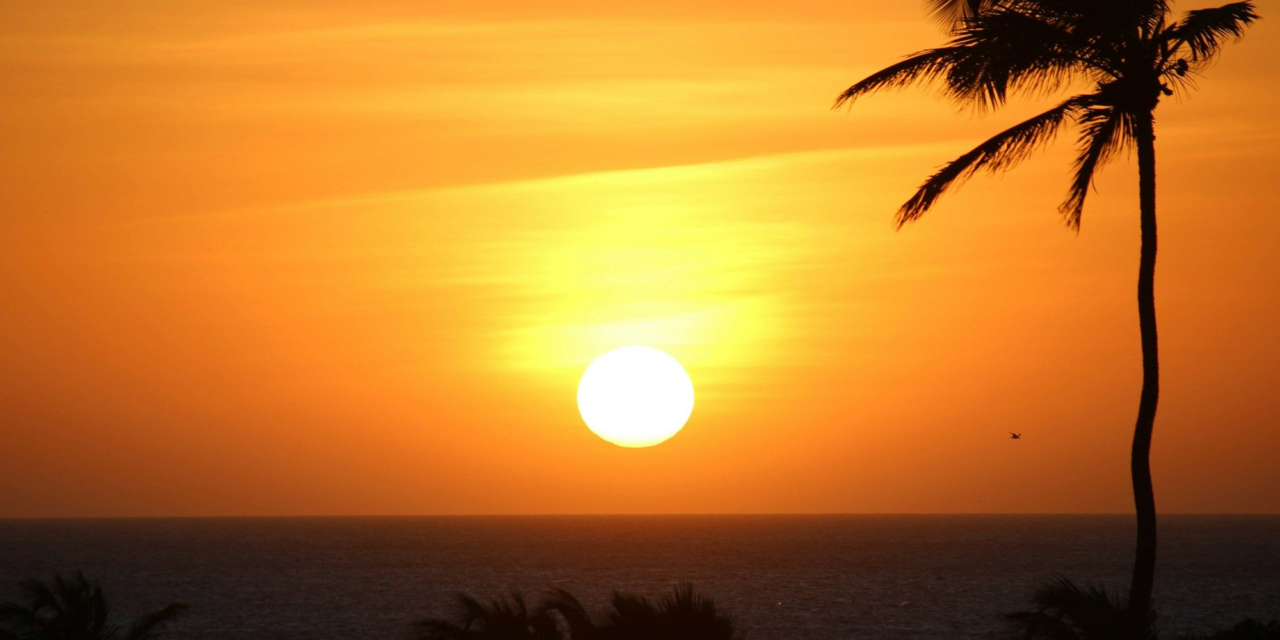
Five days is about right for a first visit to Aruba. You’ll have time for the famous beaches, the rugged north coast, a day underwater and a slow morning or two, without spending the whole trip in a car. This 5-day Aruba itinerary groups the island into sensible chunks so you don’t drive back and forth, puts the hot, exposed sights early in the day, and saves the beach time for golden hour. Stops, fees and opening times below come from official or current sources as of October 2026, but confirm hours before you go.
Quick answer: 5 days in Aruba at a glance
| Day | Focus | Highlights |
|---|---|---|
| Day 1 | Arrive and settle in | Eagle Beach, fofoti trees, sunset |
| Day 2 | North coast and northwest tip | Alto Vista Chapel, Bushiribana ruins, California Lighthouse, Arashi Beach |
| Day 3 | Arikok National Park | Natural Pool and caves (by 4×4 or guided jeep tour) |
| Day 4 | On the water | Snorkel sail, Antilla wreck area, Palm Beach evening |
| Day 5 | South and town | San Nicolas murals, Baby Beach, Oranjestad, sunset dinner |
Before you go: three things to sort out
- ED card and fee. If you’re flying in, complete the online ED card and pay the $20 Sustainability Fee by credit card before you travel, as of October 2026, per the Aruba Tourism Authority. Our ED card guide covers each step.
- Transport. Buses cover the hotel strip and Oranjestad cheaply. As of October 2026, a single Arubus ride is $2.60 (Arubus). For days 2, 3 and 5 you’ll want a car, a taxi or a tour.
- Packing. Pack reef-safe, oxybenzone-free sunscreen (Aruba has penalized its import, sale and production since July 2020, per ELAW’s summary of Aruba’s law), water shoes and closed-toe shoes for the park. Our Aruba packing list has the full checklist.
Day 1: Arrive, Eagle Beach and your first sunset
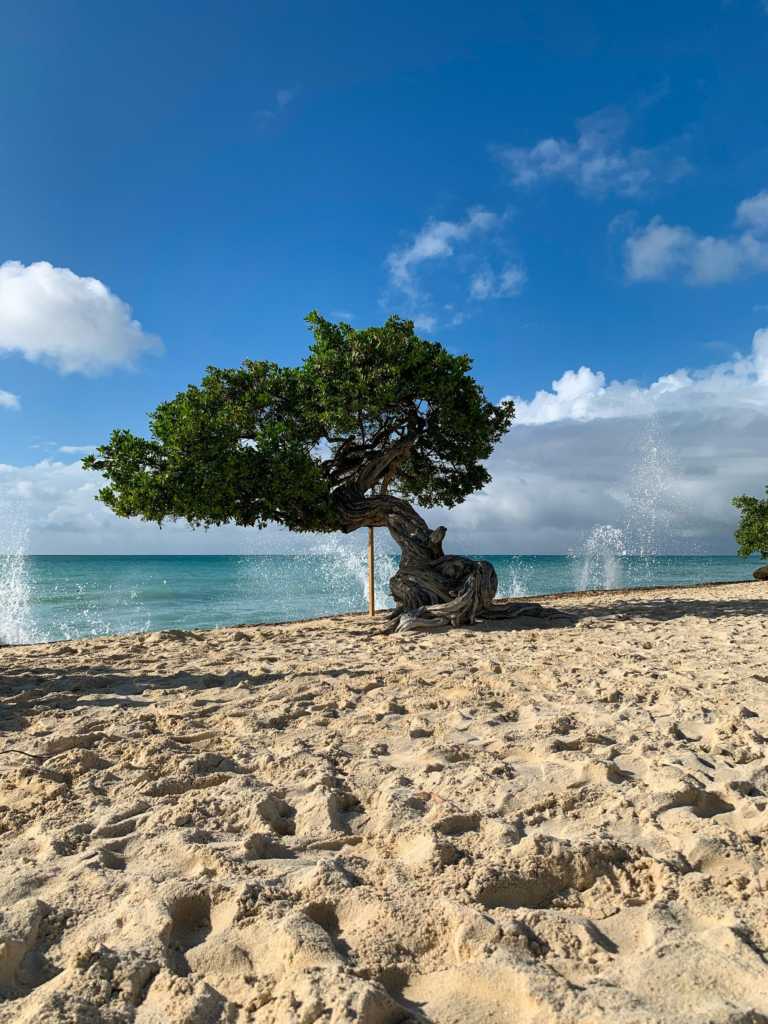
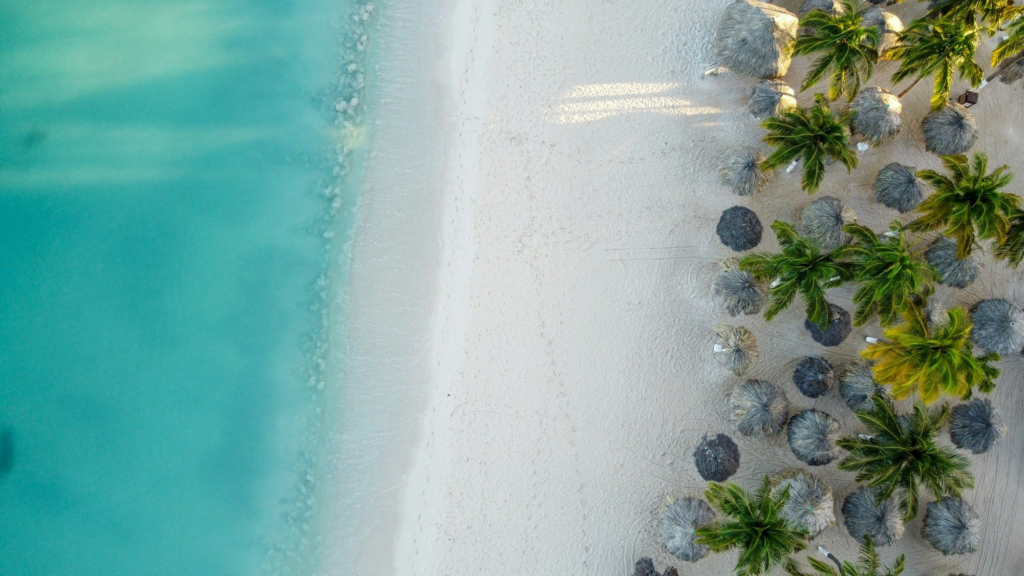
Keep your arrival day easy. Check in, change and head to Eagle Beach, which the Aruba Tourism Authority calls the widest beach on the island. It has parking, shaded spots and some beach huts. Most of Aruba’s sea turtle nests are here, so respect any marked nest areas.
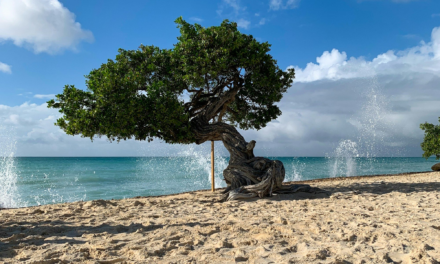
Find the two leaning fofoti trees, among the most photographed in Aruba, and plan to be there at golden hour. You’ll watch the sun go down over the Caribbean. Our Eagle Beach guide tells you where to find the trees and park.
Getting there from the airport: government taxi fares as of October 2026 are $37 to the Eagle Beach low-rise hotels and $41 to Palm Beach, for up to four passengers (VisitAruba). Fares are fixed by the government. Carry cash in small bills; card payment may be possible when you book through the official taxi app.
Day 2: North coast landmarks and the California Lighthouse
Start early, while it’s cooler, and work your way around the northern half of the island.
Morning: Alto Vista Chapel and Bushiribana
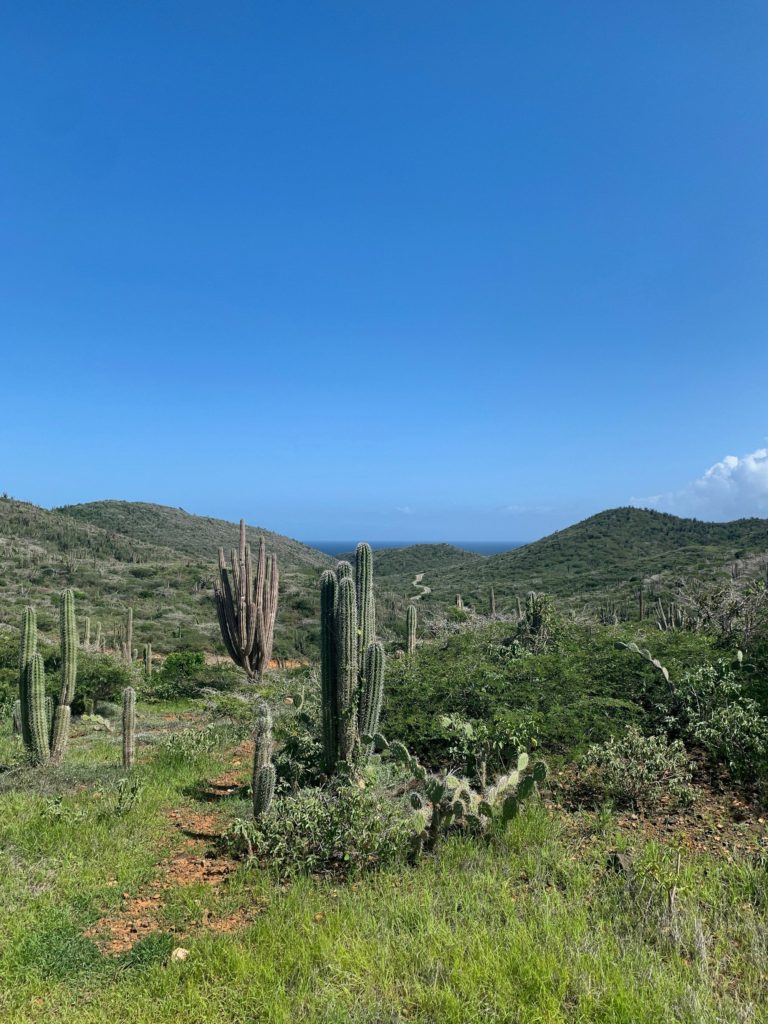
- Alto Vista Chapel sits on a hilltop in Noord surrounded by cacti, with views down the coast. The tourism authority dates it to 1750, and it’s the site of an annual pilgrimage on January 18.
- Bushiribana gold mill ruins stand on the windswept north coast. They’re a relic of Aruba’s gold rush, which ran from 1824 to 1916, per aruba.com.
Don’t swim on this coast. It’s the rough, windward side.
Afternoon: California Lighthouse and Arashi Beach
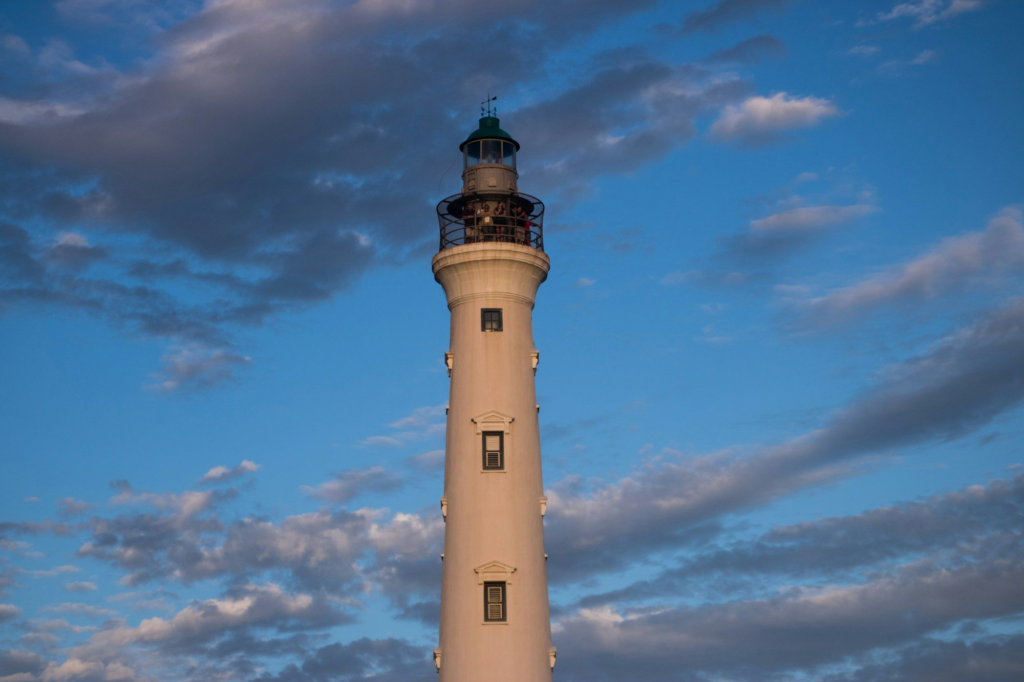
Head to the island’s northwest tip. The California Lighthouse is open daily from 9 a.m. to 7 p.m. As of October 2026, admission is $5, and you can climb to the top for 360-degree views, with no reservation needed (aruba.com). Check current status before you go. Completed in 1916, it’s named after the SS California, which wrecked nearby in 1891 (Wikipedia). Then cool off at Arashi Beach, just down the road, with calm, clear water and the best snorkeling on the left side as you face the sea. Wear water shoes for the rocky parts (aruba.com). Arashi faces west, so it works well for sunset if you’d like to stay.
Day 3: Arikok National Park and the Natural Pool
Give the national park a full morning, or a full day if you like to hike. Arikok covers about 20% of the island (Wikipedia) and has more than 35 km of nature trails (In Your Pocket).
How to do it
Regular cars can’t get to the Natural Pool (Conchi). The Aruba Tourism Authority says you need a 4×4, a horseback excursion, or a 3- to 4-hour round-trip hike, and it suggests a guided 4×4 tour for inexperienced drivers. Lonely Planet notes that public buses don’t reach the park. ATVs, UTVs and motorbikes are prohibited in the park (Aruba Conservation Foundation), so a self-drive ATV or UTV rental won’t get you in. For most first-timers, a guided jeep tour is the simplest and safest way to see the park. It handles the rough roads and the timing for you.
Fees and hours
The Aruba Conservation Foundation, which manages the park, lists a Conservation day-pass of $22 per adult (free for children under 17) as of October 2026, sold at the San Fuego and Vader Piet entrances. The San Fuego Visitor Center is open daily from 8 a.m. to 3:30 p.m., and the Vader Piet entrance closes at 3 p.m. Drones aren’t allowed in the park, per the park rules.
Safety
- Only swim at the Natural Pool when the sea is calm. Waves can break over the rocks without warning (aruba.com).
- Swimming at Boca Prins is prohibited, and swimming in the park’s bays is strongly discouraged because of strong currents (Boardwalk Aruba).
- Bring plenty of water and sun protection. Shade and restrooms are limited.
Read the Arikok National Park guide before you go.
Day 4: A day on the water
After a dusty Day 3, spend Day 4 in the sea. The calm west coast is where Aruba’s best-known snorkel spots are. The tourism authority’s beach roundup highlights the Antilla shipwreck off Malmok for snorkeling and diving. A morning snorkel sail is the classic option, and it leaves your afternoon free.
Spend the afternoon on Palm Beach, about two miles of calm water lined with beach bars, piers and water-sports stands (aruba.com). In the evening, the strip has restaurants, malls and casinos close by.
Prefer an evening on the water instead? Swap the morning sail for a sunset cruise. Our catamaran cruise guide compares morning, afternoon and sunset trips.
Day 5: San Nicolas, Baby Beach and Oranjestad
Morning: San Nicolas street art
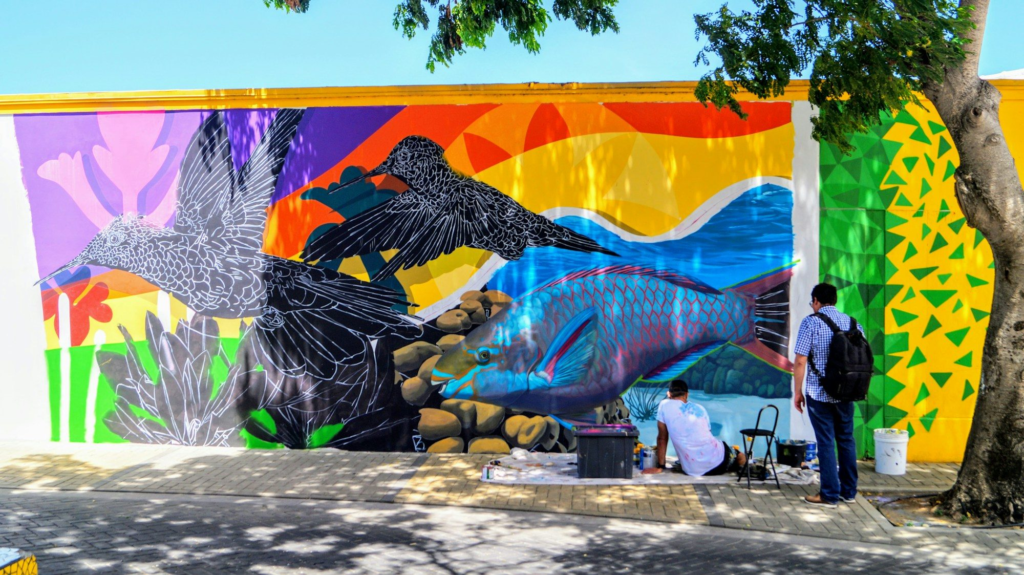
Drive southeast to San Nicolas, about 19 km from Oranjestad and Aruba’s second-largest town. It has more than 50 hand-painted murals (Wikipedia). Walk the main streets before the midday heat. Our self-guided street art tour maps out a route.
Midday: Baby Beach
Baby Beach, just south of town, is a shallow, half-moon lagoon. You can wade a long way out, and there are free shade huts, snorkel rentals and places to eat, including Big Mama’s Grill (aruba.com). Snorkel where the bay opens to the ocean, and stay inside the marked snorkel area. On the way back, stop at Zeerovers in Savaneta for a local seafood lunch on the pier. It’s closed Mondays, and the kitchen is open 11 a.m. to 9 p.m. Bring cash; some visitors report cards being accepted, but don’t count on it. (aruba.com).
Late afternoon: Oranjestad
Finish in the capital. The free downtown trolley runs between the cruise terminal and Main Street from 10 a.m. to 5 p.m., with no service on Sundays, and schedules can change by season (VisitAruba). Arrive with time to ride it. Don’t miss Fort Zoutman, completed in 1798 and described as the island’s oldest structure, now home to the Historical Museum of Aruba (Wikipedia). For a last sunset, head to a west-facing beach bar.
How to adjust this Aruba itinerary
- Traveling with kids? Swap the Arikok hike for a guided jeep tour, and give Baby Beach a longer slot.
- Not renting a car? Do Days 1 and 4 by bus and taxi, and use guided tours for Days 2 and 3. A full island tour covers most Day 2 stops in one go (what an island tour includes).
- On a budget? Most Day 1, 2 and 5 stops are free or nearly free. Read Aruba on a budget.
- Visiting on a Sunday? The downtown trolley doesn’t run and taxis add a $5 surcharge. Also note that Zeerovers is closed on Mondays. Shuffle days accordingly.
Where to stay for this itinerary
Staying around Eagle Beach or Palm Beach keeps Days 1, 2 and 4 short drives or bus rides away. Both areas are on Arubus routes, though buses don’t stop directly at several low-rise resorts along the Eagle Beach/Druif stretch (the nearest stop is by the hospital), per VisitAruba’s bus schedule. Days 3 and 5 involve the longest drives. Baby Beach is about 45 minutes from the Palm Beach hotels (aruba.com).
FAQ
Is 5 days enough in Aruba?
Yes, for a first visit. Aruba is about 20 miles long, so five days covers the main beaches, the north coast, Arikok National Park, a day on the water and San Nicolas, with time to relax.
Do I need a car for this 5-day Aruba itinerary?
Not for every day. Buses and taxis cover the hotel strip and Oranjestad. For the north coast, Arikok and the south, rent a car for those days or book guided tours. The Natural Pool needs a 4×4, a horseback ride or a long hike, and UTVs and ATVs aren’t allowed in the park.
What is the best day to visit Arikok National Park?
Any day, but go early. The park’s entrances close at 3 or 3:30 p.m., per the Aruba Conservation Foundation.
Where should I watch the sunset in Aruba?
Arashi Beach faces west, so it’s a good bet. The tourism authority also recommends the California Lighthouse at sunset, and it’s open until 7 p.m.
Can I swim on Aruba’s north coast?
Generally no. The north coast is rough, swimming is prohibited at Boca Prins, and swimming in the park’s bays is strongly discouraged because of strong currents. Swim at the calm west- and south-coast beaches instead.
Sources
- Aruba Tourism Authority – Sustainability Fee
- Arubus – Fares
- VisitAruba – Taxis and Limos
- VisitAruba – Streetcar Trolley
- VisitAruba – Bus Schedule
- Aruba Tourism Authority – Eagle Beach
- Aruba Tourism Authority – Alto Vista Chapel
- Aruba Tourism Authority – Bushiribana Gold Mill Ruins
- Aruba Tourism Authority – California Lighthouse
- Aruba Tourism Authority – Arashi Beach
- Aruba Tourism Authority – Natural Pool
- Wikipedia – Arikok National Park
- In Your Pocket – Arikok National Park
- Boardwalk Aruba – Arikok National Park in Aruba, An Introduction
- Aruba Conservation Foundation – Experiences (Arikok National Park)
- Aruba Conservation Foundation – Parke Nacional Arikok Rules
- Wikipedia – California Lighthouse
- Lonely Planet – Guide to Arikok National Park
- Aruba Tourism Authority – My Top 10 Aruba Beaches
- Aruba Tourism Authority – Palm Beach
- Wikipedia – San Nicolaas
- Aruba Tourism Authority – Baby Beach
- Aruba Tourism Authority – Zeerover
- Wikipedia – Fort Zoutman
- ELAW – Aruba: Select Plastic Laws
- VisitAruba – Aruba Travel Tips: How to Get Around, Public Beaches and More