Aruba is one of the easiest Caribbean islands to visit for the first time. English is widely spoken, US dollars work almost everywhere and the weather is reliably dry. A few local rules and habits still surprise first-timers, from the online entry form you have to fill out before you fly to taxis that don’t use meters. These 25 Aruba travel tips cover what to sort out before you leave, how to get around, and the beach, money and safety details that make the first trip smoother.
Quick answer: top Aruba travel tips
- Complete the official online ED card at edcardaruba.aw within the 7 days before you travel, and pay the $20 Sustainability Fee there if it applies to you (as of October 2026, per Aruba.com).
- US dollars are widely accepted. The Aruban florin trades at about 1.75 to 1.80 per dollar.
- Tap water is safe to drink, and the electricity is 110 volts, the same as in North America.
- Taxis have no meters. Fares are fixed by the government, so confirm the price before you ride.
- Drive on the right, never turn right on red, and give way to cars already in a roundabout.
- All beaches are public, but hotel loungers and palapas are for hotel guests.
Before you go
1. Fill out the ED card online, and only on the official site
Every traveler flying to Aruba, including infants and children, needs an approved Embarkation and Disembarkation (ED) card, according to the Aruba airport. You can submit it up to seven days before your trip. Aruba.com warns that some websites charge a fee to “help” with the form, but you can complete it yourself in a few minutes. Our step-by-step Aruba ED card guide walks through every screen.
2. Budget for the $20 Sustainability Fee
Since July 1, 2024, visitors arriving by air pay a $20 Sustainability Fee through the ED card system (as of October 2026, per Aruba.com). Children under eight are exempt, the fee is paid online by credit card and the money funds upgrades to the island’s wastewater treatment.
3. Check your passport, and bring proof of a return trip
Your passport must be valid for your whole stay, and Aruba.com adds that it must not be more than 10 years old. The immigration rules also allow officers to ask for proof that you can return home or travel onward, proof of enough money for your stay and health or travel insurance that covers at least $15,000 in medical costs.
4. US citizens can stay up to 90 days
The standard tourist stay is 30 days, but US nationals can stay up to 90 days without applying for an extension, according to Aruba.com. Other nationalities should check the immigration page before booking a long trip.
5. Pick your season for value, not weather
Aruba is warm and dry all year. Prices and crowds change much more than the weather does. Our guide to the best time to visit Aruba has the month-by-month numbers and explains why hurricanes are rarely a problem.
6. Pack reef-safe sunscreen
Aruba banned oxybenzone, a sunscreen chemical linked to coral damage, along with single-use plastics such as straws, cups and utensils. Penalties for importing, selling or producing them have applied since July 2020, according to VisitAruba. Pack a reef-safe, oxybenzone-free sunscreen before you leave home. The Aruba packing list covers the rest.

Arriving and getting around
7. Taxis have fixed fares, not meters
Aruba’s taxis don’t use meters. The government sets fares by zone and destination. As of May 2026, VisitAruba’s taxi guide lists the airport to Oranjestad at $26, to the Eagle Beach low-rise hotels at $37 and to the Palm Beach high-rise hotels at $41, for up to four passengers. A flat $5 surcharge applies on Sundays, holidays and from 11 pm to 7 am, according to the official fare site, taxi.aw. Official taxis have “TX” on the license plate.
8. Carry small bills for taxis
An Aruba.com guide from July 2025 suggests small bills, since drivers often can’t break large ones. Carry cash in small bills; card payment may be possible when you book through the official taxi app, according to VisitAruba’s May 2026 taxi guide.
9. Don’t count on ride-share apps
The US State Department says ride-sharing apps are not available in Aruba. Plan on taxis, buses, a rental car or tour transfers instead.
10. The bus is cheap and covers the hotel strip
A single Arubus ride costs $2.60, a two-ride retour card $5 and a day pass $15 (as of October 2026, per Arubus). Line 10 runs from the Oranjestad main station along Eagle Beach and Palm Beach to Arashi Beach. Line 2 passes the airport, but buses don’t take luggage beyond carry-on items, so they won’t work if you’re arriving with suitcases. Our getting around Aruba guide compares every option.
11. If you drive, learn three rules
Aruba drives on the right. Right turns on red are prohibited, and cars already in a roundabout have the right of way, according to VisitAruba. Speed limits are posted in kilometers per hour: generally 30 in town, 60 outside town and 80 on faster roads.
12. Most gas stations are full service
Attendants pump the fuel at most stations, and prices are the same everywhere because the government regulates them. At self-service lanes you pay inside first.
13. Your rental car probably can’t go off-road
VisitAruba notes that most rental cars may not be driven on dirt roads to remote spots such as the Natural Pool or the area behind the California Lighthouse, and insurance won’t cover damage there. ATVs, UTVs and motorbikes are prohibited in Arikok National Park, according to the Aruba Conservation Foundation. A guided jeep tour is the easiest way into the park and to the Natural Pool, and a UTV tour works for the rugged north coast outside it. Our jeep vs UTV comparison helps you choose.
14. Use the free downtown streetcar
A free trolley loops between the cruise terminal and Oranjestad’s main shopping street. VisitAruba lists hours of 10 am to 5 pm, with no service on Sundays, and notes that the schedule can change by season. It makes an easy start to a day in Oranjestad.
Beaches and the sun
15. Beaches are public, hotel setups are not
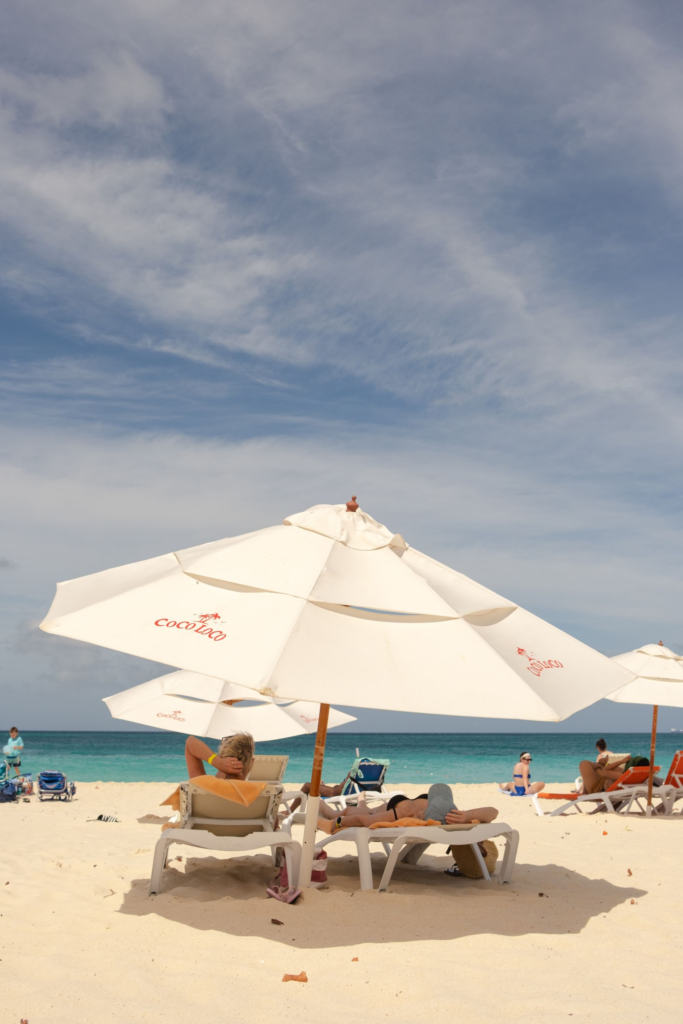
Aruba’s beaches are open to everyone. Under beach guidelines published in April 2026, though, loungers, palapas and umbrellas that hotels assign to guests count as in use even when the guest steps away, and non-guests shouldn’t use or move them. Some stretches of sand are designated for hotel use, so ask staff if you’re unsure.
16. Respect the breeze and the sun
The steady trade wind makes the heat comfortable, but it also hides how fast you burn. Reapply sunscreen often, wear a hat and plan shade breaks, especially around midday.
17. Check the water before you swim
The State Department notes that the trade winds, strongest from January through August, can cause choppy water, strong currents and high waves at some beaches. Our best beaches guide explains which beaches suit swimmers and which are better for views.
18. Don’t leave valuables on the sand or in the car
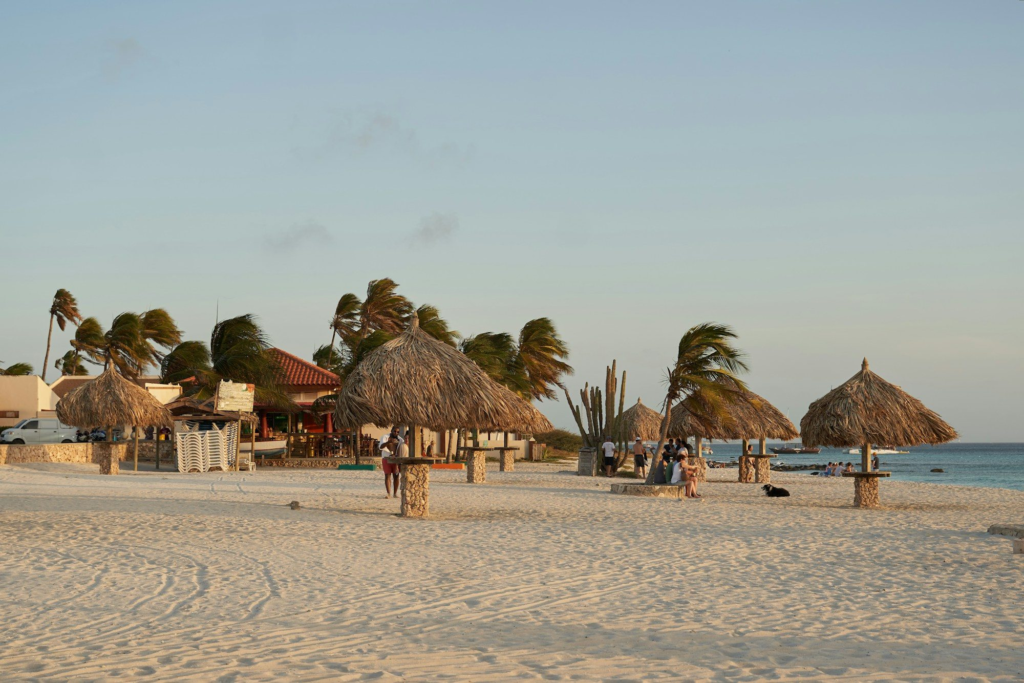
Petty theft is the most common problem for visitors, according to the State Department. Keep phones and wallets with you, and don’t leave bags in view in a parked car. VisitAruba notes that rental insurance doesn’t cover personal belongings.
Money, language and everyday details
19. US dollars work almost everywhere
The official currency is the Aruban florin (AWG), but Aruba.com says US dollars are widely accepted. VisitAruba puts the rate at about 1.75 to 1.80 florins per dollar, and Aruba’s taxi rules use a fixed 1.80.
20. Check the bill before you tip
Tipping is optional in Aruba. Some restaurants and bars add a service charge, usually 10 to 15 percent, so look at the bill before you add more. For taxis, the 2025 Aruba.com taxi guide suggests 10 to 15 percent or rounding up.
21. Drink the tap water
Aruba’s tap water is made in a desalination plant and is safe to drink, according to VisitAruba. Bring a refillable bottle and skip the plastic.
22. Your chargers will work
Aruba uses 110 volts at 60 cycles, the North American standard. Travelers from Europe and the UK will need an adapter.
23. English is spoken widely
Dutch and Papiamento are the official languages, but English and Spanish are widely spoken.
24. Island time is AST all year
Aruba is on Atlantic Standard Time (UTC-4) and does not observe daylight saving time. That means it matches US Eastern time in summer and is one hour ahead in winter.
25. Know the local laws and emergency numbers
Call 911 for an ambulance or fire and 100 for the police. The State Department notes that marijuana and CBD products are illegal in Aruba even if they are legal at home, and that drinking alcohol in public spaces is restricted. It also advises extra caution in San Nicolas at night. The main hospital, Dr. Horacio Oduber Hospital, is near Eagle Beach.
Bonus: plan your days in the right order
First-timers often spend the whole trip on one beach. Mix it up instead: a beach morning, a north coast or Arikok outing, a town afternoon in Oranjestad or San Nicolas and a sunset sail. For a ready-made plan, use our 5-day Aruba itinerary.
FAQ
Do I need a passport to go to Aruba?
Yes. Aruba requires a passport valid for your whole stay. US travelers should note that a US passport card can’t be used for air travel to Aruba, according to VisitAruba.
Do I need cash in Aruba?
Bring some. Carry cash in small bills for taxis; card payment may be possible when you book through the official taxi app. Arubus buses take cash on board. US dollars are accepted almost everywhere, so you don’t need to exchange money before you arrive.
Is Aruba safe for tourists?
The US State Department rates Aruba Level 1, “Exercise normal precautions,” as of August 2026. Petty theft is the main concern, so keep valuables with you.
Can you drink the water in Aruba?
Yes. Aruba’s tap water is desalinated and safe to drink.
What is the ED card for Aruba?
It’s a mandatory online entry form every air traveler must complete and have approved before flying, submitted within the 7 days before travel at the official site, edcardaruba.aw. The $20 Sustainability Fee is paid through the same system.
Is Uber available in Aruba?
No. The US State Department says ride-sharing apps are not available. Use government-licensed taxis, the bus or a rental car.
Sources
- Aruba Airport – Immigration and ED-Card
- Aruba.com – Online ED Card
- Aruba.com – Sustainability Fee
- Aruba.com – Immigration Regulations
- VisitAruba – Aruba Officially Bans Plastics and Oxybenzone
- Aruba Online ED Card (official portal)
- Taxi.aw – Aruba Taxi Fares
- Aruba.com – Taxis in Aruba: Reliable and Quick
- U.S. Department of State – Aruba Travel Advisory
- Arubus – Fares & Passes
- Arubus – FAQ
- VisitAruba – Driving in Aruba
- VisitAruba – Streetcar / Trolley
- Aruba Conservation Foundation – Experiences
- Aruba.com – Aruba Beach Guidelines 2026
- Aruba.com – Island Facts
- VisitAruba – General Aruba Facts
- VisitAruba – Entry Requirements and Visas