Picking among the best beaches in Aruba is mostly about matching the beach to your day. The island’s west and south coasts face the calm Caribbean, with soft sand and gentle water. The north and east coasts take the trade winds head-on, and that side is all cliffs, surf and strong currents. Most of the swimming beaches are a short drive or bus ride from the hotel strip. The wild ones take more effort and reward you with views instead of a swim. All Aruban beaches are public, so you can walk onto any stretch of sand, even in front of a resort.
This guide covers 15 beaches, grouped by the kind of day you’re after, with honest notes on facilities, snorkeling and safety.
Quick answer: the best beaches in Aruba by type
- Best all-rounder: Eagle Beach, the widest beach on the island, famous for its fofoti trees.
- Best for action, bars and water sports: Palm Beach, the resort strip.
- Best for snorkeling from shore: Arashi, Boca Catalina, Tres Trapi and Mangel Halto.
- Best for small kids: Baby Beach, a shallow lagoon on the southern tip.
- Best for windsurfing and kiting: Hadicurari (Fisherman’s Huts) for learners, Boca Grandi for experts.
- Best for scenery (not swimming): Andicuri, Dos Playa and Boca Prins on the rugged north coast.
Aruba beaches at a glance
| Beach | Coast | Best for | Swimming | Facilities |
|---|---|---|---|---|
| Eagle Beach | West | Relaxing, sunsets, photos | Calm | Huts, rentals, parking |
| Palm Beach | West | Water sports, bars | Calm | Full resort services |
| Druif Beach | West | Quiet swims | Calm | Huts, chairs, volleyball |
| Surfside | West, near Oranjestad | Plane spotting, beach bar | Calm | Bar, chairs, umbrellas |
| Hadicurari | Northwest | Learning to windsurf or kite | Very shallow | Parking, lessons nearby |
| Malmok | Northwest | Snorkeling | Calm | Minimal |
| Boca Catalina | Northwest | Snorkeling, families | Calm | Shade huts, parking |
| Tres Trapi | Northwest | Sea turtles | Rocky entry | None |
| Arashi | Northwest | Snorkeling, local vibe | Calm | Bar, huts, rentals |
| Mangel Halto | South | Snorkeling, kayaking, shore diving | Calm, shallow | Huts, sun deck |
| Baby Beach | South tip | Small kids | Very calm lagoon | Food, rentals, restrooms |
| Rodger’s Beach | South tip | Quiet days | Calm bay | Dive shop, shower and restaurant next door |
| Boca Grandi | Southeast | Expert kitesurfing | Strongly discouraged | Beach bar |
| Andicuri | North | Bodyboarding, views | Experienced swimmers, watch currents | None |
| Dos Playa | North (Arikok) | Scenery, surfing | Not safe for most | None |
The classic west-coast beaches
1. Eagle Beach
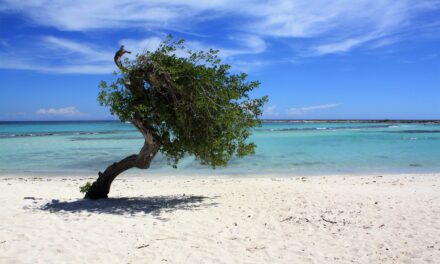
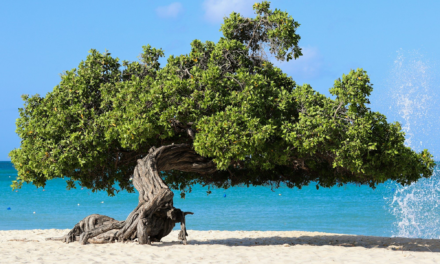
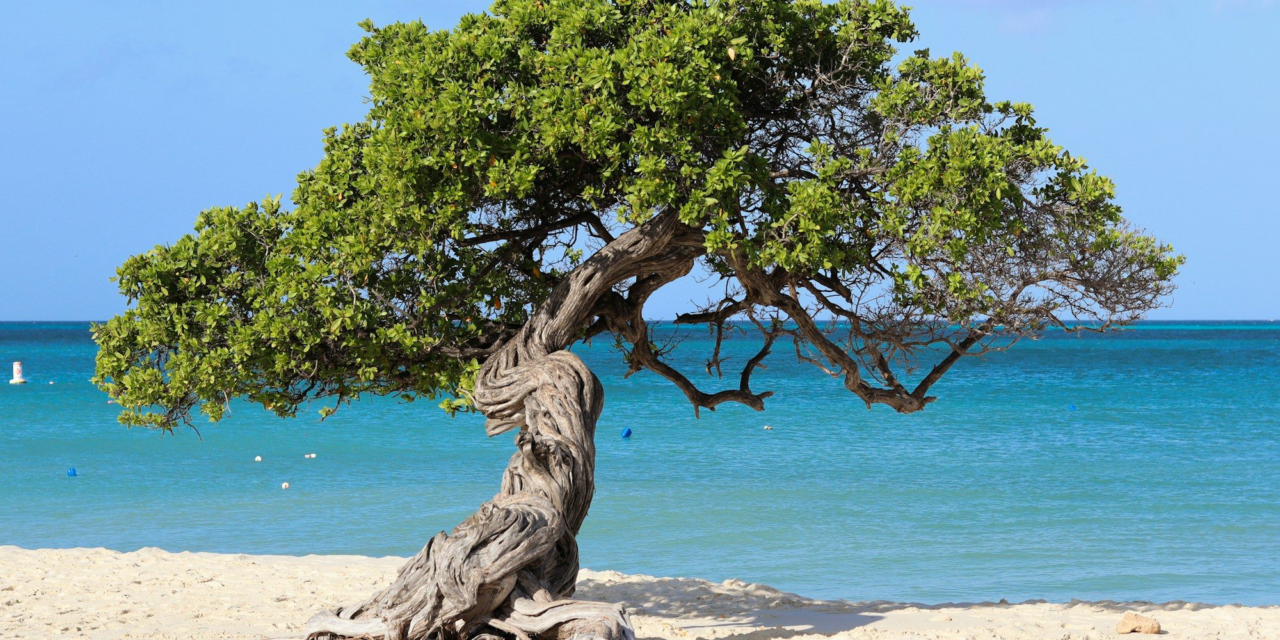
If you only visit one beach, make it this one. The Aruba Tourism Authority describes Eagle Beach as the widest beach on the island, and the sand is soft and white with plenty of room to spread out. It’s home to two fofoti trees that are among the most photographed in Aruba and have starred in island ad campaigns. Take your photos next to them, but don’t sit or stand on them or hang anything from the branches, which can damage the trees.
Eagle Beach has parking, shaded areas and some beach huts, and vendors rent loungers. Lonely Planet reported in December 2025 that some vendors charge at least US$50 to rent two chairs for the day, so bring cash or your own beach chair. It’s also the island’s main sea turtle nesting beach, so you may see roped-off nests. For a deep dive, read our complete Eagle Beach guide.
2. Palm Beach
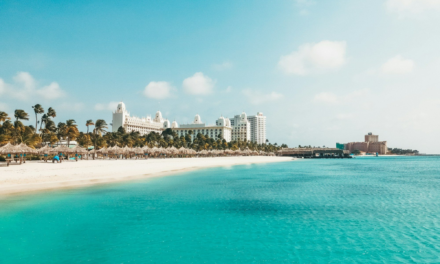
Palm Beach is the two-mile strip lined with high-rise resorts, piers, beach bars and water sports stands. The water is usually calm enough for easy swimming and snorkeling, and water sports stands along the sand offer everything from paddleboarding to windsurfing lessons. It gets crowded, but if you like a lively scene with a cocktail always within reach, nothing else on the island compares. See our Palm Beach guide for the details.
3. Druif Beach
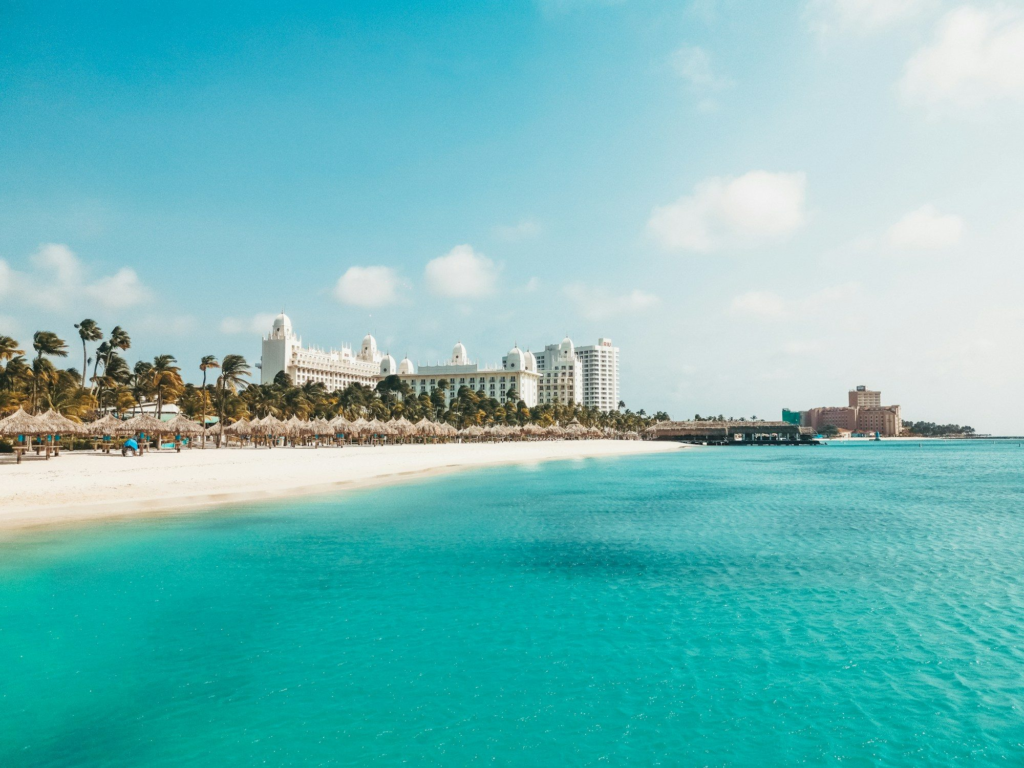
Druif sits at the Oranjestad end of the Eagle Beach area and links up with the neighboring beaches into one long run of sand. The water is calm and clear, and you’ll find palapas, beach chairs and a volleyball court. Look for pelicans perched on the poles offshore. It suits anyone who wants Eagle Beach conditions with a slightly more low-key feel.
4. Surfside Beach
Close to downtown Oranjestad and right under the airport flight path, Surfside is the spot for watching planes come in low over the water. Surfside Beach Bar has chairs and umbrellas on the sand and serves pizza and cocktails, and the tourism board lists it as one of the island’s best beach bars as of 2025. It works well on an arrival or departure day.
The northwest coast: snorkeling coves
North of Palm Beach, the road toward the California Lighthouse runs past a string of small beaches with some of the easiest shore snorkeling in Aruba. Bring your own gear; Boca Catalina, for one, has no rentals. For more ideas, see our full guide to the best snorkeling spots in Aruba.
5. Hadicurari (Fisherman’s Huts)
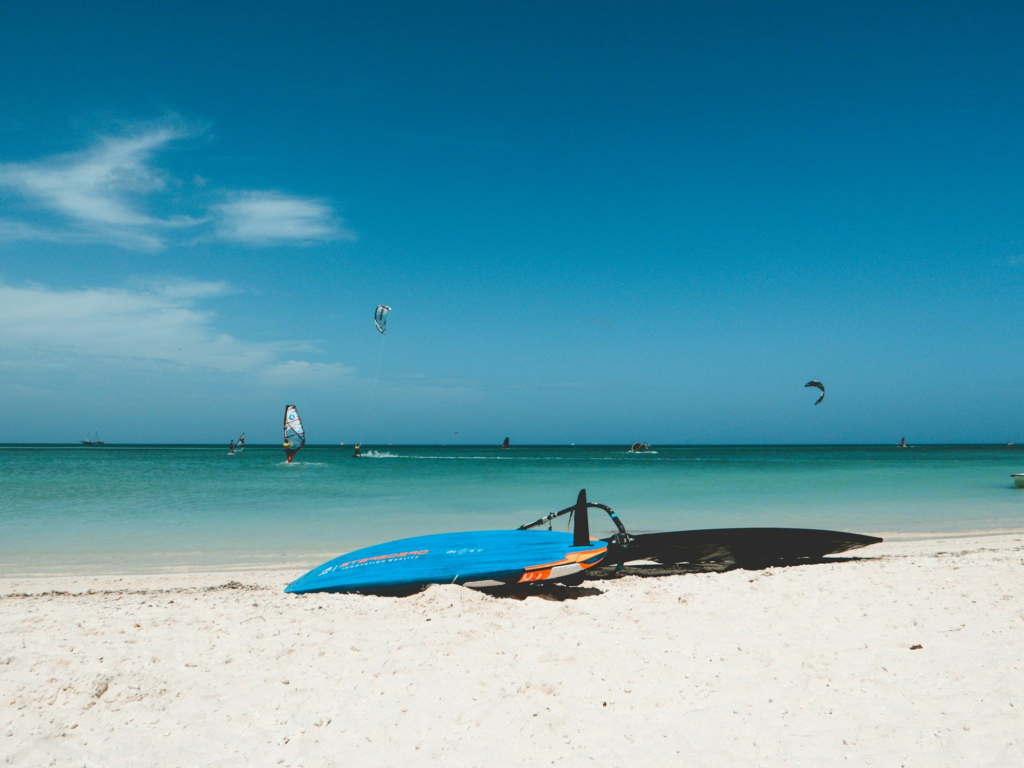
Locals just call it “the Huts.” It sits on a rocky stretch past the Marriott at the north end of Palm Beach. With very shallow, calm water and a steady breeze, it’s the island’s favorite place for beginners to pick up windsurfing and kitesurfing, according to the tourism board. Several schools operate here. The Aruba Hi-Winds windsurfing event is held off this beach, usually in late spring or early summer (the 2026 edition ran May 13–18); check this year’s dates.
6. Malmok Beach
Malmok is a narrow sandy stretch along a mostly rocky, residential coastline. The water is shallow and clear, which is why catamarans and sailboats stop just offshore on their daytime snorkel trips. If you’d rather not swim out on your own, a catamaran snorkel cruise is the easiest way to see this coast from the water.
7. Boca Catalina
Boca Catalina is a small white-sand bay in the Malmok area, about five minutes’ drive from the Palm Beach resorts. You walk down steps from a roadside parking area, and there’s shade from a few simple huts. The water is calm and clear, good for swimming and snorkeling. On weekdays you may have it to yourself; on weekends local families show up. AFAR suggests arriving in the morning, before the snorkel boats, and wearing water shoes for the rocky entry.
8. Tres Trapi
The name means “three steps” in Papiamento, after the steps cut into the low rock shelf where you climb down into the water. There’s no sand to speak of and no handrail, and the rocks and coral are sharp, so water shoes matter here. What you get in return is clear water with a very good chance of seeing sea turtles. Islands.com recommends arriving between 6 and 11 a.m. for turtles, before they move to deeper water. There are no facilities, so bring water and snacks.
9. Arashi Beach
Near the island’s northern tip, Arashi is calmer and more local than the resort beaches. The best snorkeling is on the left side as you face the sea. It has a beach bar, shade huts and chair rentals, and arriving early improves your chances of a free hut and an easy parking spot. Arashi Beach Shack serves light bites and has live music during happy hour. The beach faces west, so it’s also a strong sunset pick; see our ranking of the best sunset spots in Aruba.
The south coast: calm lagoons and quiet bays
10. Mangel Halto
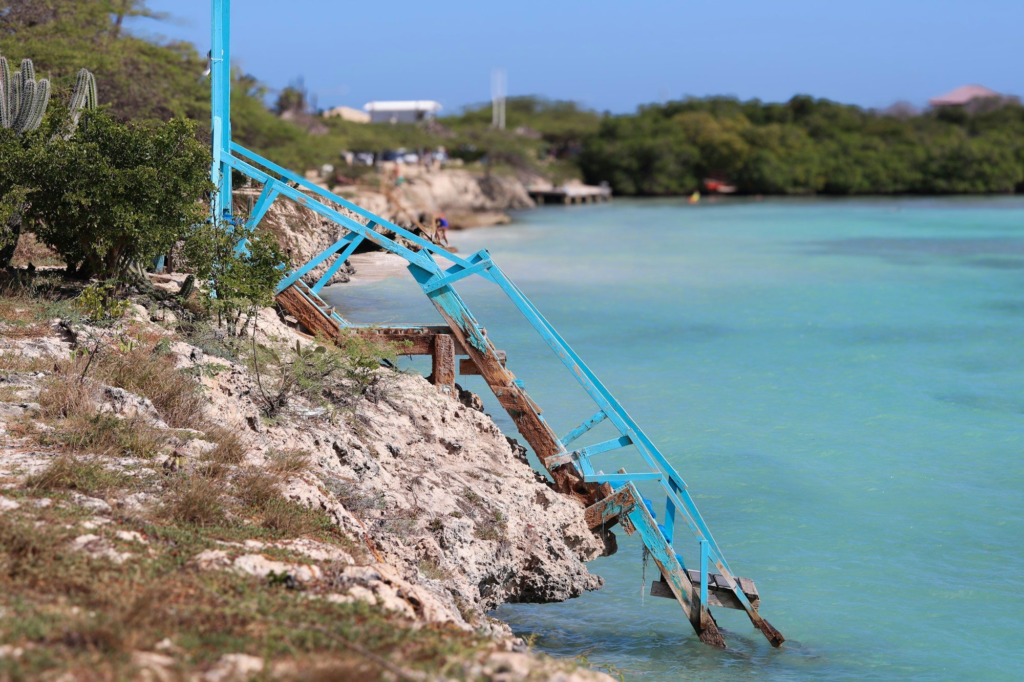
In Pos Chiquito, just south of the Spanish Lagoon,Mangel Halto is a calm, shallow bay fringed by mangroves, with a wooden sun deck and public huts. It’s a favorite for snorkeling and an excellent shore-dive site: the reef drops to about 110 feet, where divers see morays and barracuda. The mangroves also make it a good launch point for kayaks and paddleboards. Note that the tourism board’s things-to-do guide warns currents are stronger farther from shore, so less confident swimmers should stay close.
11. Baby Beach
On the southern tip near San Nicolas, Baby Beach is a half-moon lagoon so shallow you can wade a long way out and still touch the bottom. It’s the island’s go-to beach for small kids. Snorkeling is best near the opening to the sea, but stay inside the marked area because currents beyond it can be strong. You’ll find free shade huts, rentals, a food stand and Big Mama’s Grill. It’s about 45 minutes from the Palm Beach hotels, which is why we wrote a whole post on whether Baby Beach is worth the drive.
12. Rodger’s Beach
A minute’s drive from Baby Beach, Rodger’s is a slim ribbon of fine white sand on a calm bay, very quiet on weekdays and popular with local families on weekends. You can see the old Lago refinery from the sand. The beach takes its name from a British captain, Rodger, who opened the refinery in 1928.
13. Boca Grandi
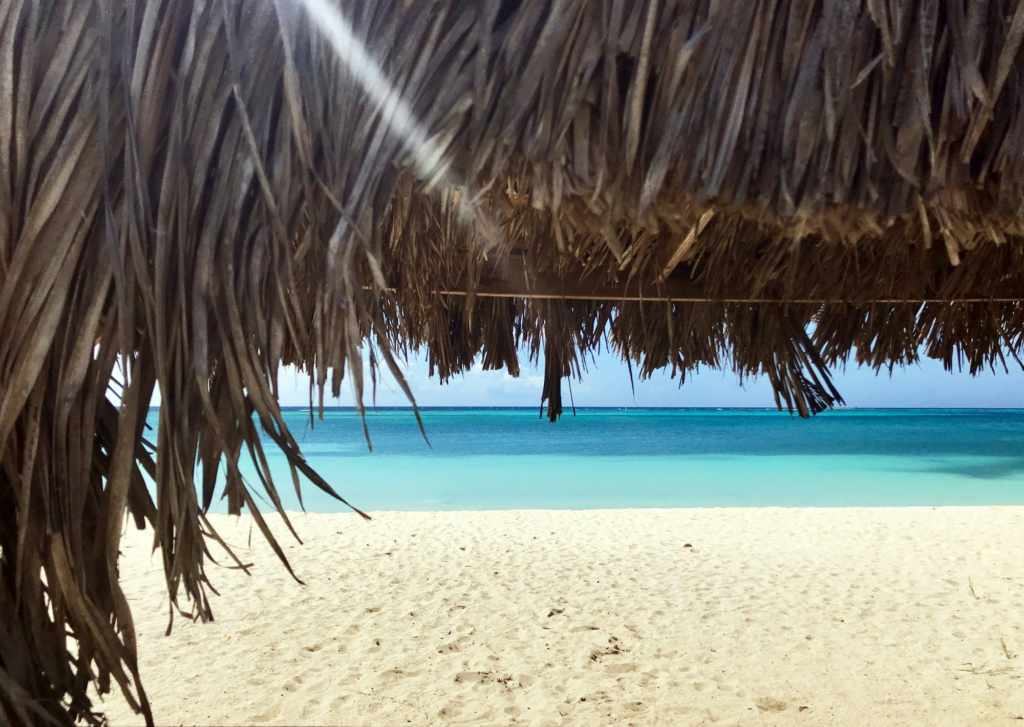
On the east side of the southern tip, about five minutes from San Nicolas, Boca Grandi is marked by a big red anchor at the entrance. Steady wind and real waves bring out advanced kitesurfers, and it’s a great place to watch them. Do not swim: the tourism board says swimming is strongly discouraged because the current is strong. It is also one of Aruba’s main sea turtle nesting areas.
The wild north coast: look, don’t swim
The windward side is where Aruba feels most remote. These beaches are for scenery, photos and a picnic, not for swimming. Many visitors see them on a guided jeep tour, which saves you from navigating rough dirt roads in a rental car. Our hidden beaches guide covers more of this coast.
14. Andicuri Beach
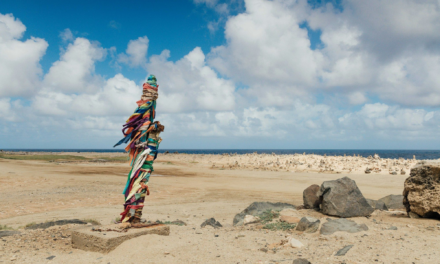
Just south of the collapsed Natural Bridge, Andicuri is a sandy cove backed by cliffs. Bodyboarders love the bigger surf, and local competitions are held here. The tourism board says experienced swimmers can go in but need to watch for currents. There’s no food or drink, driving on the sand and barbecuing are prohibited, and the access is by dirt road.
15. Dos Playa
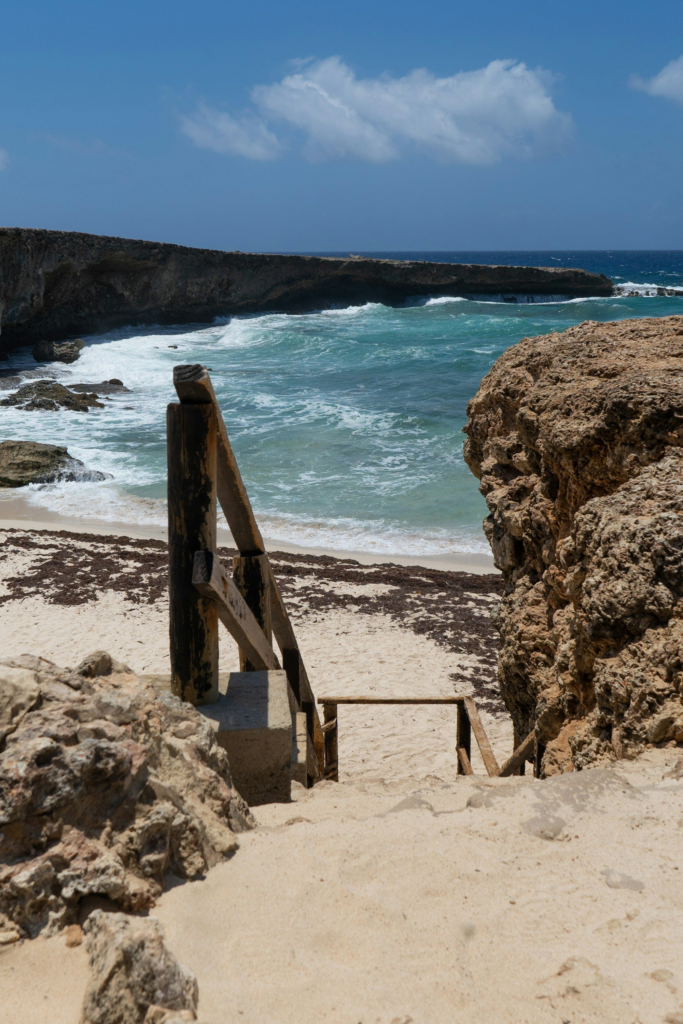
Inside Arikok National Park, Dos Playa is two neighboring coves cut out of the limestone. One is a favorite with local surfers. The sea is rough, with a strong undertow, so it’s too rough for anyone but strong, experienced swimmers. There are no facilities, and you’ll need a park day-pass: as of October 2026, the Aruba Conservation Foundation charges USD 22 per adult, with children under 17 free. Boca Prins, also inside Arikok, has white dunes, wooden stairs down to the sand and a sign warning of strong undertows; Boca Prins Restaurant is nearby for a cold drink.
Beach rules and safety tips
- Reef-safe sunscreen. Since July 2020, Aruba has penalized the import, sale and production of sunscreen containing oxybenzone. Pack a reef-safe, oxybenzone-free formula.
- Leave nature where it is. Don’t take sand, shells or coral, and don’t sit or stand on the fofoti trees.
- Respect turtle nests. Nesting season runs March through September and hatching from May to November. Keep lights and flash off on the beach at night, and call Turtugaruba at +297 592 9393 if you see a nest or hatchlings.
- Read the north coast correctly. Undertows on the windward side are strong; at Boca Prins, the tourism board says they are always present. If a sign says don’t swim, don’t.
- Water shoes help at rocky entries like Tres Trapi, Boca Catalina and the rocky sections at Arashi.
- Getting there by bus. Arubus Line 10 runs from the Oranjestad station to Eagle, Palm and Arashi beaches; as of October 2026, Arubus lists a single trip at $2.60 per person, paid in cash on board.
Which beach fits your day?
- Lazy day with the best sand: Eagle Beach, then sunset under the fofoti trees.
- Beach plus bars and activities: Palm Beach.
- Snorkel crawl: Boca Catalina, Tres Trapi and Arashi in one morning.
- Toddlers and nervous swimmers: Baby Beach, or the shallows at Hadicurari.
- Something wild: Andicuri and Dos Playa, ideally on a jeep tour.
FAQ
What is the most beautiful beach in Aruba?
Eagle Beach is the usual answer. It is the widest beach on the island, with soft white sand, calm water and the famous fofoti trees, and the Aruba Tourism Authority notes it was voted the #3 beach in the Caribbean in 2026 travelers’ choice awards.
Which Aruba beach is best for snorkeling?
For shore snorkeling, try Boca Catalina, Tres Trapi and Arashi on the northwest coast, or Mangel Halto in the south. Baby Beach is good for beginners if you stay in the marked area.
Are beaches in Aruba free?
Yes. All beaches in Aruba are public, so access is free. You pay only if you rent chairs, umbrellas or gear. Beaches inside Arikok National Park, such as Dos Playa, require a park day-pass (USD 22 per adult, free under 17, as of October 2026).
Which Aruba beaches are not safe for swimming?
Avoid swimming on the north and east coasts, including Boca Prins, Dos Playa and Boca Grandi, where strong currents and undertows are common. At Andicuri, experienced swimmers can go in but need to watch the currents.
What is the best beach in Aruba for families with small kids?
Baby Beach, a shallow lagoon on the southern tip. Hadicurari (Fisherman’s Huts) has very shallow, calm water closer to the hotel area, and Arashi is calm too.
Can I walk onto a resort’s beach in Aruba?
Yes. Beaches are public, so you can use the sand and water in front of any resort. Loungers and umbrellas that belong to the resort are usually for guests only.
Sources
- Beaches and Coves, Aruba Tourism Authority
- Best Things to Do in Aruba, Aruba Tourism Authority
- Eagle Beach, Aruba Tourism Authority
- Palm Beach, Aruba Tourism Authority
- Druif Beach, Aruba Tourism Authority
- Surfside Beach, Aruba Tourism Authority
- Hadicurari Beach, Aruba Tourism Authority
- Malmok Beach, Aruba Tourism Authority
- Boca Catalina, Aruba Tourism Authority
- Arashi Beach, Aruba Tourism Authority
- Mangel Halto, Aruba Tourism Authority
- Baby Beach, Aruba Tourism Authority
- Rodgers Beach, Aruba Tourism Authority
- Boca Grandi, Aruba Tourism Authority
- Andicuri Beach, Aruba Tourism Authority
- Dos Playa, Aruba Tourism Authority
- Boca Prins, Aruba Tourism Authority
- Best Beach Bars, Aruba Tourism Authority
- How to Protect Our Sea Turtles During Your Vacation, Aruba Tourism Authority
- Leave Only Footprints, Aruba Tourism Authority
- Aruba’s Best Beaches, Lonely Planet
- 10 Must-Visit Beaches in Aruba, AFAR
- Tres Trapi snorkeling, Islands.com
- Aruba Officially Bans Plastics and Oxybenzone, VisitAruba
- Experiences, Aruba Conservation Foundation
- FAQ, Arubus