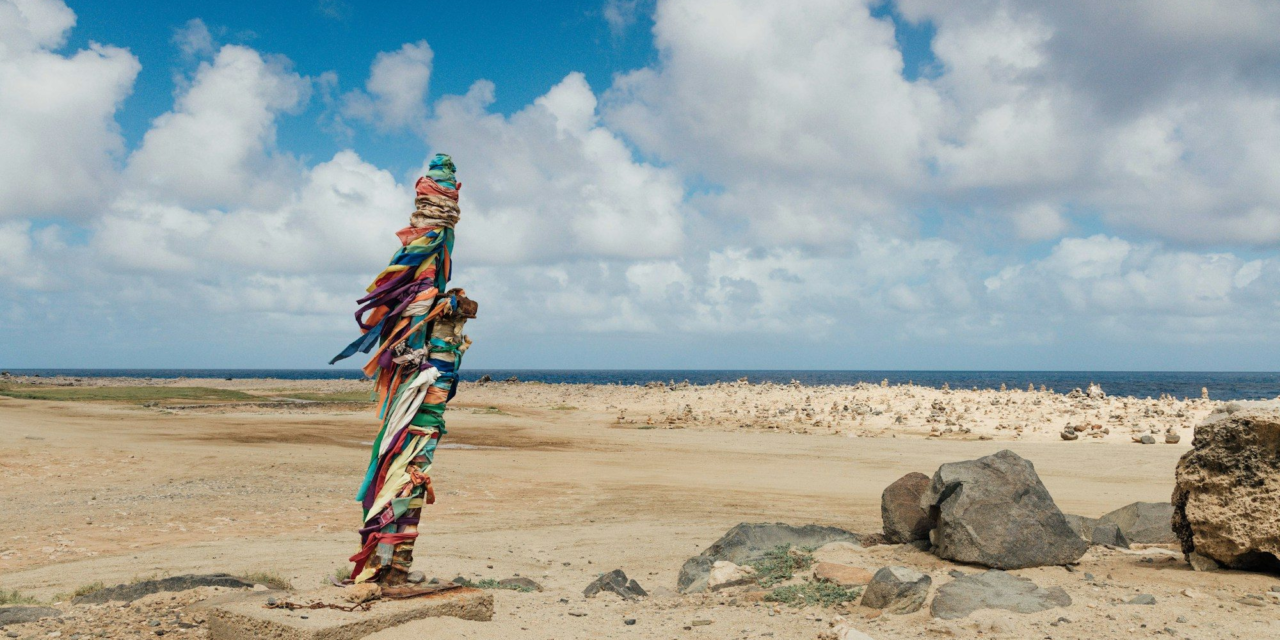
Aruba’s famous beaches are easy to find: walk out of almost any resort and you’re on one. The hidden beaches in Aruba take a little more effort. Some are tiny snorkel coves a few minutes past the hotel strip, a couple are quiet bays in the south, and the rest are wild, windswept beaches on the north coast that you reach by dirt road or on foot. Here’s where to find them, what each is good for, and which ones you should never swim at.
Quick answer: the best hidden beaches in Aruba
- For snorkeling: Tres Trapi and Boca Catalina on the northwest coast.
- For a quiet swim: Santo Largo and Rodger’s Beach in the south.
- For wild scenery: Andicuri, Dos Playa, Boca Prins and Boca Keto on the north coast.
- Swimming warning: Most north-coast beaches have strong currents and undertows. Look, photograph, picnic, but stay out of the water unless conditions are clearly calm and signs allow it.
- Getting there: Some need a 4×4 or a hike. ATVs, UTVs and motorbikes are prohibited inside Arikok National Park.
Hidden beaches at a glance
| Beach | Area | How you get there | Swim? | Facilities |
|---|---|---|---|---|
| Tres Trapi | Northwest, near Malmok | Car, park at the water | Yes, rocky entry | None |
| Boca Catalina | Northwest, Malmok | Car, steps from parking | Yes | Simple shade huts |
| Santo Largo | South, near Savaneta | Car or taxi | Yes, shallow | None |
| Rodger’s Beach | South tip, San Nicolas | Car | Yes, calm bay | Minimal; dive shop next door |
| Andicuri | North coast | Dirt road; 4×4 recommended | Experienced swimmers, watch currents | None |
| Dos Playa | North coast, Arikok | Park day-pass; 4×4 recommended | No | None |
| Boca Prins | North coast, Arikok | Park day-pass; wooden stairs | No | Restaurant nearby |
| Boca Keto | North coast | Hike in from the Daimari area | No | None |
| Westpunt | Behind California Lighthouse | Little-used path | Not recommended | None |
Northwest coves: hidden in plain sight
A few minutes past the Palm Beach high-rises, the road toward the California Lighthouse passes small coves that most visitors drive right by. They’re the easiest hidden beaches to reach and the best for snorkeling.
Tres Trapi
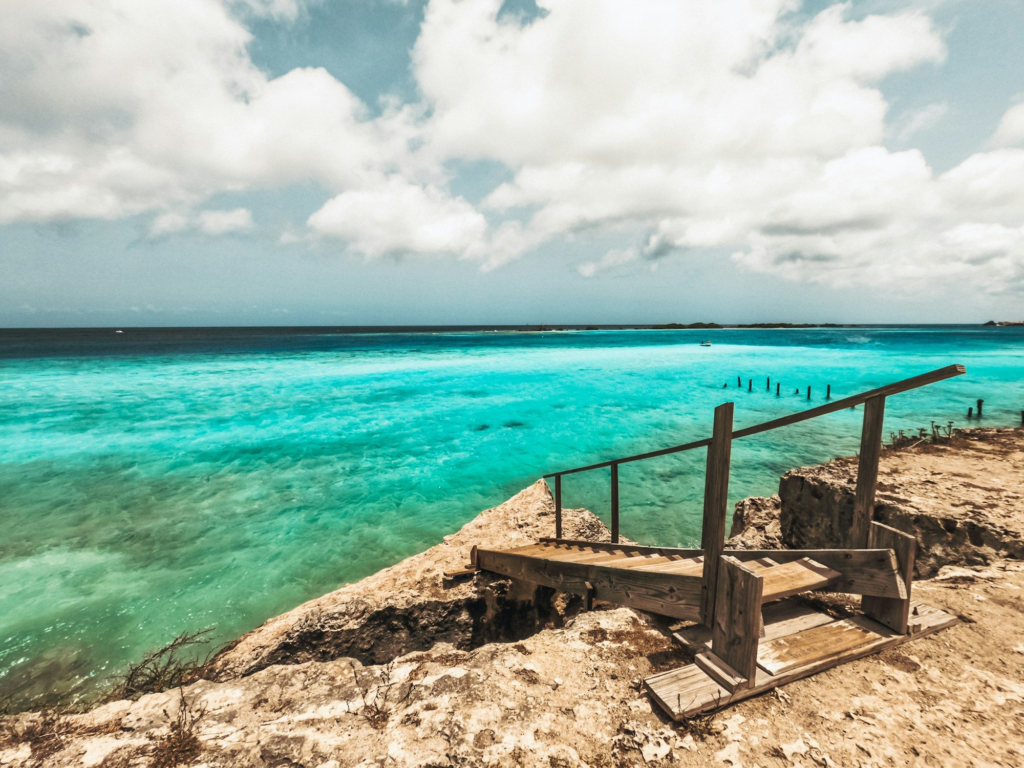
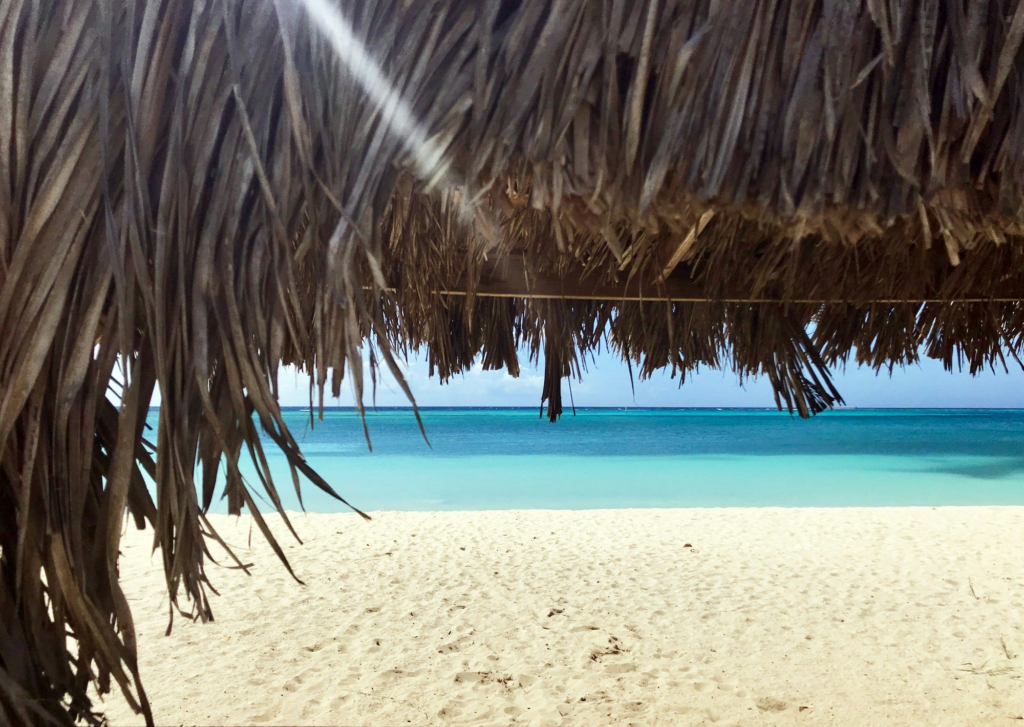
Tres Trapi, Papiamento for “three steps,” isn’t much of a beach. It’s a short rocky shoreline where three steps are cut into a low rock ledge so you can climb down into the water. Islands.com puts it about 5 miles from Eagle Beach, between Malmok and Arashi, and says it’s recognizable by a single thatched umbrella by the parking area. It’s one of the best places on the island to snorkel with sea turtles; Lonely Planet calls sightings almost guaranteed.
- Arrive between 6 and 11 a.m. for the best turtle odds, before they head to deeper water and before the boat crowds, per Islands.com.
- Wear water shoes. The rocks and coral are sharp and the steps have no handrail.
- Keep your distance from turtles and never touch them, and watch for boats.
- There are no facilities and very little shade, so bring water and snacks.
Boca Catalina
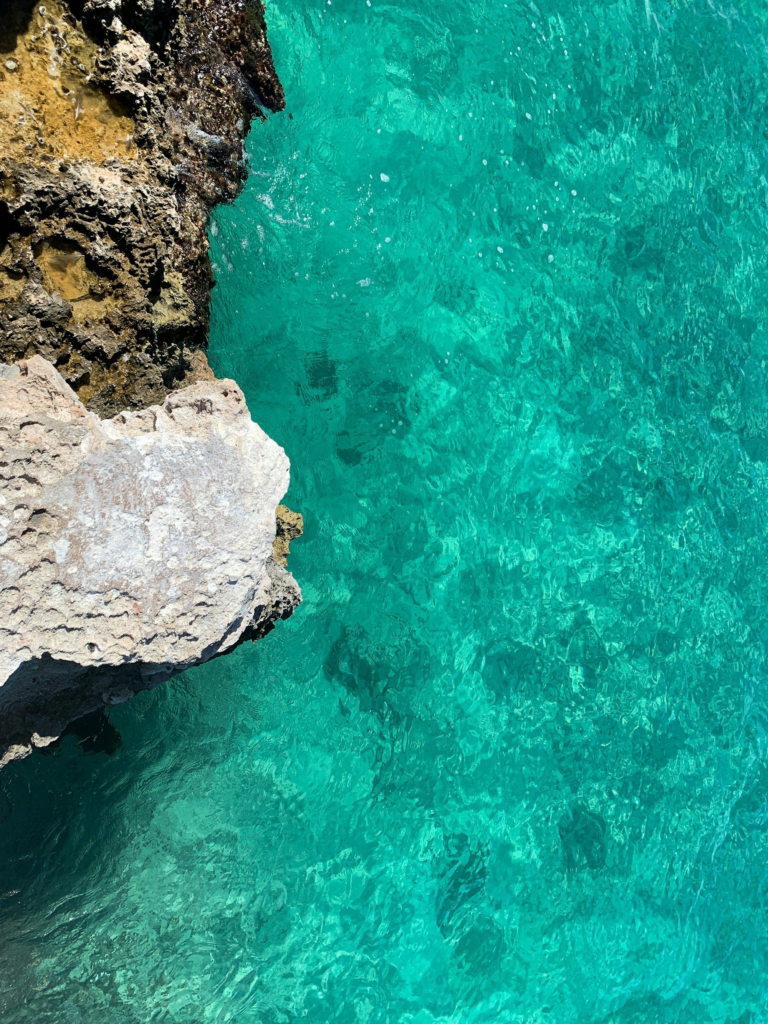
Next door in Malmok, Boca Catalina is a small white-sand bay reached by steps from a roadside parking area, about five minutes from the Palm Beach resorts. The water is calm and clear, good for swimming and snorkeling. The tourism board says you can sometimes have it to yourself on weekdays. It does get snorkel boats, so AFAR recommends going in the morning, and bringing your own gear since there are no rentals.
For more reef-and-wreck ideas, see our guide to the best snorkeling spots in Aruba.
Quiet south-coast beaches
Santo Largo
Between Mangel Halto and Savaneta, Santo Largo (also called Savaneta Beach) is a quiet stretch of white sand split into three small beaches by mangroves. The water is shallow, calm and clear, good for swimming and a little snorkeling. There are no facilities at all, so pack everything you need.
Rodger’s Beach
Baby Beach is the famous one; Rodger’s Beach, a minute’s drive away on a calm bay, is where the locals go. It’s a slim ribbon of fine white sand that’s very quiet on weekdays and popular with local families on weekends. There’s a dive shop next door with gear rental, a shower and a restaurant. The refinery on the horizon isn’t pretty, but it’s part of the story: the beach is named for Captain Rodger, who opened the refinery in 1928. Read our Baby Beach guide to plan a south-coast day.
The wild north coast
The windward coast is where Aruba’s hidden beaches really live. The landscape turns to cactus, limestone and crashing surf, and the beaches are beautiful but dangerous for swimming. A wild-beaches roundup we reviewed (October 2026) says plainly that swimming isn’t recommended at any of them. Several sit inside or near Arikok National Park, which requires a conservation day-pass: USD 22 per adult, free for children under 17, as of October 2026, per the Aruba Conservation Foundation.
The roads are rough. You can do some of it in a regular car plus some walking, but a 4×4 is the safer choice, and ATVs, UTVs and motorbikes are prohibited inside Arikok. Many visitors see this coast on a guided jeep tour, which is the simplest way to reach these beaches without risking a rental car on the dirt tracks. See our north coast guide for the lighthouse, chapel and ruins along the same route.
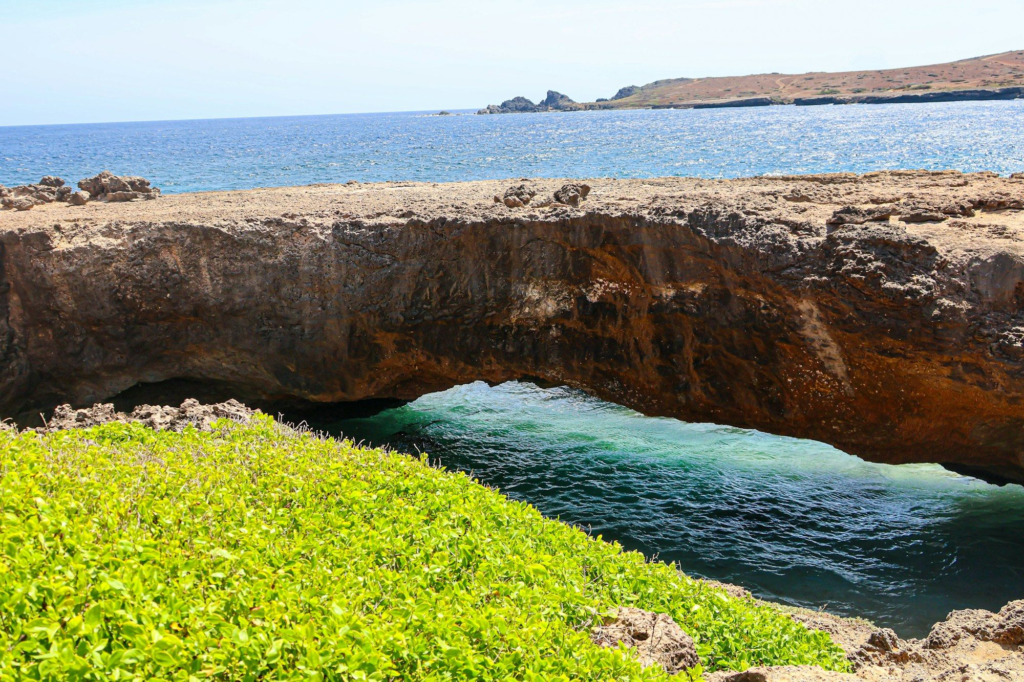
Andicuri Beach
Just south of the collapsed Natural Bridge, Andicuri is a sandy cove enclosed by cliffs, with turquoise and deep-blue water. Bodyboarders love it for the stronger surf, and local competitions are held here. Experienced swimmers can go in, but only with an eye on the currents. There’s no food or water, and driving on the sand and barbecuing are prohibited. The tourism board recommends a 4×4 for the access road. A little further along the dirt road is Black Stone Beach, made of dark stones instead of sand.
Dos Playa
Inside Arikok, Dos Playa is two side-by-side coves cut into the limestone. One is popular with local surfers and has sea-grape trees for shade. The water is rough with a strong undertow, so it’s too rough for anyone but strong, experienced swimmers. Sea turtles nest here, so watch where you step. There are no facilities, and driving or barbecuing on the sand is forbidden.
Boca Prins
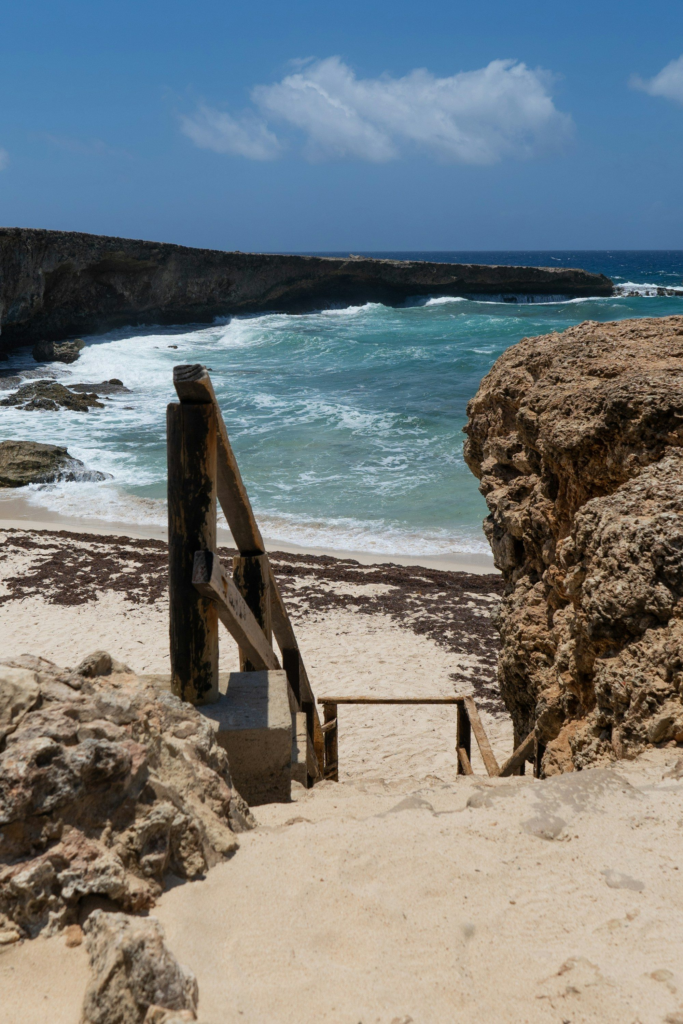
Also inside Arikok, Boca Prins pairs white sand dunes with a rocky bay reached by wooden stairs. A sign on the beach warns of strong, constant undertows, so don’t swim. Boca Prins Restaurant is nearby for food and drinks.
Boca Keto and Boca Daimari
These two are as hidden as Aruba gets. One travel writer we read reached them by parking in the Daimari area and hiking through rocky hills, with a view over Boca Daimari along the way. Expect nothing but sand, waves and wind. Swimming isn’t recommended.
Westpunt
Behind the California Lighthouse on the northwest tip, a little-used path leads to Westpunt, where surf breaks hard against the rocks and the sand has a pink tint from crushed coral. It’s for looking and photos, not swimming.
How to visit hidden beaches safely
- Believe the signs. North-coast undertows are strong and constant. If a beach says no swimming, don’t.
- Go with a plan. There’s no shade, food or water at most of these spots. Bring more water than you think you need.
- Wear proper shoes. Water shoes for rocky entries; closed shoes for hikes.
- Respect the park. Buy an Arikok day-pass at the San Fuego or Vader Piet entrance, stay on marked tracks and never drive on the sand. As of October 2026, the San Fuego Visitor Center is open daily 8:00 a.m. to 3:30 p.m., and the Vader Piet entrance closes at 3:00 p.m.; confirm before you go.
- Watch for turtle nests on Dos Playa and Boca Prins, especially in nesting season (March to September).
- Reef-safe sunscreen only. Since July 2020, Aruba has penalized the import, sale and production of sunscreen containing oxybenzone, so choose an oxybenzone-free formula.
- Take nothing. Leave sand, shells and coral where they are.
Want to compare these with the island’s famous stretches? See our full list of the best beaches in Aruba, or check jeep vs. UTV tours to decide how to tackle the north coast.
FAQ
What is the most secluded beach in Aruba?
Boca Keto and Boca Daimari on the north coast are among the most remote. You reach them by hiking in from the Daimari area. Swimming isn’t recommended.
Can you swim at the north coast beaches in Aruba?
Generally no. Beaches like Boca Prins, Dos Playa and Boca Grandi have strong currents and undertows. At Andicuri, experienced swimmers can go in but need to watch the currents. Stick to the calm west and south coasts for swimming.
Do I need a 4×4 to reach hidden beaches in Aruba?
For north-coast beaches like Andicuri and those in Arikok, a 4×4 is recommended. Northwest coves like Tres Trapi and Boca Catalina, and southern beaches like Santo Largo, are reachable by regular car.
Are UTVs allowed in Arikok National Park?
No. ATVs, UTVs and motorbikes are prohibited in Arikok. Jeeps and regular cars can enter, though a 4×4 is recommended, and you can also hike.
Where can I snorkel with turtles in Aruba?
Tres Trapi on the northwest coast is known for frequent sea turtle sightings. Go early in the morning, keep your distance, and never touch them.
Is there an entrance fee for Dos Playa and Boca Prins?
Yes. Both are inside Arikok National Park. As of October 2026, the conservation day-pass is USD 22 per adult and free for children under 17, sold at the San Fuego and Vader Piet entrances.
Sources
- Beaches and Coves, Aruba Tourism Authority
- Boca Catalina, Aruba Tourism Authority
- Rodgers Beach, Aruba Tourism Authority
- Andicuri Beach, Aruba Tourism Authority
- Dos Playa, Aruba Tourism Authority
- Boca Prins, Aruba Tourism Authority
- Boca Grandi, Aruba Tourism Authority
- Arashi Beach, Aruba Tourism Authority
- 8 Beaches You Must Visit on Your Aruba Vacation, Aruba Tourism Authority
- The Best Wild Beaches in Aruba, Aruba Tourism Authority
- How to Protect Our Sea Turtles During Your Vacation, Aruba Tourism Authority
- Arikok National Park, Aruba Tourism Authority
- Arikok National Park, VisitAruba
- Santo Largo, VisitAruba
- Tres Trapi snorkeling, Islands.com
- Aruba’s Best Beaches, Lonely Planet
- Guide to Arikok National Park, Lonely Planet
- Experiences, Aruba Conservation Foundation
- 10 Must-Visit Beaches in Aruba, AFAR
- Aruba Officially Bans Plastics and Oxybenzone, VisitAruba