Aruba has a reputation as a pricey island, and some of it is earned: resort rooms, sit-down dinners and boat trips add up fast. But a lot of what makes the island special costs little or nothing. The beaches are public, the downtown trolley is free, and a bus ride along the hotel strip costs a few dollars. This guide to Aruba on a budget shows where the savings really are, which costs you can’t get out of, and where it’s worth spending so you don’t skip the experiences people fly here for.
Quick answer: how to do Aruba on a budget
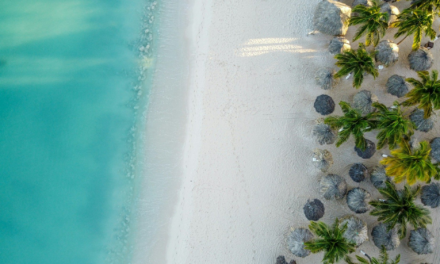
- Beaches are free. Aruba’s beaches are public, and you can lay your own towel down anywhere on the sand. Resort loungers and palapas are for hotel guests.
- Take the bus, not taxis, for short hops. As of October 2026, a single Arubus ride is $2.60 and a day pass is $15 (Arubus).
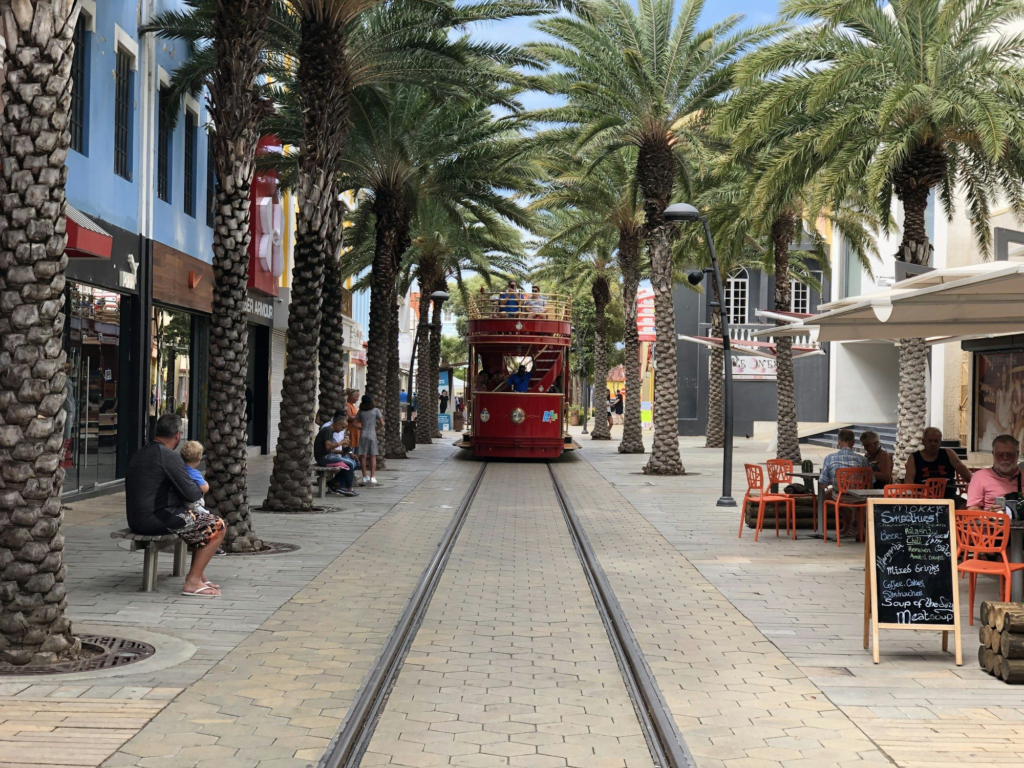
- Ride the free downtown trolley in Oranjestad between the cruise port and Main Street (no Sunday service).
- Drink the tap water. It’s desalinated, safe and good, so you can skip bottled water.
- Budget for the unavoidable: the $20 Sustainability Fee paid with your ED card (air arrivals, as of October 2026).
- Spend on one or two signature experiences (a snorkel sail, an off-road tour of the north coast) and keep everything else simple.
The costs you can’t avoid (plan for them first)
Before you hunt for deals, put the fixed costs into your budget so they don’t catch you out.
The $20 Sustainability Fee
Since July 1, 2024, visitors arriving by air pay a $20 Sustainability Fee, according to the Aruba Tourism Authority. You pay it online through the ED card system before your card is approved. There’s no option to pay at the airport, and the fee page lists only credit cards (Visa, Mastercard, Discover), not cash. Children under eight are exempt, and the fee is charged once per 365 days. Repeat visitors in the same year still pay at the time, then ask for a refund with proof. Our step-by-step guide to the ED card and entry requirements walks through the form.
Getting from the airport
Taxis in Aruba don’t use meters. They charge fixed fares set by the government. The 2026 government fare table published by VisitAruba lists $37 from the airport to the Eagle Beach low-rise hotels and $41 to the Palm Beach high-rises. Both are base fares for up to four people. A $5 surcharge applies on Sundays, from 11 p.m. to 7 a.m., and over the holidays. Fares are fixed by the government. Carry cash in small bills; card payment may be possible when you book through the official taxi app (VisitAruba). Splitting one cab among four people makes it much cheaper per person. Traveling solo with light bags? The bus is the cheapest way to get around once you’ve checked in.
Getting around Aruba on a budget
Transportation is where budget travelers save the most, because the island is small. VisitAruba puts it at about 20 miles long and 6 miles wide.
Arubus: the cheapest way to the beaches
The Arubus public bus network runs between Oranjestad and the hotel areas. Fares as of October 2026, from the Arubus fares page:
| Ticket | Price (USD) | Price (AWG) |
|---|---|---|
| Single trip | $2.60 | 4.50 |
| Retour card (round trip) | $5.00 | 8.75 |
| Day pass | $15.00 | 26.25 |
Retour cards and day passes are sold at the Oranjestad bus station booth and at resort gift shops and other stores listed on the Arubus site. For a beach-and-back day, the $5 retour card is enough.
The bus routes on VisitAruba’s schedule page include the Oranjestad–Malmok line along the hotel strip, an Arashi line, and a Marriott line with departures from early morning until about 11:40 p.m. One catch: the schedule notes that buses don’t stop directly at several low-rise resorts in the Eagle Beach/Druif area. The nearest stop is by the hospital.
The free trolley in Oranjestad
Downtown Oranjestad has a free streetcar that loops between the cruise terminal and Main Street. VisitAruba lists 10 a.m. to 5 p.m., with no service on Sundays, and notes that schedules change by season. Pair it with a walk through town and you have a free half day.
When a rental car or tour is worth it
Buses don’t go everywhere. Lonely Planet notes that public buses don’t reach Arikok National Park, and parts of the north coast are rough going. You can rent a car for one or two days instead of the whole trip and stack your far-flung sights onto those days. If the rough roads put you off, a guided off-road day spares you a 4×4 rental, and nobody in your group has to drive. Our comparison of rental cars, buses, taxis and tours breaks down the options.
Free and nearly free things to do
Beaches, all of them
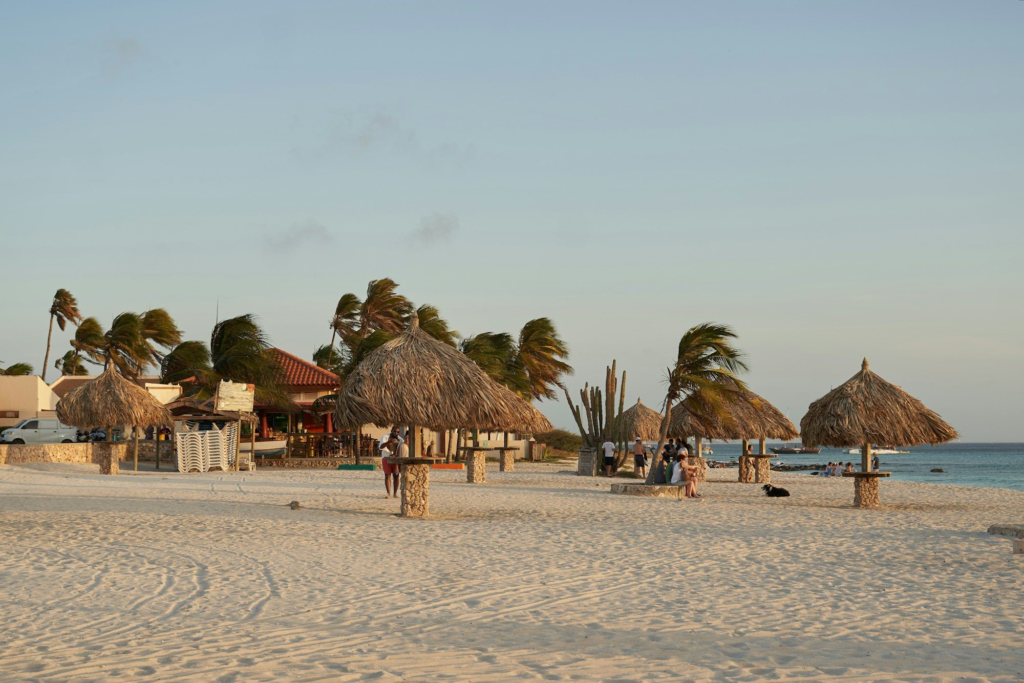
The single biggest money saver: you never pay to get onto a beach. VisitAruba’s travel tips (September 2026) describe Aruba’s beaches as entirely public. Resort palapas are usually hotel-managed, but you’ll find natural shade at public access points. Bring your own towel, an umbrella if you have one, and snorkel gear.
- Eagle Beach is the widest beach on the island, per the Aruba Tourism Authority, with shaded areas, some beach huts and ample parking. It’s also where you’ll find the famous fofoti trees.
- Arashi Beach, near the northern tip, has calm, clear water. The best snorkeling is on the left side as you face the sea, according to aruba.com. It’s also on a bus route.
- Mangel Halto in Pos Chiquito offers shallow water, mangroves, public huts and a wooden sun deck (aruba.com).
- Baby Beach on the south tip has a calm, shallow lagoon and free shade huts (aruba.com).
For the full rundown, see the best beaches in Aruba.
Sights that cost little or nothing
- Bushiribana gold mill ruins on the north coast are a relic of Aruba’s gold rush, which the tourism authority says ran from 1824 to 1916. A budget guide from Exploration Vacation (updated March 2026) lists the ruins as free.
- Casibari rock formations have steps and trails to the top of the boulders for 360-degree views (aruba.com). The same guide names Casibari and Ayo as free alternatives to a paid Arikok visit.
- San Nicolas murals. The island’s second-largest town has more than 50 hand-painted murals, per Wikipedia. Walking around is free, but you may pay for street parking. Use our self-guided San Nicolas street art tour.
- California Lighthouse. Admission is $5 as of October 2026, you can climb to the top, no reservation is needed, and it’s open daily from 9 a.m. to 7 p.m., per the Aruba Tourism Authority. Check current status before you go.
- Hooiberg is a hill rising 540 feet in the middle of the island. About 600 steps lead to the summit (aruba.com). Go early, before the heat builds.
Arikok National Park: a good-value half day
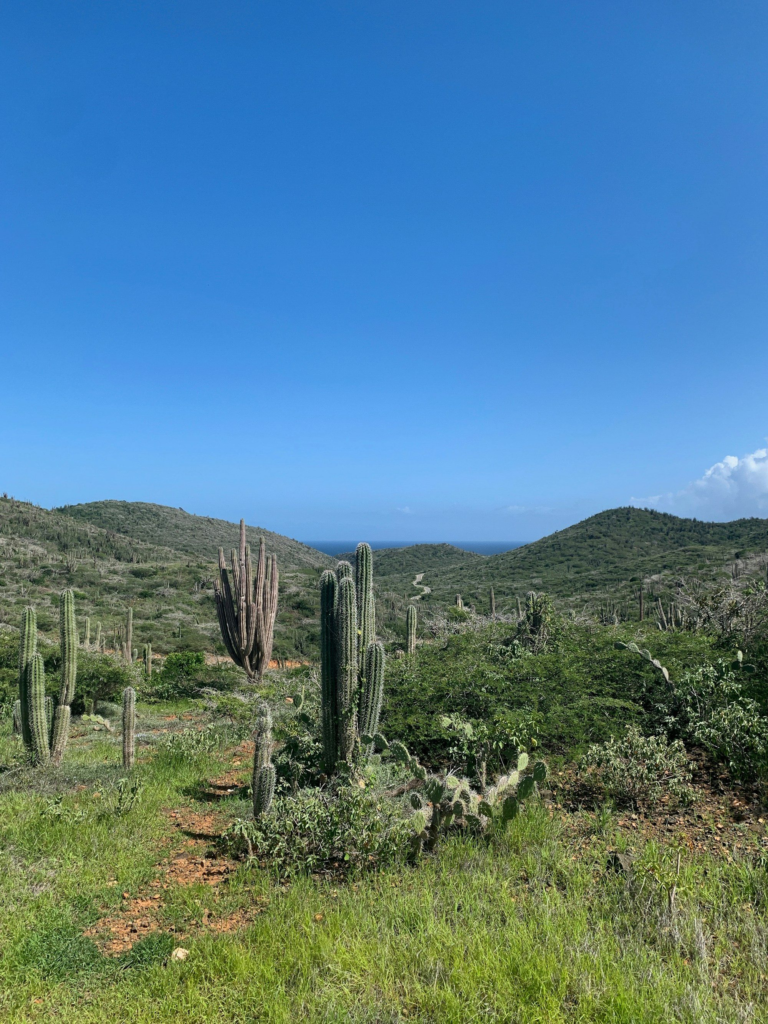
Arikok covers about 20% of the island, per Wikipedia. The park has caves with Arawak drawings and more than 35 km of nature trails, according to In Your Pocket. The Aruba Conservation Foundation, which manages the park, lists a Conservation day-pass of $22 per adult, free for children under 17, as of October 2026. Passes are sold at the San Fuego and Vader Piet entrances. The San Fuego Visitor Center is open daily from 8 a.m. to 3:30 p.m., and the Vader Piet entrance closes at 3 p.m. Our Arikok National Park guide covers the stops.
Park rules matter on a budget too. ATVs, UTVs and motorbikes are prohibited in the park (Aruba Conservation Foundation), and swimming at Boca Prins is prohibited because of strong currents (Boardwalk Aruba). Don’t plan a self-drive ATV day around the park.
Eating well for less
Shop at supermarkets and eat breakfast in
VisitAruba’s travel tips suggest stocking up on breakfast items, snacks and drinks at local supermarkets instead of buying everything at the resort. Booking a room or condo with a kitchenette lets you make breakfast and pack beach lunches. Over a week, that’s often the biggest food saving. The plastics law means you should bring your own tote. Aruba’s 2019 ordinance bans single-use plastic bags with handles, among other items, according to ELAW’s summary of the law.
Skip bottled water
The Aruba Tourism Authority says tap water is safe to drink. It’s made from desalinated seawater and then remineralized. Refill a reusable bottle and save the cost of cases of bottled water.
Local spots and happy hours
- Zeerovers in Savaneta is a fish pier where you pick from the day’s catch and it’s cooked on the spot. The kitchen is open 11 a.m. to 9 p.m. and it’s closed Mondays, per aruba.com. Bring cash; some visitors report cards being accepted, but don’t count on it. Portions are sold by weight rather than from a set menu (Frommer’s). Read our Zeerovers guide before you go.
- Happy hours. Surfside Beach Bar near Oranjestad runs happy hour three times a day, with half-price beers, cocktails and selected wines, per aruba.com. Check current times when you arrive.
- Snack like a local. Snack shops and bakeries are often cheaper than hotel cafés. Look for local dishes and snacks rather than hotel menus.
Money tips that add up
- Paying in dollars is fine. US dollars are widely accepted, according to the Aruba Tourism Authority, but you may get change in Aruban florins. The same page notes that some businesses won’t take $50 or $100 bills, so bring smaller notes.
- Exchange rates vary by place. The tourism authority lists slightly different florin rates at banks, supermarkets and gas stations, and restaurants and shops. Paying by card avoids the guesswork. Tell your card issuer you’re traveling.
- Tipping: it isn’t mandatory, but 15% to 20% is customary, per aruba.com. Check your restaurant bill first so you don’t tip twice if a service charge is already on it.
- Keep some cash for small purchases and places like Zeerovers.
Where to splurge (and why it’s worth it)
Doing Aruba cheaply doesn’t mean skipping the big experiences. It means choosing one or two on purpose. These are hard or impossible to do on your own:
- A snorkel or sunset sail. Reefs and wrecks offshore are easiest to reach by boat. Compare morning snorkel trips and sunset sails in our catamaran cruise guide.
- An off-road day on the north coast. The Natural Pool can’t be reached by regular car. The tourism authority points to 4×4 tours for inexperienced drivers. A guided jeep tour saves you a 4×4 rental and the risk of damaging it on rocky tracks.
Not sure which to pick? Our list of the best tours in Aruba compares the main options by price level and time.
Sample daily budget plan
We won’t list hotel or restaurant prices, since those change constantly. Here’s a sample day built from the fixed prices above:
| Item | Low-cost choice | Price as of October 2026 |
|---|---|---|
| Beach access | Any public beach | Free |
| Transport | Arubus retour card | $5.00 |
| Downtown sightseeing | Free Oranjestad trolley | Free |
| Drinking water | Tap water in a refillable bottle | Free |
| Viewpoint | California Lighthouse admission | $5.00 |
| Lunch | Supermarket picnic or a local snack shop | Varies |
FAQ
Is Aruba expensive to visit?
Accommodation and sit-down dining can be pricey, but many of Aruba’s highlights are free, including every public beach, the downtown trolley and several historic sites. With buses, supermarket meals and tap water, daily costs drop a lot.
Are beaches in Aruba free?
Yes. Aruba’s beaches are public, so you can use any of them at no cost. Resort loungers and palapas are generally for hotel guests, and some islands reached by boat, like Renaissance Island, are private.
How much is the bus in Aruba?
As of October 2026, the official Arubus fares are $2.60 for a single trip, $5.00 for a retour (round-trip) card and $15.00 for a day pass.
Do I have to pay the Aruba Sustainability Fee?
If you arrive by air and fill out an ED card as a non-resident, yes. The fee is $20, paid by credit card when you complete the ED card. Children under eight are exempt.
Can I drink the tap water in Aruba?
Yes. The Aruba Tourism Authority says the island’s desalinated tap water is safe and high quality, so a refillable bottle saves money.
Should I rent a car in Aruba to save money?
It depends on your plans. Buses cover the hotel strip and Oranjestad cheaply. For Arikok and the north coast, a one- or two-day rental or a single guided tour is usually better value than a car for the whole trip.
Sources
- Arubus – Fares
- Aruba Tourism Authority – Sustainability Fee
- VisitAruba – Taxis and Limos (2026 fare table)
- VisitAruba – Bus Schedule
- VisitAruba – Streetcar Trolley
- VisitAruba – Aruba Travel Tips: How to Get Around, Public Beaches and More
- Aruba Conservation Foundation – Experiences (Arikok National Park)
- Lonely Planet – Guide to Arikok National Park
- Boardwalk Aruba – Arikok National Park in Aruba, An Introduction
- In Your Pocket – Arikok National Park
- Wikipedia – Arikok National Park
- Aruba Tourism Authority – Eagle Beach
- Aruba Tourism Authority – Arashi Beach
- Aruba Tourism Authority – Mangel Halto
- Aruba Tourism Authority – Baby Beach
- Aruba Tourism Authority – Bushiribana Gold Mill Ruins
- Aruba Tourism Authority – Casibari Rock Formations
- Aruba Tourism Authority – California Lighthouse
- Aruba Tourism Authority – Hooiberg
- Aruba Tourism Authority – Natural Pool
- Exploration Vacation – Five Fun and Cheap Things to Do in Aruba
- Wikipedia – San Nicolaas
- Aruba Tourism Authority – Zeerover
- Frommer’s – Zeerover Pescaderia
- Aruba Tourism Authority – Surfside Beach
- Aruba Tourism Authority – Drinking Water in Aruba
- ELAW – Aruba: Select Plastic Laws
- Aruba Tourism Authority – Currency
- Citizen Daily Post – Are the Beaches Free in Aruba?