If you’re planning on kitesurfing in Aruba, the wind is the reason to come. The island’s trade winds blow most of the year, and the west coast has a long stretch of shallow, flat water where beginners can stand up between attempts. Over on the southeast tip there’s a wavy, onshore spot that keeps advanced riders busy. Windsurfers get the same conditions. This guide covers the main spots, the windiest months, what lessons involve, and the safety points worth knowing before you rig up.
Kitesurfing Aruba: quick answer
- Why Aruba: steady trade winds. Aruba’s tourism authority describes them as a constant 15 knots, and kite travel guides put typical days at 20–25 knots.
- Best spot to learn: Fisherman’s Huts (Hadicurari Beach) in the Noord/Malmok area, with shallow, flat water and several kite and windsurf schools.
- Advanced spot: Boca Grandi on the southeast tip, with onshore wind, waves and a strong current. Swimming there is strongly discouraged.
- Windiest stretch: roughly May through July. September through November is lighter.
- Big event: Aruba Hi-Winds, held every year since 1987. It’s usually held in late spring or early summer (the 2026 edition ran May 13–18); check this year’s dates.
Why Aruba’s trade winds are so good for wind sports
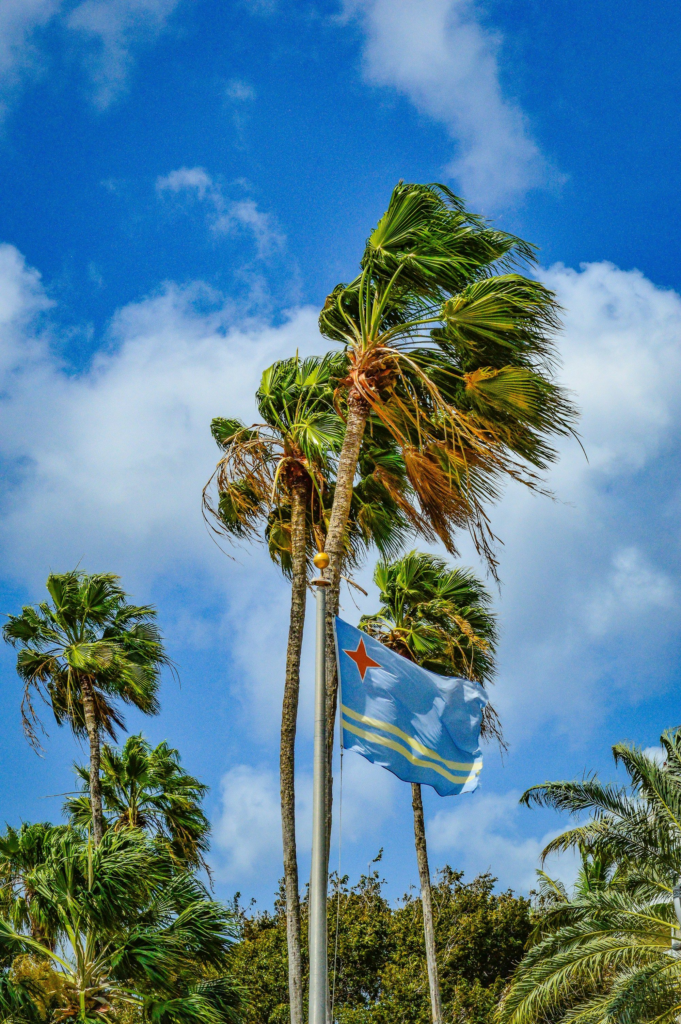
Aruba lies far enough south that hurricanes rarely reach it, and it gets a near-constant ocean breeze. The official Aruba weather and climate page calls the trade winds almost ever-present and says they pick up most between May and October. On its kite and windsurfing page, the tourism authority puts the baseline at a constant 15 knots.
Riders’ guides go further. Frommer’s says the strongest winds come from May through July, averaging 20 to 25 knots, and the calmest stretch runs September through November at 10 to 20 knots. The IKSURFMAG Aruba guide lists 20–25 knots as typical, 15–20 on lighter days and 30–35 on strong ones. It says most riders use kites of about 7 to 12 meters.
The warmth matters too. IKSURFMAG puts the water at about 26°C (79°F) all year, and a local windsurfing and kiteboarding guide notes that you won’t need a wetsuit. A rash guard and good sun protection are usually enough.
The main kitesurfing and windsurfing spots
Fisherman’s Huts (Hadicurari Beach)
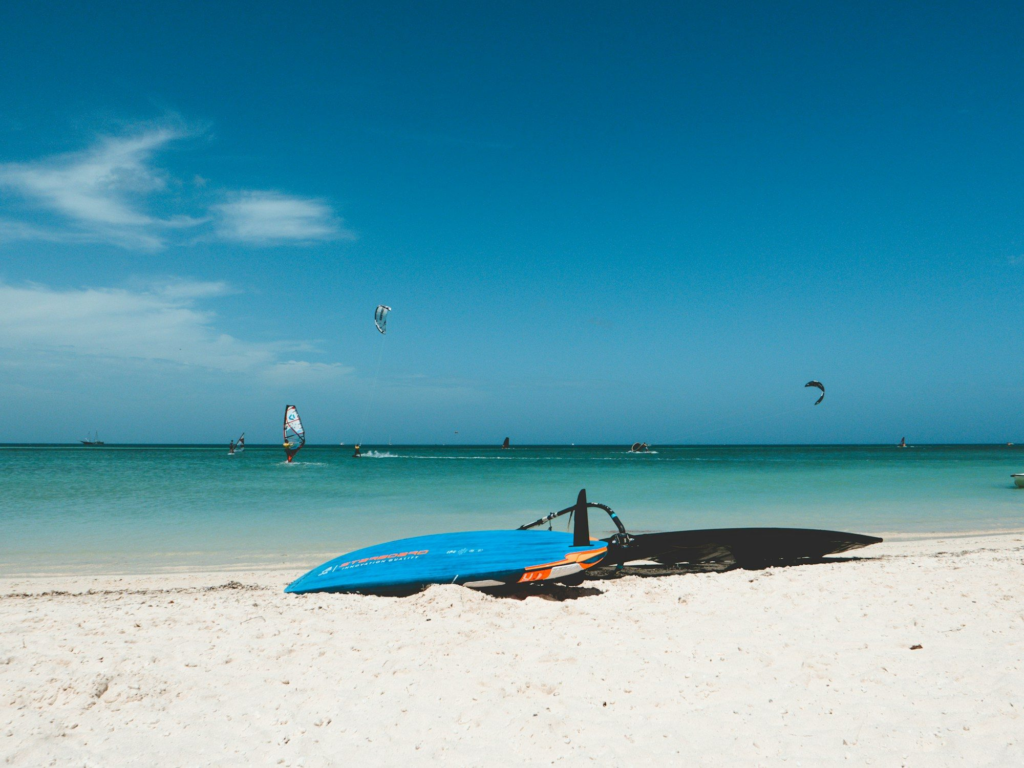
Most people learn here, and most schools are based here. The beach sits north of the Palm Beach high-rise hotels, between The Ritz-Carlton and Malmok Beach. The Aruba Tourism Authority ranks it as the island’s top spot for learning to windsurf and kite. The name comes from the small huts fishermen once built along the shore. Public parking and bus access are listed for the beach.
The appeal is the water. Frommer’s says it stays shallow for more than 60 meters (about 200 feet) from shore, and a 2023 surf-magazin spot guide describes a waist-deep standing area about 50 meters wide. Further out, past where the waves stop breaking, advanced slalom and foil riders head for a stretch known as the “blue highway.”
The tradeoff is an offshore breeze. It flattens the water but turns gusty close to the beach because of the hotels and other buildings upwind. It can also carry a struggling rider out to sea. IKSURFMAG notes that the schools offer a paid rescue service for riders who drift downwind.
Boca Grandi
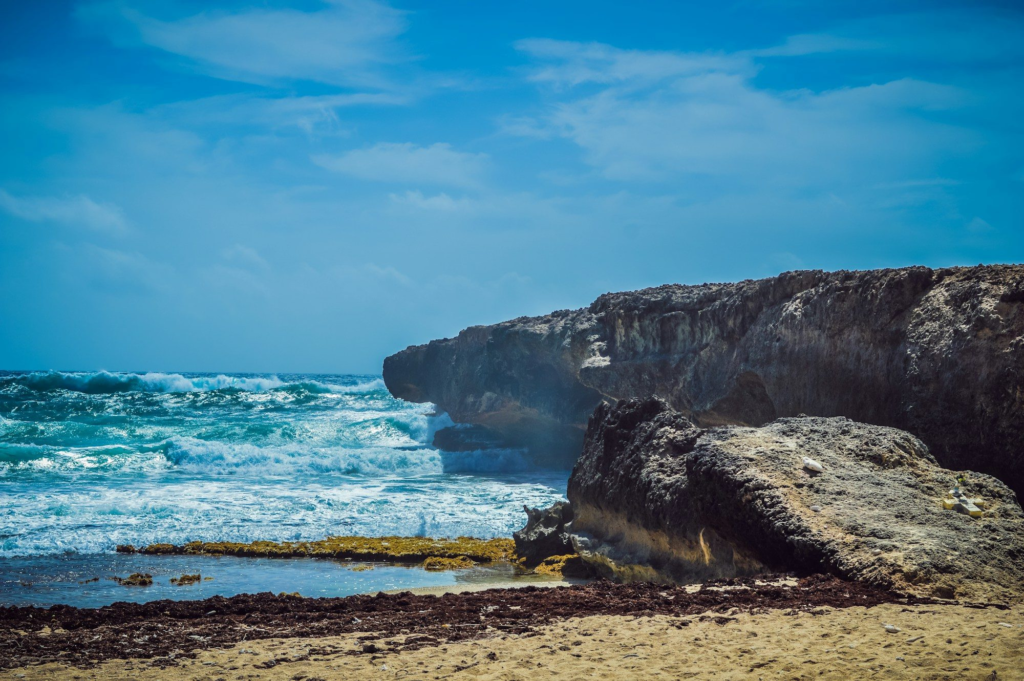
This is where advanced riders go. Boca Grandi is on the east side of Aruba’s southern tip, about five minutes’ drive from San Nicolas, and you’ll find it by the big red anchor at the entrance. The wind is onshore and very steady, and the bay has waves. Advanced riders come here for the waves, and spectators come to watch them.
Boca Grandi is not a swimming beach. The tourism authority warns that the current is strong and strongly discourages swimming. Frommer’s describes a strong outward current and calls the spot suitable for advanced riders only. IKSURFMAG adds that it’s roughly a 50-minute drive from the Noord hotel area and isn’t served by taxis or buses, so you’ll need a rental car.
Other spots
- Barcadera: a lagoon below the airport, sheltered by a mangrove-covered reef. Surf-magazin reports choppier water and slightly more wind than the Huts, plus boat traffic in and out of the lagoon.
- Rodger’s Beach: just around the corner from Boca Grandi. It can produce serious waves on the right day, but even locals struggle to predict when that will be.
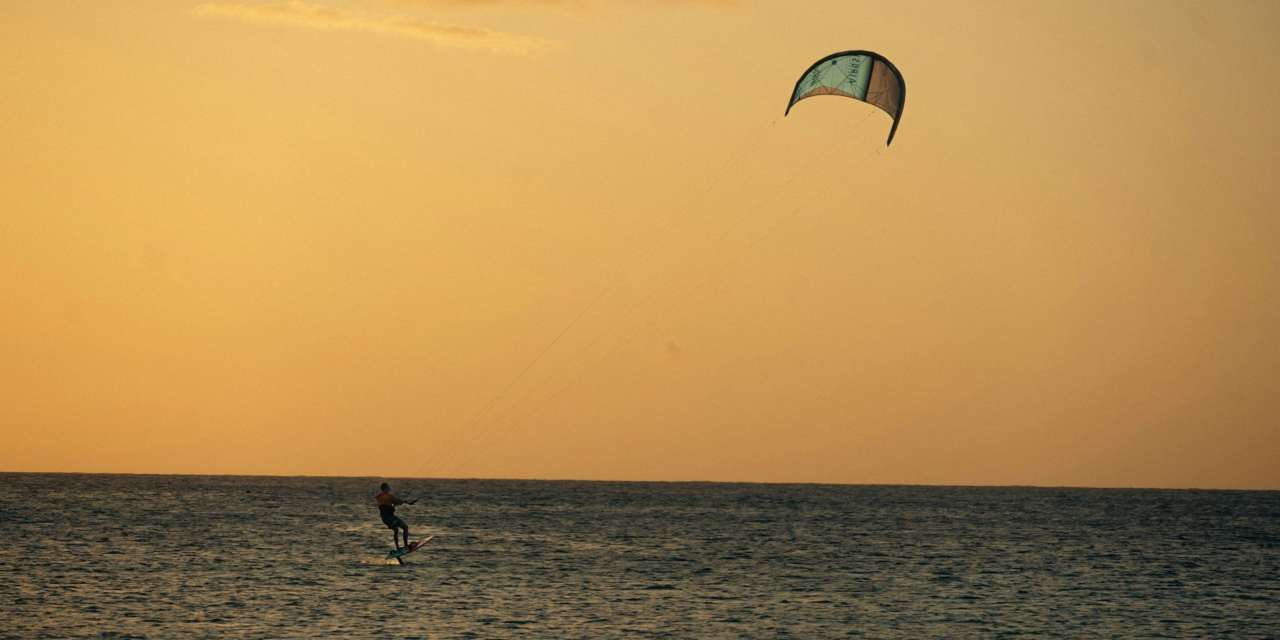
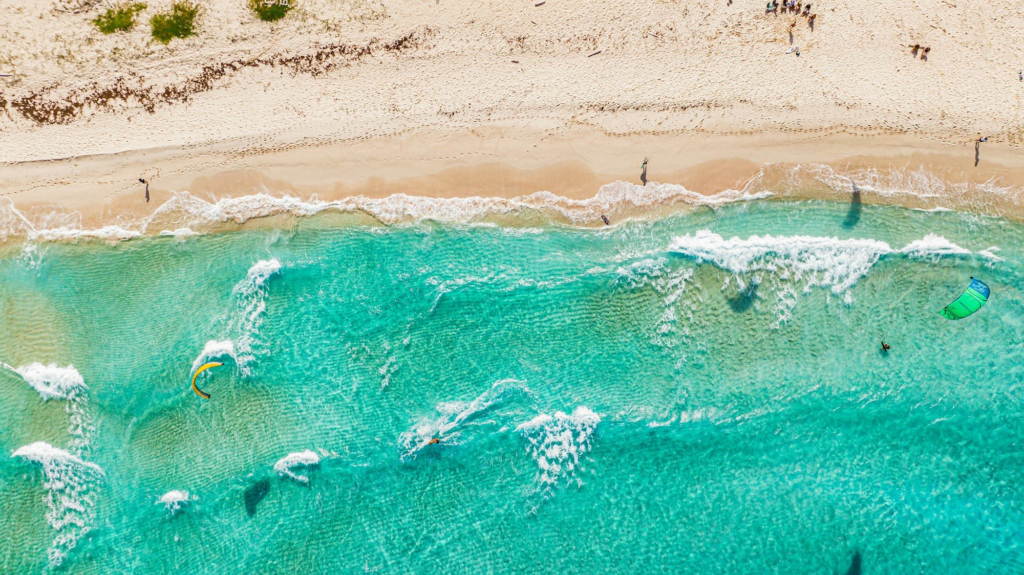
- Arashi Beach: at the island’s northwest tip. Our featured photo shows a kite session there, but it isn’t one of the established spots in the guides above, so check conditions locally first.
Spot comparison
| Spot | Area | Wind direction | Water | Best for |
|---|---|---|---|---|
| Fisherman’s Huts | Noord / Malmok, west coast | Offshore, gusty near shore | Shallow and flat | Lessons, freestyle, slalom |
| Boca Grandi | Southeast tip, near San Nicolas | Onshore, very steady | Waves, strong current | Advanced kite and wave riding |
| Barcadera | Below the airport | Sideshore in the morning | Lagoon chop | Freestyle in chop |
| Rodger’s Beach | Southern tip | Similar to Boca Grandi | Waves on the right day | Experienced wave sailors |
When to go: the best months for wind
You can ride in Aruba most of the year. Ask three sources for the best season, though, and you’ll get three slightly different answers:
- May to July: the strongest wind, according to Frommer’s, at 20–25 knots on average.
- December to August: IKSURFMAG lists all of these months as windy and says Aruba doesn’t really have one windy season.
- September and October: the most likely months for light days. Passing storms during hurricane season can kill the breeze, as the official climate page also notes.
The wind also shifts during the day. At Fisherman’s Huts, IKSURFMAG says it’s strongest from about 11 a.m. to 3 p.m. At Boca Grandi, surf-magazin says mornings from sunrise are good, the wind eases around midday, and it builds again from about 3 p.m. until dark. For more on picking your dates, see our guide to the best time to visit Aruba. If your trip falls in late summer or fall, our Aruba hurricane season explainer covers what to expect.
Learning to kitesurf in Aruba: what lessons involve
Most beginners do their first lessons at Fisherman’s Huts and move to Boca Grandi once they’re confident. An October 2022 Aruba.com kiteboarding article describes a four-level progression. You start with gear setup, safety systems and basic kite control. Next come body-dragging, water relaunches and water starts. Then you learn to ride both ways and upwind, and finally to make basic jumps.
The same article says most students reach independent riding after about four to six lessons, though progress varies. It suggests choosing an IKO-certified school, which you can check on the IKO website. You’ll need basic swimming skills but not great strength, and students range from roughly 10 to 75 years old depending on weight, mobility and focus.
Some beginners find windsurfing a gentler start, since there’s no kite overhead to manage. On the shallow sandbar at the Huts, you can stand up, reset and try again. Lesson and rental prices change by school and season, so compare current rates directly before you book.
Aruba Hi-Winds: the island’s big wind sports week
Local windsurfers Anthony Blok and Ruben Croes came up with the idea in 1986, and the first Aruba Hi-Winds was held in 1987, according to Aruba.com. It started at Eagle Beach before moving to Fisherman’s Huts. Kitesurfing was added in 2002, and most kite events are held at Boca Grandi. Today’s program also includes foiling, stand-up paddle, Sunfish sailing and a mountain bike race, with beach parties and live music in the evenings.
The event is usually held in late spring or early summer. The 2026 edition ran May 13–18, according to the 2026 event listing and the PWA World Tour calendar. That year it also hosted a PWA youth windsurfing world cup at Fisherman’s Huts, and the event listing said entry was free for spectators. Check this year’s dates before planning around it.
You’ll probably hear the name Sarah-Quita Offringa at the Huts. The Aruba-born windsurfer won three PWA world titles: freestyle in 2010 and 2011, and slalom in 2011, according to Wikipedia. The tourism authority says that when she isn’t competing, you can often find her on the water at Hadicurari.
Safety tips before you ride
- Know the offshore risk at the Huts. The wind there blows away from the beach. If your gear fails or you get tired, you’ll drift away from shore, not back toward it. Ride where a school’s rescue service covers you, and stay within your ability.
- Treat Boca Grandi as experts-only water. The current is strong, and the tourism authority strongly discourages swimming there.
- Watch your sun exposure. Hours on the water add up quickly. Since July 2020, Aruba has penalized the import, sale and production of sunscreen with oxybenzone, a chemical linked to reef damage (Visit Aruba). Pick a reef-safe, oxybenzone-free sunscreen.
- Give swimmers space. Families also use the shallow water at Hadicurari, so launch and land where your school tells you to.
Not riding? Other ways to enjoy the wind
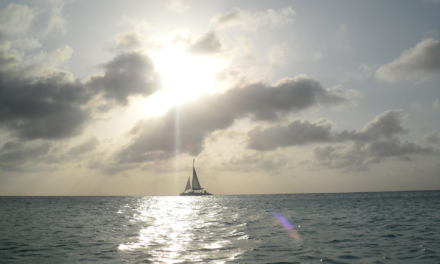
Non-riders in your group can still enjoy the water. Watching kites at Boca Grandi fits easily into a day at Baby Beach, which is a few minutes away. On the west coast, the same breeze pushes sailing trips along. A catamaran cruise gets you out on the water without any lessons, and there’s plenty more on our list of the best beaches in Aruba and in our Palm Beach guide.
FAQ
Is Aruba good for beginner kitesurfers?
Yes. Fisherman’s Huts has shallow, flat water with a wide standing area and several schools on the beach. The offshore wind means you should learn with a school that offers a rescue service.
What is the best month for kitesurfing in Aruba?
May through July usually has the strongest wind, averaging 20–25 knots according to Frommer’s. September and October are most likely to bring light days.
What size kite should I bring to Aruba?
IKSURFMAG says most riders use kites of about 7 to 12 meters to cover typical days of 20–25 knots and lighter days of 15–20 knots.
Do I need a wetsuit to kitesurf in Aruba?
Usually not. The water is around 26°C (79°F) year-round. Most riders wear a rash guard and sun protection.
Can you swim at Boca Grandi?
It isn’t recommended. The Aruba Tourism Authority says the current is strong and strongly discourages swimming there.
When is Aruba Hi-Winds?
It’s usually held in late spring or early summer (the 2026 edition ran May 13–18). Check this year’s dates before you book.
Sources
- Kite and Windsurfing – Aruba.com
- Hadicurari Beach – Aruba.com
- Boca Grandi – Aruba.com
- Weather and Climate – Aruba.com
- Aruba Hi-Winds: Caribbean’s Longest-Running Annual Sporting Event – Aruba.com
- Kiteboarding in Aruba – Aruba.com
- Aruba Hi-Winds 2026 – VisitAruba.com
- 2026 Aruba Hi-Winds Youth World Cup – PWA World Tour
- Windsurfing in Aruba – Frommer’s
- Aruba Kitesurfing Holiday and Travel Guide – IKSURFMAG
- Fisherman’s Huts – VisitAruba.com
- Spot Guide: The Best Windsurfing Spots in Aruba – surf-magazin
- Windsurfing and Kiteboarding in Aruba – Boardwalk Aruba
- Sarah-Quita Offringa – Wikipedia
- Aruba Officially Bans Plastics and Oxybenzone – VisitAruba.com