Aruba hurricane season runs from June 1 to November 30, the same months as the rest of the Atlantic. Aruba’s reputation as an island “outside the hurricane belt” is mostly earned: direct hurricane strikes are very rare, and most storms pass well to the north. The full story has more nuance, though, and it affects how you plan a summer or fall trip. Here is what the official sources say, how often storms have actually affected the island, and what a nearby storm really means for your vacation.
Quick answer: is Aruba safe during hurricane season?
- Season dates: June 1 to November 30.
- Direct hits: very rare. Aruba’s tourism authority says the Atlantic hurricane database shows no direct hurricane hit since records began in 1851.
- “Outside the belt”? Mostly. The regional meteorological service describes the ABC islands as sitting on the southern fringe of the hurricane belt rather than fully outside it.
- Close calls: roughly once every four years a tropical cyclone passes within about 93 miles (150 km), usually to the north and usually without serious bad weather.
- What you might notice: extra rain, rough seas, gusty winds or, oddly, a total lack of wind that makes it feel hotter.
Why Aruba rarely gets hurricanes
The Aruba Tourism Authority says Aruba lies outside the Caribbean hurricane belt, well to the south of where most storms track. The island sits about 15 miles off the coast of Venezuela according to Aruba.com. The Aruba Tourism Authority’s hurricane guide notes that the island is geologically part of South America and sits on the South American continental shelf, so storms that form in the Atlantic usually pass it by.
That geography is why Aruba’s official tourism site places the island outside the hurricane belt and calls hurricanes rare.
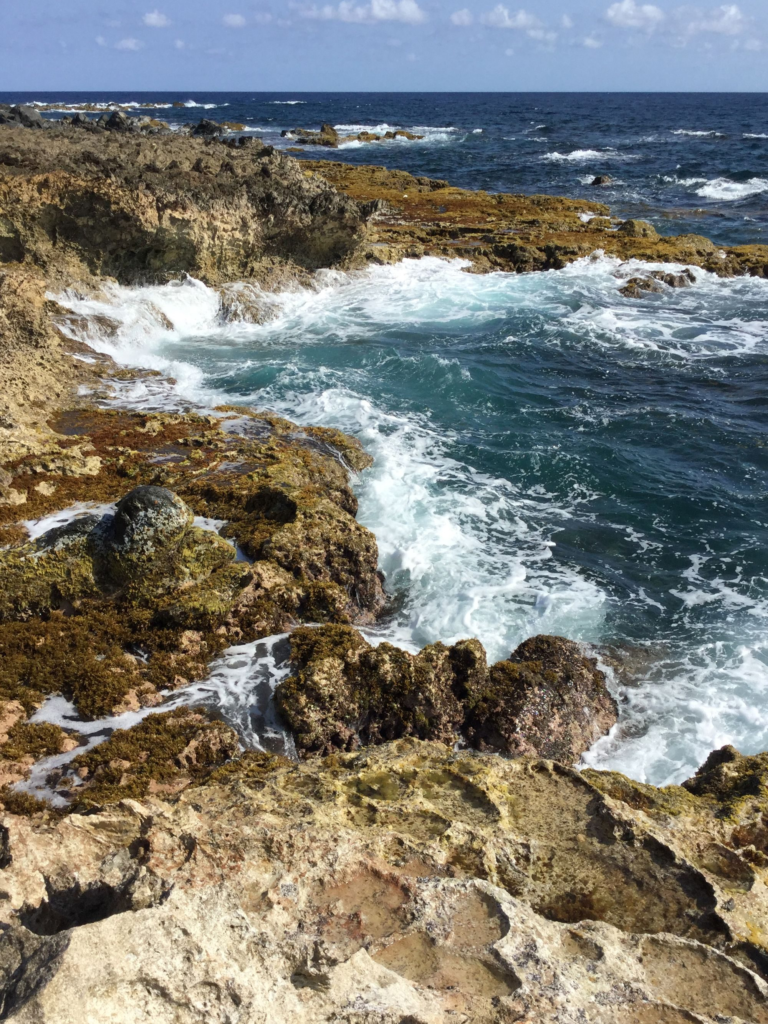
Is Aruba really outside the hurricane belt?
This is where the sources differ in tone. The tourism authority says Aruba is outside the belt. The Meteorological Department Curaçao’s publication on hurricanes and tropical storms, which covers Aruba, Bonaire and Curaçao together, puts it more carefully: the islands lie on the southern fringe of the hurricane belt, their hurricane experience is very small, but they are not entirely outside it.
The practical difference is small. Both agree that serious damage is rare. The meteorological publication estimates that considerable damage from a storm passing over or just south of the islands happens roughly once a century, while a tropical cyclone passes within about 150 km (93 miles) roughly once every four years, mostly to the north and without serious bad weather.
A third source, the storm-history site HurricaneCity, uses a looser definition that includes storms that only brushed the islands. It counts 23 tropical systems brushing or hitting the ABC islands in its records (the earliest in 1876, the latest in 2016), which it works out to about one every 6.7 years. It lists four direct hurricane hits on the ABC area, the most recent in 1932, which is why you will see different numbers in different places. How often the islands are “affected” depends on how close a storm has to come to count.
Storms that have affected Aruba
The record shows that a storm does not need to make landfall to cause problems. These are the events the meteorological and tourism sources highlight, plus HurricaneCity’s note on Matthew.
| Year | Storm | What happened |
|---|---|---|
| 1954 | Hurricane Hazel | Center passed about 56 miles (90 km) north of the islands. Flash floods caused damage. |
| 1988 | Joan | Passed just south of the islands as a tropical storm, causing damage. |
| 2004 | Hurricane Ivan | Eye passed about 81 miles (130 km) north. Heavy rain caused significant flooding and material damage on Aruba, and high waves reshaped parts of the coastline. |
| 2005 | Emily | Closest approach about 109 miles (175 km). Tropical storm winds stayed north of the islands. |
| 2007 | Hurricane Felix | Came within about 50 miles (80 km), the closest approach in more than a century, according to Aruba.com. Rough seas and strong winds, but damaging winds stayed mostly offshore. |
| 2016 | Hurricane Matthew | Strengthened while about 80 miles north of Aruba. |
Sources for this table: the Meteorological Department Curaçao publication, the Aruba.com hurricane guide and HurricaneCity.
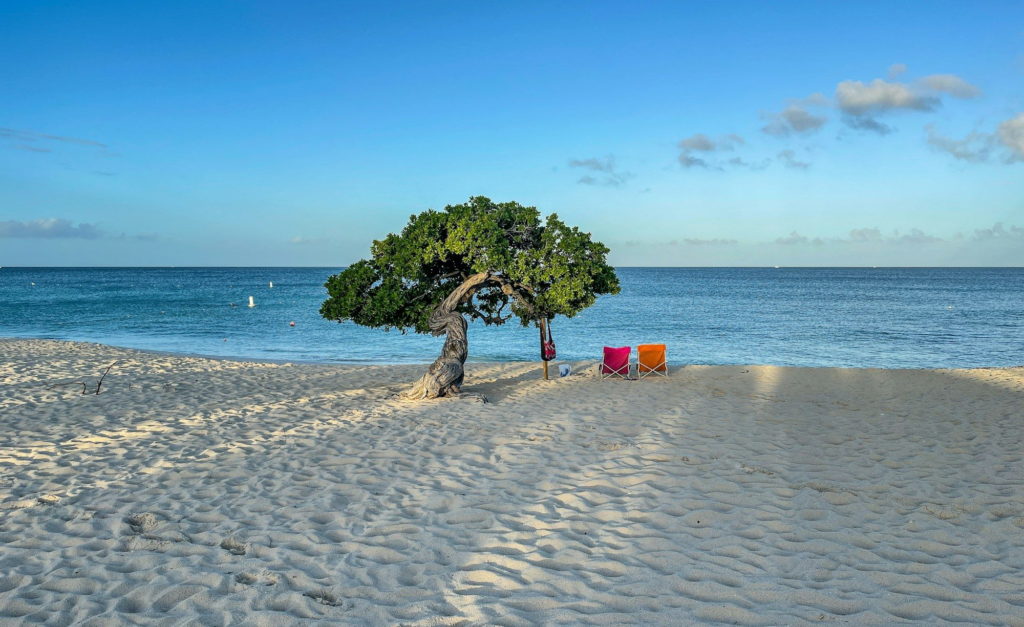
What a nearby storm actually feels like in Aruba
When a storm passes north of the island, the Aruba Tourism Authority lists these possible effects:
- More rain than usual, sometimes in heavy bursts.
- Gusty winds.
- No wind at all. A passing system can disrupt the trade winds for a day or two, and without the breeze it feels much hotter.
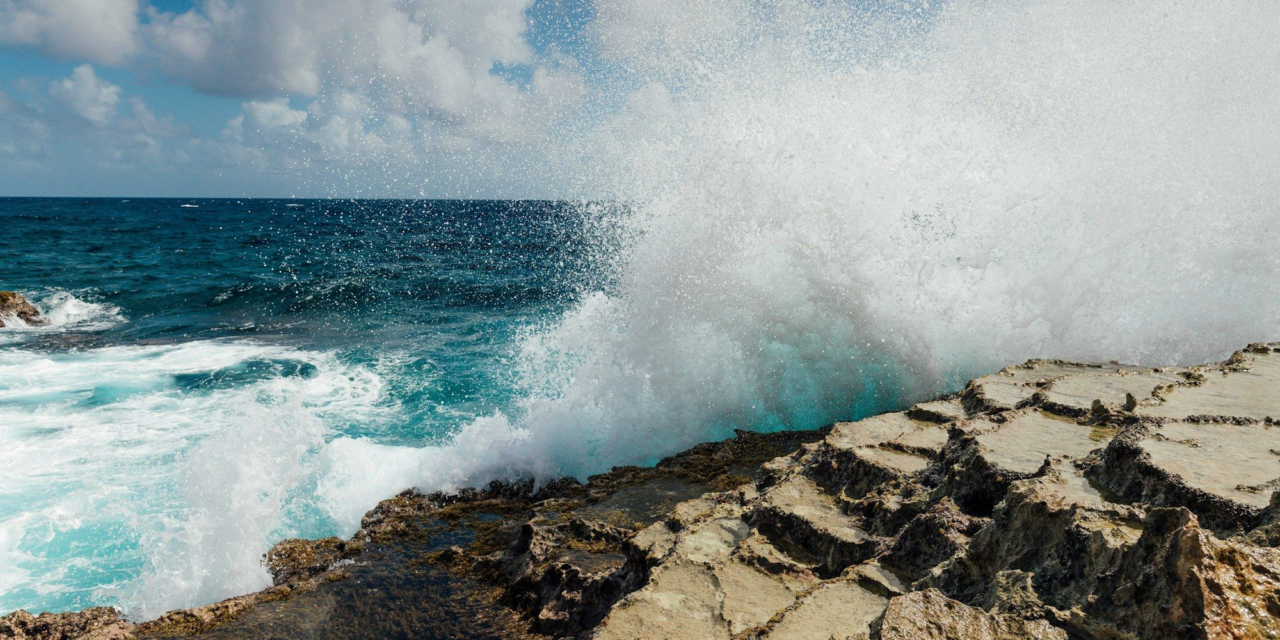
- Rough seas, including swell on beaches that are normally calm.
None of these is guaranteed. The effects depend on the storm’s track and strength and on how active the season is. The calm, windless days are the surprise for many visitors: Aruba’s usual breeze averages roughly 13 to 20 mph depending on the month, and losing it changes how the heat feels.
Rough water is the effect most likely to change your plans. When Hurricane Beryl passed north in July 2024, a local report to the Caribbean Hurricane Network described very rough seas and beach erosion on the island’s southeastern beaches. If the sea is up, check with your boat or snorkel tour about conditions. If a storm is passing, it is a good day for something on land. An inland Aruba island tour or a visit to Oranjestad are easy swaps, and our list of things to do on a cloudy or windy day has more ideas.
Hurricane season vs the rainy season
These overlap but are not the same thing. Aruba’s wettest months, based on the Departamento Meteorologico Aruba 1991–2020 averages, are October through December, at about 3 inches of rain a month. Most of that rain falls as short showers, according to Aruba.com. Even in November, the wettest month, the 1991–2020 averages show about 10 days with measurable rain. October and November also have the lightest winds of the year, which makes the water calmer for snorkeling and diving.
For a full comparison of weather, crowds and prices through the year, see our guide to the best time to visit Aruba.
Should you travel to Aruba during hurricane season?
For most travelers, yes. The months from June to November bring lower prices and quieter beaches, and the chance of a storm disrupting your trip is small. A few steps lower the risk even more.
Before you go
- Buy travel insurance that covers trip delays and cancellations for weather.
- Know that the risk can also be elsewhere. A storm near a connecting airport can delay your flight even when Aruba is sunny.
- Book flexible tours where you can, especially boat trips, so you can move them if the sea gets rough.
While you are there
- Watch official forecasts. The Departamento Meteorologico Aruba posts cyclone advisories and a marine forecast on meteo.aw. The tourism authority also recommends keeping weather alerts on your phone.
- Respect beach conditions. The US State Department notes that wind can bring choppy water, strong currents and high waves to some beaches. Check conditions before you swim.
- Take extra care on the north coast. Check conditions and posted warnings before you go near the water. Our north coast guide covers the main stops.
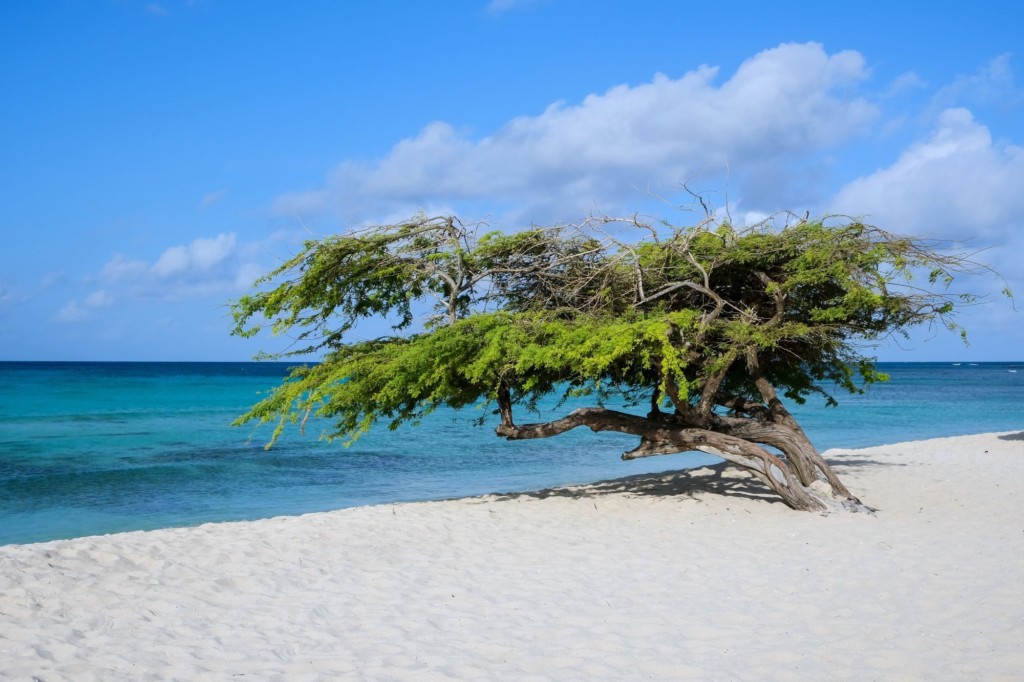
FAQ
When is hurricane season in Aruba?
Aruba follows the Atlantic hurricane season, June 1 to November 30. The island is rarely affected, but storms passing to the north can bring rain, rough seas or a lull in the wind.
Has Aruba ever been hit by a hurricane?
The Aruba Tourism Authority says the Atlantic hurricane database shows no direct hurricane hit on Aruba since records began in 1851. Several storms have passed close enough to cause flooding or rough seas, including Hurricane Ivan in 2004 and Hurricane Felix in 2007.
Is Aruba in the hurricane belt?
The tourism authority says Aruba is outside it. The regional meteorological service describes the ABC islands as being on the southern fringe of the belt. Either way, serious hurricane damage is rare.
What is the worst month for weather in Aruba?
November is the wettest month on average, with about 3.4 inches of rain, followed by December and October. Rain usually comes as short showers.
Do I need travel insurance for Aruba in hurricane season?
It is a good idea. The main risk is not a storm hitting Aruba but a storm delaying flights through other airports. Choose a policy that covers weather delays and cancellations.
Which ABC island has the lowest hurricane risk?
Aruba, Bonaire and Curaçao share a similar position south of the main storm track, and the regional meteorological service discusses them together. See our Aruba vs Curaçao vs Bonaire guide for how the islands differ otherwise.
Sources
- Aruba.com – Aruba Hurricane Season: What Visitors Need to Know
- Aruba.com – Weather and Climate
- Aruba.com – Island Facts
- Meteorological Department Curaçao – Hurricanes and Tropical Storms (PDF)
- HurricaneCity – Aruba, Bonaire & Curaçao’s History with Tropical Systems
- Departamento Meteorologico Aruba – Climate Data
- Departamento Meteorologico Aruba – Climate Averages 1991–2020 (PDF)
- U.S. Department of State – Aruba Travel Advisory
- Caribbean Hurricane Network – 2024 Updates from Aruba
- Departamento Meteorologico Aruba – Cyclone Advisories