This page contains affiliate links; we may earn a commission from bookings. Ratings from Viator & Tripadvisor.
Beach umbrella delivery in Aruba gets you the gear for the day, usually at a lower daily rate. The rest is up to you: carrying it, finding a spot and planting it in the sand against a steady east wind. A set that is already up and anchored when you arrive costs more, but you walk to your chairs and sit down. This guide compares the two: what the trade winds really do, what delivery leaves to you, the price per person, and when delivery is the smarter pick.
Beach umbrella delivery in Aruba vs. set up: quick answer
- Delivery: Gear only. You carry it to the beach, choose a spot and plant the umbrella yourself, then pack it up again.
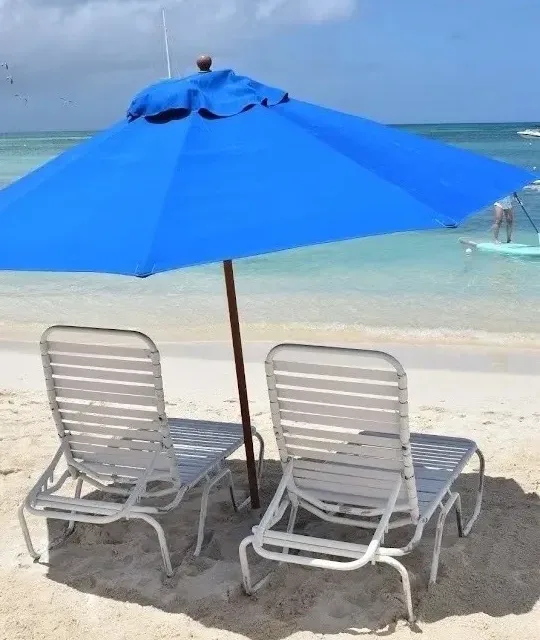
- Already set up: Umbrella and two beach chairs waiting on the sand under your name. Nothing to carry or plant.
- The wind: Aruba’s trade wind blows from the east almost all the time, averaging about 17 mph at the airport over 30 years of records.
- Price: Our set is $120 per day, all in on Eagle Beach, or $60 each when two people share it.
- Pick delivery if you’re on a tight budget, comfortable setting up, or heading to a beach with no rental stand.
- Pick a set-up umbrella if you want Eagle Beach without the morning hunt and the afternoon wrestling.
What each option actually includes
Both look alike in a listing: an umbrella and chairs for a day. With delivery, you rent equipment. With a set that’s already up, you rent a finished spot on the sand.
| Delivery rental | Set up on the sand | |
|---|---|---|
| What arrives | Umbrella and chairs, dropped off for you | Nothing arrives; the set is already on the beach |
| Carrying | You, from the drop-off to the sand and back | None |
| Finding a spot | You, on the day | Held under your name |
| Planting and anchoring | You | Done before you arrive |
| Which beach | Wherever you carry it | Eagle Beach |
| Hours | As long as you keep the gear | 9 AM to 5 PM |
| Price | Usually lower per day | $120 per set per day, all in |
Neither one is better in every case. The difference comes down to the wind, the walk and what your beach time is worth to you.
Aruba’s trade winds: what the numbers say
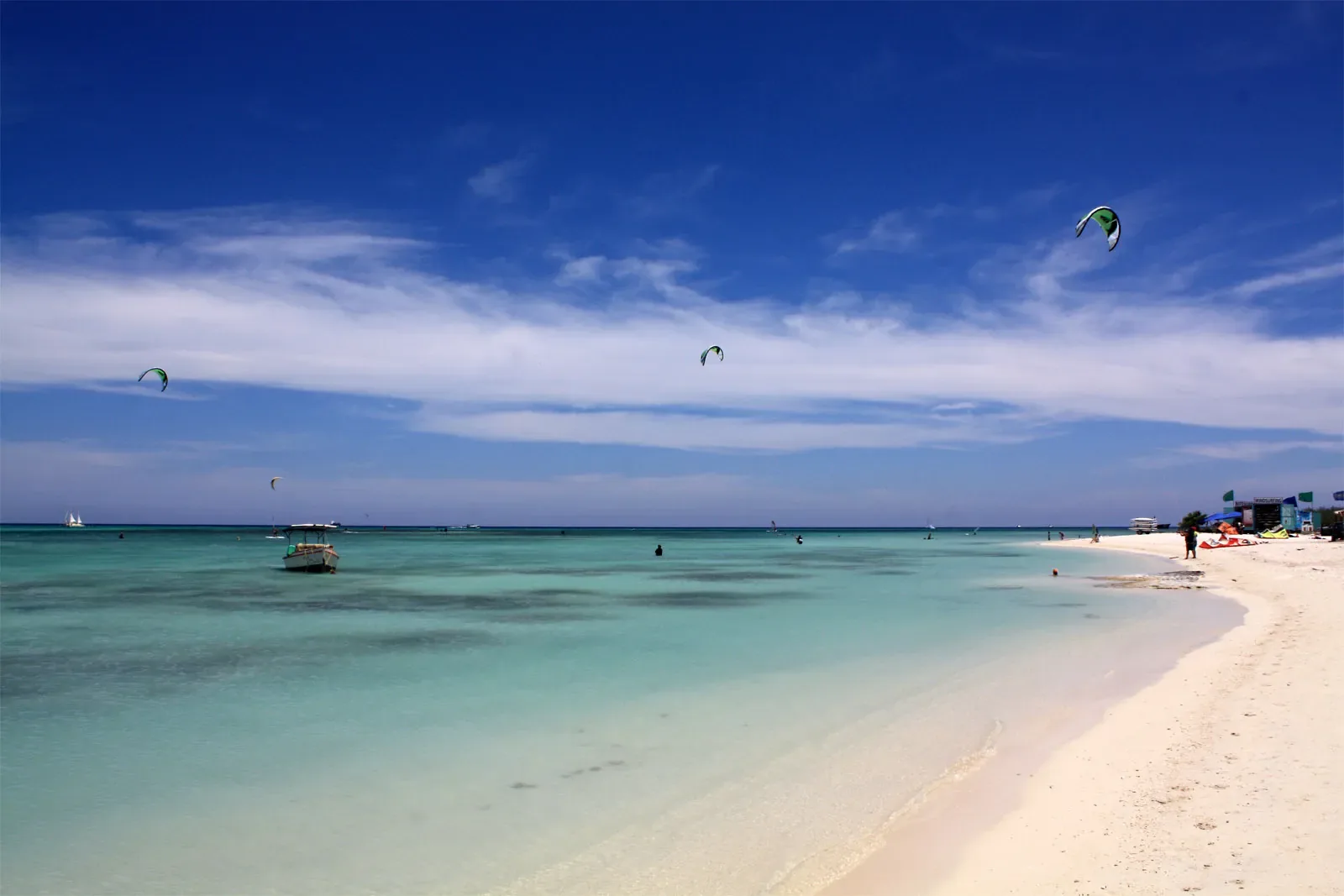
Aruba is windy, which is great news for windsurfing and kitesurfing and less great for a loose umbrella. The climate normals for Aruba’s airport (1971 to 2000, published by the Meteorological Department Curaçao) give these averages:
- Direction: from the east, about 91 degrees on average, in every month of the year.
- Steadiness: a wind persistency of 98 percent, meaning it keeps coming from that same direction.
- Average speed: 7.5 m/s at 10 meters, about 17 mph.
- Windiest month: June, at 8.9 m/s (about 20 mph).
- Calmest months: October and November, at 6.0 m/s (about 13 mph).
- Average maximum speed: 14.7 m/s, about 33 mph.
The Aruba Tourism Authority describes the trade winds as constant and says they pick up from May to October. The airport records agree on the early summer peak, but they show September through November as the lightest months, so expect the strongest breeze from about April to August.
Why this matters for an umbrella: the U.S. Consumer Product Safety Commission’s beach umbrella guidance points to the voluntary ASTM F3681 standard, under which a compliant umbrella and anchor must stay secure in winds up to 30 mph. The CPSC also says most umbrellas on their own don’t meet it, and its safety alert says umbrellas blown loose by gusts have caused serious injuries and deaths. Aruba’s average maximum of about 33 mph, measured 10 meters up, is above that 30 mph test speed; wind at chair height is somewhat lower, but gusts are the problem.
Beachgoers often find that on windy afternoons a hand-planted umbrella can work loose, lift out of the sand and tumble down the beach. That’s the problem a properly anchored set is meant to solve.
What a delivery rental leaves to you
Delivery takes care of one step: getting the gear to you. Everything after the drop-off is yours.
- The carry. An umbrella, a base or anchor if one comes with it, and two chairs, from the car or the hotel lobby across the road to the sand. The tourism board’s turtle guide asks people not to drive on beaches, so it all goes on foot.
- The spot. On busy mornings, people often claim the free palapas very early, sometimes before sunrise, and the front-row sand fills up after that. You’ll be choosing from what’s left.
- The planting. Dig deep, follow the anchor’s instructions, and watch the canopy. The CPSC advises closing the umbrella right away if it becomes unstable in the wind.
- The afternoon. The breeze often builds after lunch. Be ready to re-set, tilt or close the umbrella more than once.
- The pack-up. Everything comes off the sand at the end of the day. Eagle Beach is where most of Aruba’s turtle nests are, and the turtle guide asks visitors to remove beach furniture and equipment that can block nesting females and hatchlings.
- The return. Collection times, deposits and damage rules vary, so read the terms before you book.
None of this is hard on a calm morning. It gets harder with small kids, a bad back, a long walk from parking or a gusty afternoon.
The price logic
We won’t quote other companies’ rates, because they change and vary by what’s included. Delivery rentals typically charge less per day than a set that’s already up, because the labor of carrying and planting moves to you.
Our prices:
| Booking | Price, all in |
|---|---|
| 1 set (umbrella + 2 beach chairs), 1 day | $120 |
| Per person, two sharing one set | $60 per day |
| 1 set, 3 days | $360 |
| 2 sets for a group of four, 1 day | $240 ($60 each) |
That’s $120 per set per day, all in: no tax or fees on top. You pay in full online, and the booking is a request: we confirm by email, and if we can’t confirm, you get a full refund.
When you compare, put the same things side by side:
- Per person, per day. Two people sharing one set is $60 each.
- Your effort. Happy to carry and plant? Delivery saves money. If not, the extra pays for your morning.
- Hours you’ll actually use. Our set is up from 9 AM to 5 PM. You can leave for lunch or a swim and come back; it stays yours.
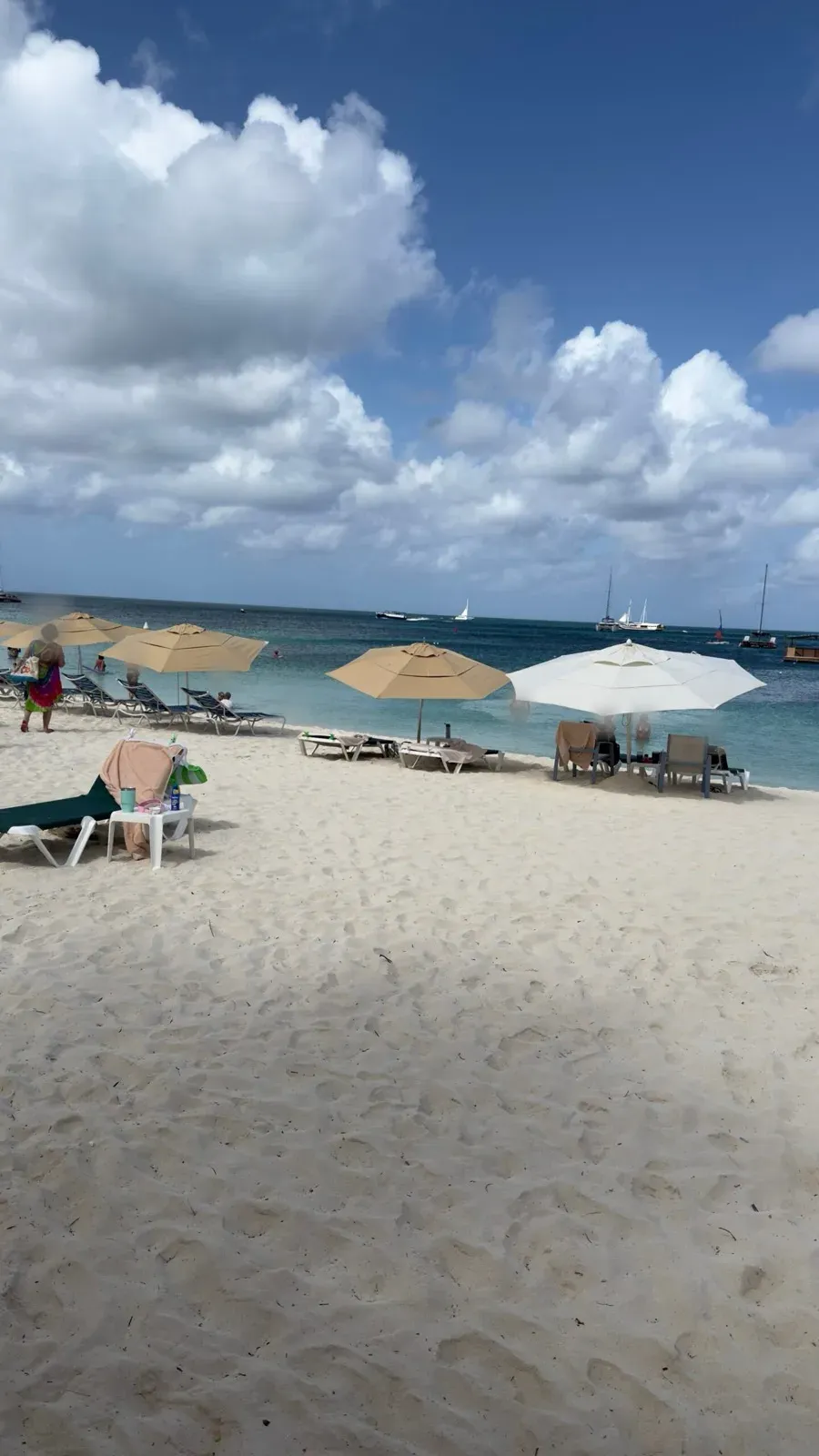
Rather skip the carrying and planting? Reserve an umbrella and chairs on Eagle Beach, set up from 9 AM, $120 a day, all in.
When delivery is the better choice
Delivery makes real sense for plenty of trips. Choose it when:
- Budget comes first. Over a week, a lower daily rate adds up, and you don’t mind the work.
- Your beach has no rental stand. Smaller coves often have nothing to rent on the sand. A set-up service can’t help there; delivery can.
- You want to move around. Our sets stay at the beach you booked. With delivered gear, you can try a new beach every day.
- Your hours are unusual. If you want shade at 8 AM or until sunset, gear you control fits better than a 10-to-4 set.
- You decide on the day. Our sets are booked from tomorrow onward, with no same-day online bookings.
Our Aruba on a budget guide has more ways to keep beach days cheap, and the Aruba packing list covers what to bring if you go the do-it-yourself route.
When a set that’s already up is worth it
- You want Eagle Beach and don’t want to race for a spot. See our Eagle Beach vs. Palm Beach comparison if you haven’t picked one.
- You’re traveling with kids or older relatives, and carrying chairs plus a beach bag plus a child isn’t the holiday you had in mind.
- You’re here in the windiest months, roughly April to August, when the afternoon breeze is at its strongest. Our best time to visit Aruba guide covers the seasons month by month.
- You’re booking several days. The same spot on the same beach every booked day, with a start and end date in one booking.
- You’re a group. Up to 8 sets per booking, all ages.
How our umbrella-and-chairs set works
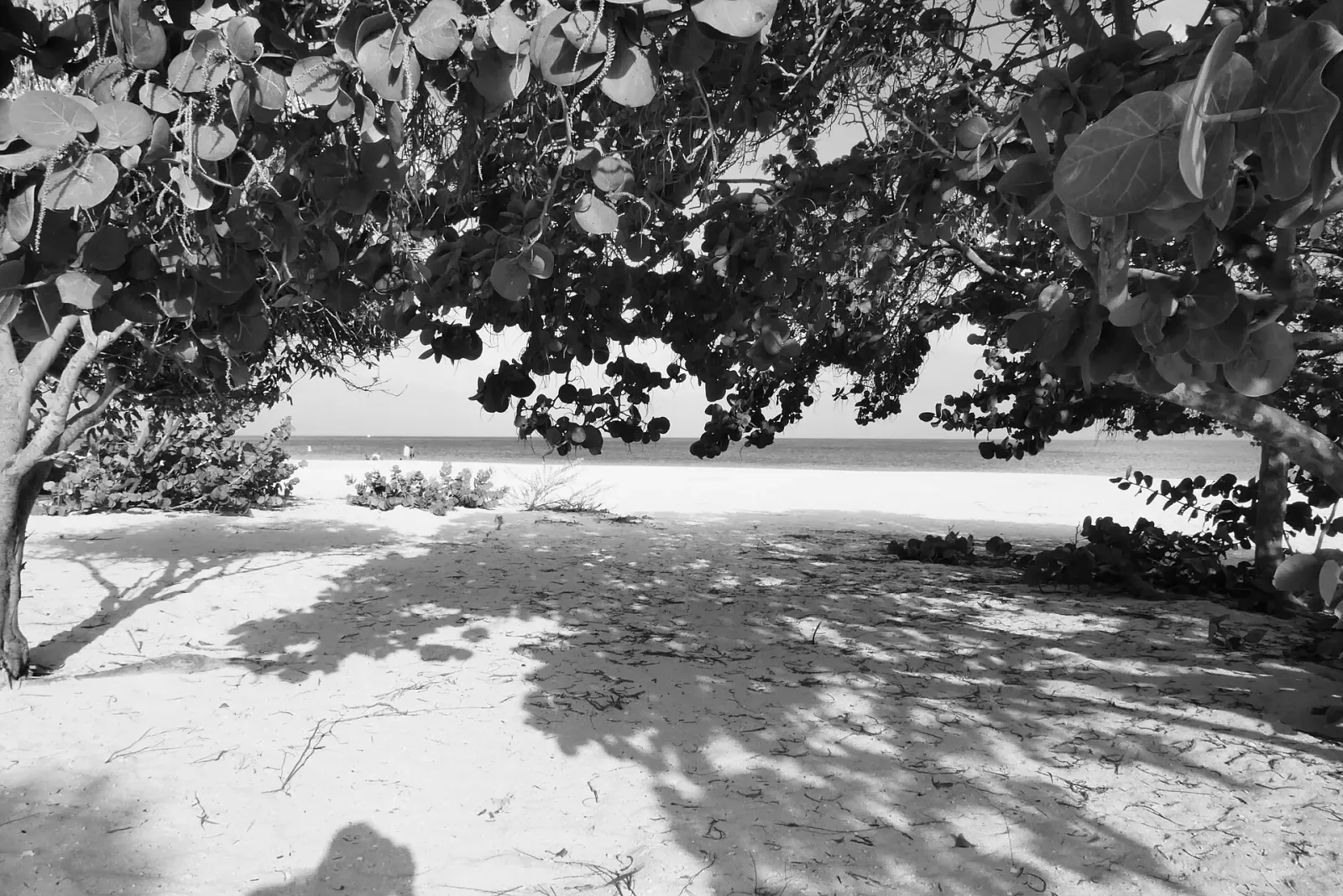
- One beach umbrella and two beach chairs, set up on the sand before you arrive and held under your name.
- The set is on Eagle Beach, stays there and can’t be moved elsewhere.
- Available 9 AM to 5 PM Aruba time. Leave and come back as you like.
- Umbrella and chair styles can differ from one beach stand to the next.
- Once confirmed, all sales are final, except for weather: if the beach is unusable and no setup is possible, the booking moves to another day or is refunded.
- Each beach usually sets up a limited number of sets a day, and walk-ups typically get one only when a set is free, which is why booking ahead helps.
For other ways to find shade, our beach shade in Aruba guide compares every option, and palapas in Aruba explains how the free huts work.
Once your shade is sorted, the rest of the day is free. A morning snorkel trip or a sunset sail fits easily around a 10-to-4 beach day.
FAQ
Can you get a beach umbrella delivered in Aruba?
Yes. Delivery rentals drop off an umbrella and chairs, and you carry them to the beach, plant the umbrella and pack it up yourself. If you’d rather not, a set that’s already up on Eagle Beach saves those steps.
How windy is it on Aruba’s beaches?
Steady. Long-term airport records give an average wind of about 17 mph from the east. It peaks in June at about 20 mph and eases to about 13 mph in October and November.
Will a beach umbrella blow away in Aruba?
It can if it isn’t anchored well. The CPSC says most umbrellas alone don’t meet the safety standard for winds up to 30 mph, and advises closing the canopy immediately if it becomes unstable.
How much does a beach umbrella and two chairs cost?
Our set on Eagle Beach is $120 per day, all in, which is $60 each for two people.
Can I leave a delivered umbrella on the beach overnight?
No. Take it off the sand at the end of the day. The tourism board asks visitors to remove beach furniture and equipment because it can block nesting turtles and hatchlings.
Ready to book your shade? Reserve an umbrella and chairs on Eagle Beach, set up from 9 AM, $120 a day, all in.
Sources
- Summary of Climatological Normals 1971-2000, Beatrix Airport Aruba, Meteorological Department Curaçao
- Weather and Climate, Aruba Tourism Authority
- Beach Umbrella Safety 2025, U.S. Consumer Product Safety Commission
- Airborne Beach Umbrellas Can Kill (Safety Alert, May 2024), U.S. Consumer Product Safety Commission
- How to Protect Our Sea Turtles During Your Vacation, Aruba Tourism Authority
- Eagle Beach, Aruba Tourism Authority