This page contains affiliate links; we may earn a commission from bookings. Ratings from Viator & Tripadvisor.
What to beware of in Aruba comes down to four things: a very strong sun, a wind that never really stops, rough water on the north and east coasts, and petty theft from bags and parked cars. None of it should keep you home. Aruba is an easy island to enjoy safely once you know how each one shows up on a normal beach day. This guide goes deeper than our first-timer tips: UV numbers by month, what the wind does on the beach, where not to swim, and how to keep your things.
What to beware of in Aruba: quick answer
- Sun: The average daily peak UV index sits at 9 to 11+ all year. Shade, SPF 30+ and a hat matter more than the temperature suggests.
- Wind: The trade winds are almost always blowing, and they hide how fast you are burning. Anchor anything light.
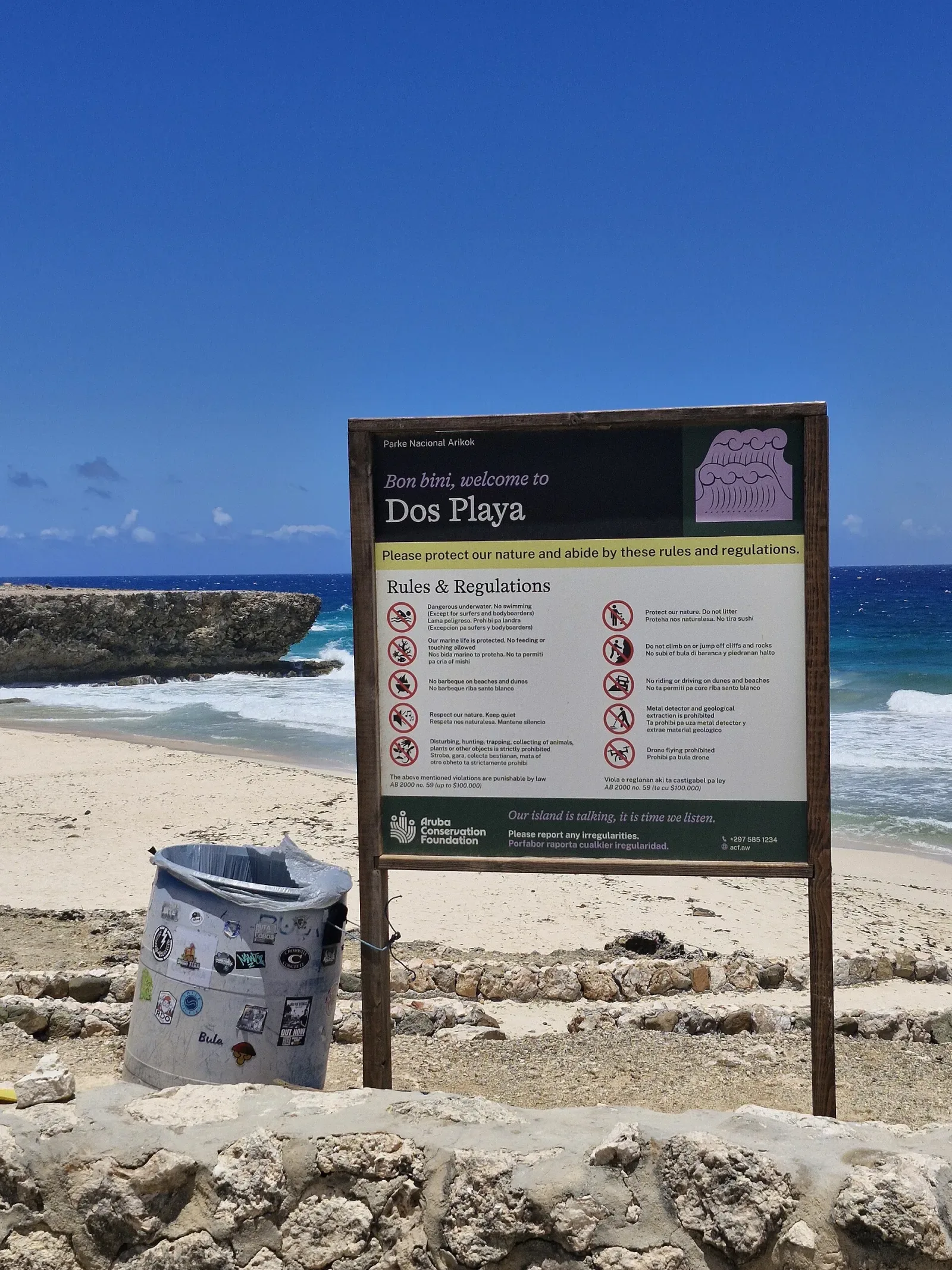
- Rough water: The north and east coasts have strong currents and undertow. Swimming is strongly discouraged at Boca Grandi, and the park sign at Dos Playa says no swimming.
- No lifeguard: Don’t count on one. Swim where the water is calm and you can see others in it.
- Theft: Petty theft from unattended beach bags and cars is the main crime risk for visitors. Bring little, keep it close.
- Emergencies: Police 100; ambulance and fire 911.
The sun: stronger than it feels
Aruba sits close to the equator, and the UV index runs from very high to extreme in every month. A cool breeze and a few clouds don’t change that.
The figures below are average daily maximums for Oranjestad, as published by the climate site weather2travel from Met Office and Dutch meteorological data. The World Health Organization’s advice for a UV index of 8 and above is blunt: avoid being outside at midday, seek shade, and treat a shirt, sunscreen and a hat as essentials.
| Month | Average max UV index | Category |
|---|---|---|
| January | 10 | Very high |
| February to September | 11+ | Extreme |
| October | 11 | Extreme |
| November | 10 | Very high |
| December | 9 | Very high |
Why visitors burn on day one
- The breeze hides it. VisitAruba credits the trade winds with keeping you cool, which is why you stop noticing the sun on your skin.
- White sand and water bounce the light back. VisitAruba points out that both reflect a lot of the sun’s rays, so you get UV from below as well as above.
- Clouds don’t switch it off. Overcast days still burn.
- Shade isn’t total protection. VisitAruba notes that an umbrella doesn’t block all exposure, so keep sunscreen on under it.
What actually works
- SPF 30 or higher, broad spectrum, reapplied every couple of hours and after every swim, even if the bottle says water-resistant.
- Mineral sunscreen. The Aruba Tourism Authority asks visitors to pack mineral-based sunscreen with titanium dioxide or zinc oxide as the active ingredient. Since July 2020, Aruba has penalized the import, sale and production of sunscreen with oxybenzone, so buy oxybenzone-free.
- Plan around midday. Swim in the morning; sit in real shade through the middle of the day.
- Drink more water than you think. Average temperatures run 80 to 90°F (27 to 32°C) all year, and the wind dries sweat before you notice it. Aruba’s tap water is desalinated seawater and safe to drink, according to the tourism authority, so refill a bottle at your hotel.
- Treat a burn early. VisitAruba recommends aloe, ideally gel straight from the plant, to soothe skin after too much sun.
Getting reliable shade
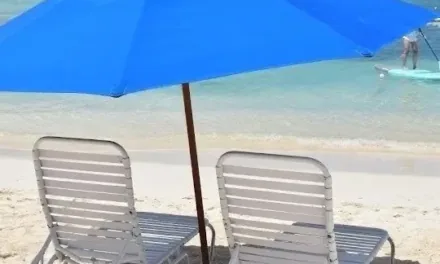
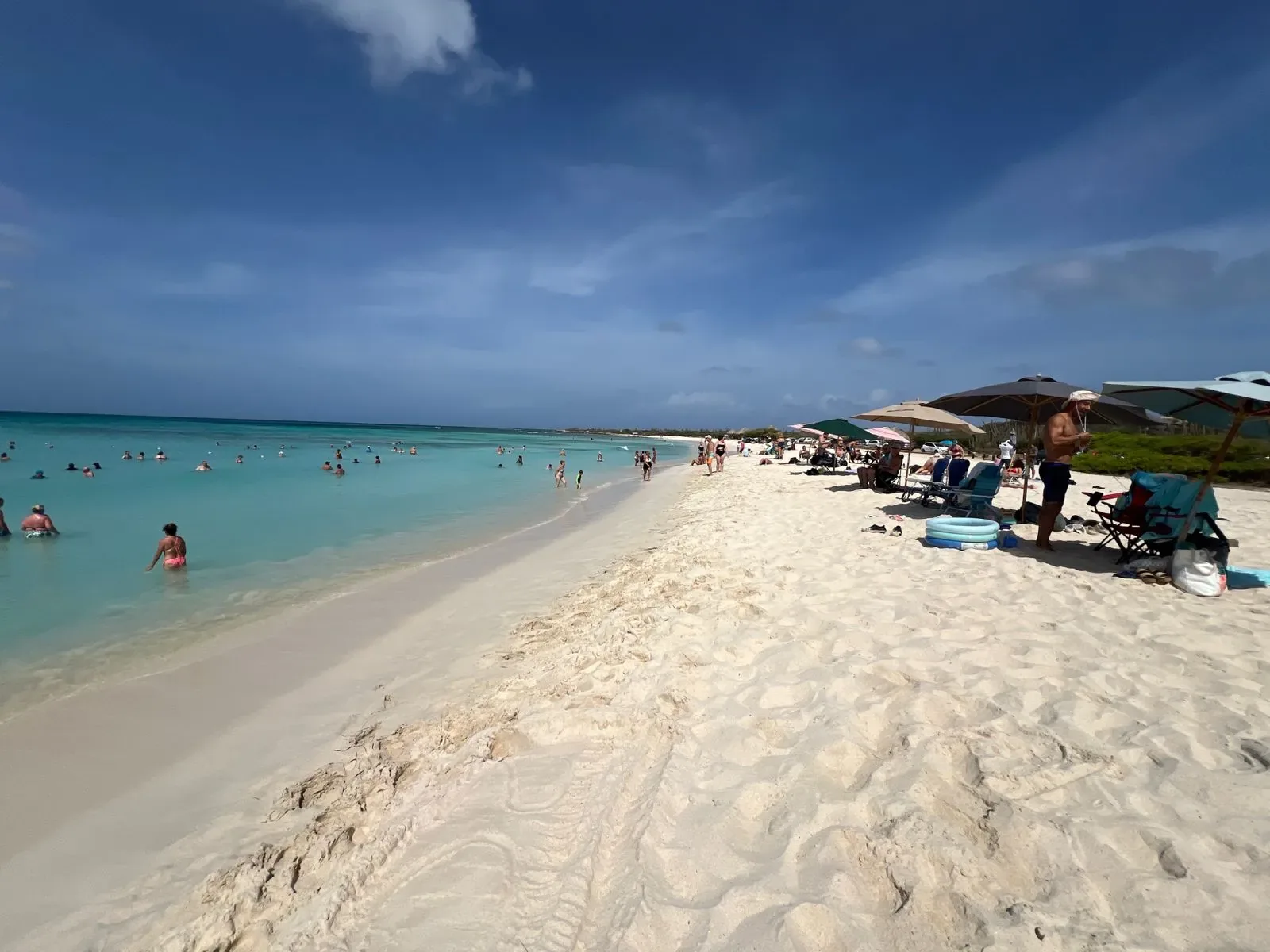
Shade is the part people underestimate. The free thatched palapas on beaches like Eagle Beach are first come, first served, and on busy mornings people often claim them very early, sometimes before sunrise. Hotel palapas and loungers are usually for that hotel’s guests; under the April 2026 beach guidelines, a set a hotel has assigned to a guest counts as in use even when nobody is sitting in it. Bringing your own umbrella works on a calm day, but read the wind section below first.
Rather not chase shade at sunrise? Reserve an umbrella and chairs on Eagle Beach, set up from 9 AM, $120 a day, all in.
The wind: Aruba’s constant companion
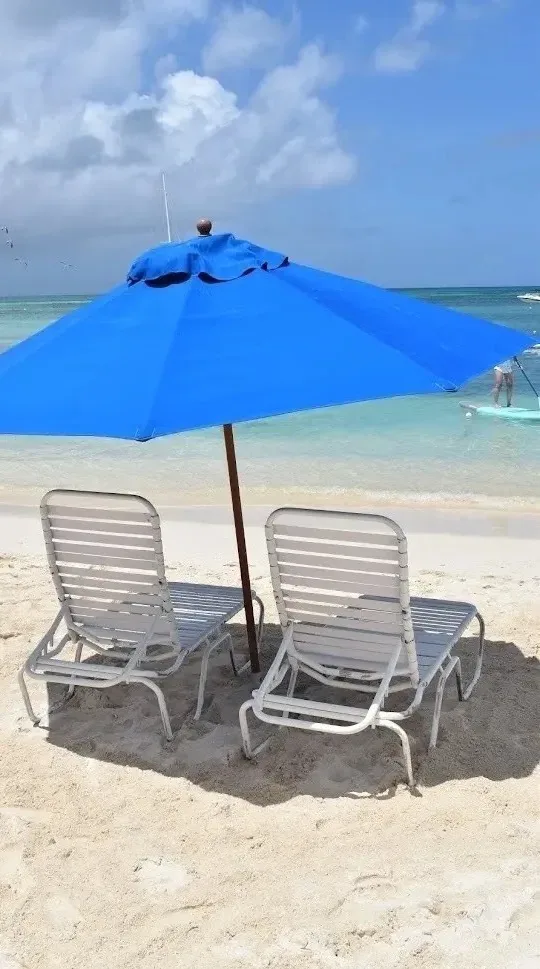
The trade winds are why Aruba feels pleasant at 88°F. The Aruba Tourism Authority says they are almost always present and pick up more from May to October; its watersports page calls them a constant 15 knots, which is what draws windsurfers and kitesurfers (see our windsurfing and kitesurfing guide). On the beach, that steady push has side effects:
- Umbrellas move. A hand-planted umbrella often lifts out of the sand on a gusty afternoon and can tumble down the beach. If you bring one, dig the pole deep, angle it into the wind, and take it down when you leave your spot.
- Light things fly. Hats, towels and wrappers go first. Weigh towels down and pack trash away as you go; Aruba bans single-use plastic bags.
- Sand gets everywhere. Set up with your back to the wind and keep phones in a zip pouch.
Rough water: know which coast you’re on
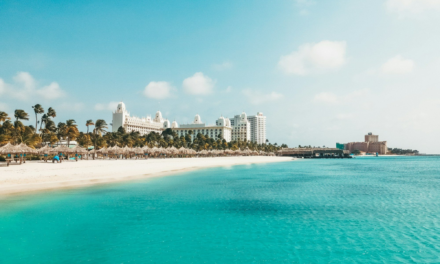
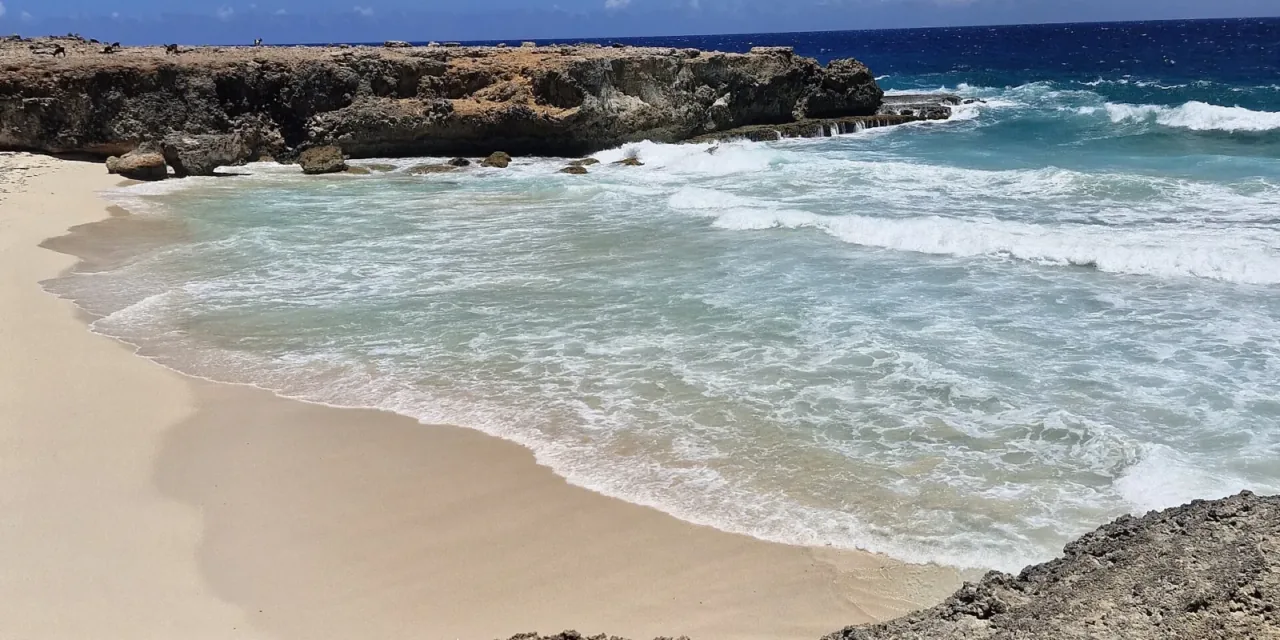
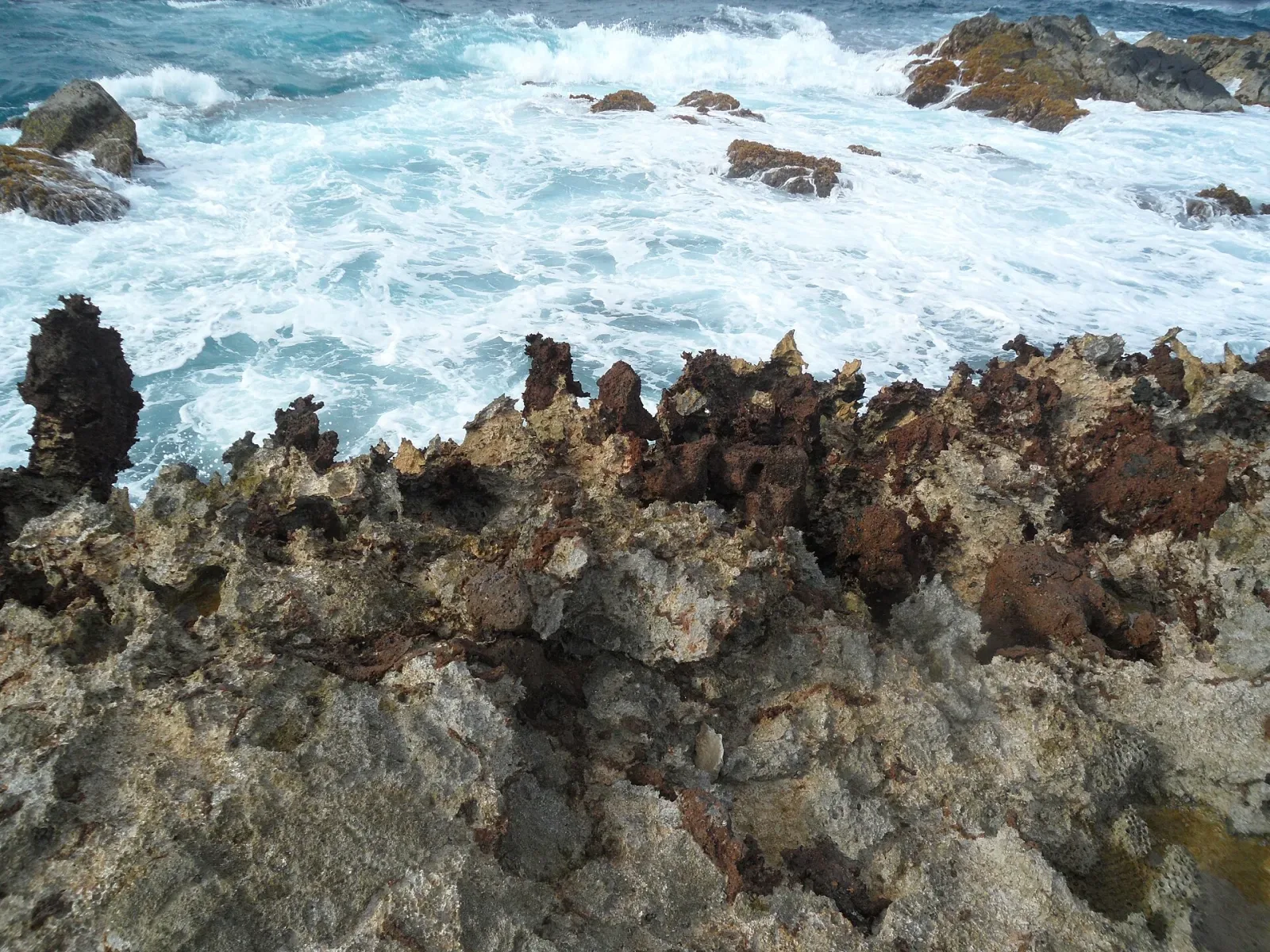
Aruba has two very different shorelines. The west coast, home to Eagle Beach, Palm Beach and Arashi, is usually calm. The north and east coasts take the open sea and the full force of the wind, and the water there can look inviting from the cliffs and still be dangerous.
The tourism authority is unusually direct about some of these beaches:
- Boca Grandi: strong current; swimming is strongly discouraged. It’s a spot for advanced kitesurfers, five minutes from San Nicolas.
- Dos Playa: rough sea with a strong undertow, not suited to inexperienced swimmers or bodyboarders, and no facilities. The park sign at the beach, photographed in April 2026, reads “Dangerous underwater. No swimming,” with an exception for surfers and bodyboarders.
- Mangel Halto near Pos Chiquito: calm-looking, but the tourism authority warns of strong currents.
Don’t count on a lifeguard
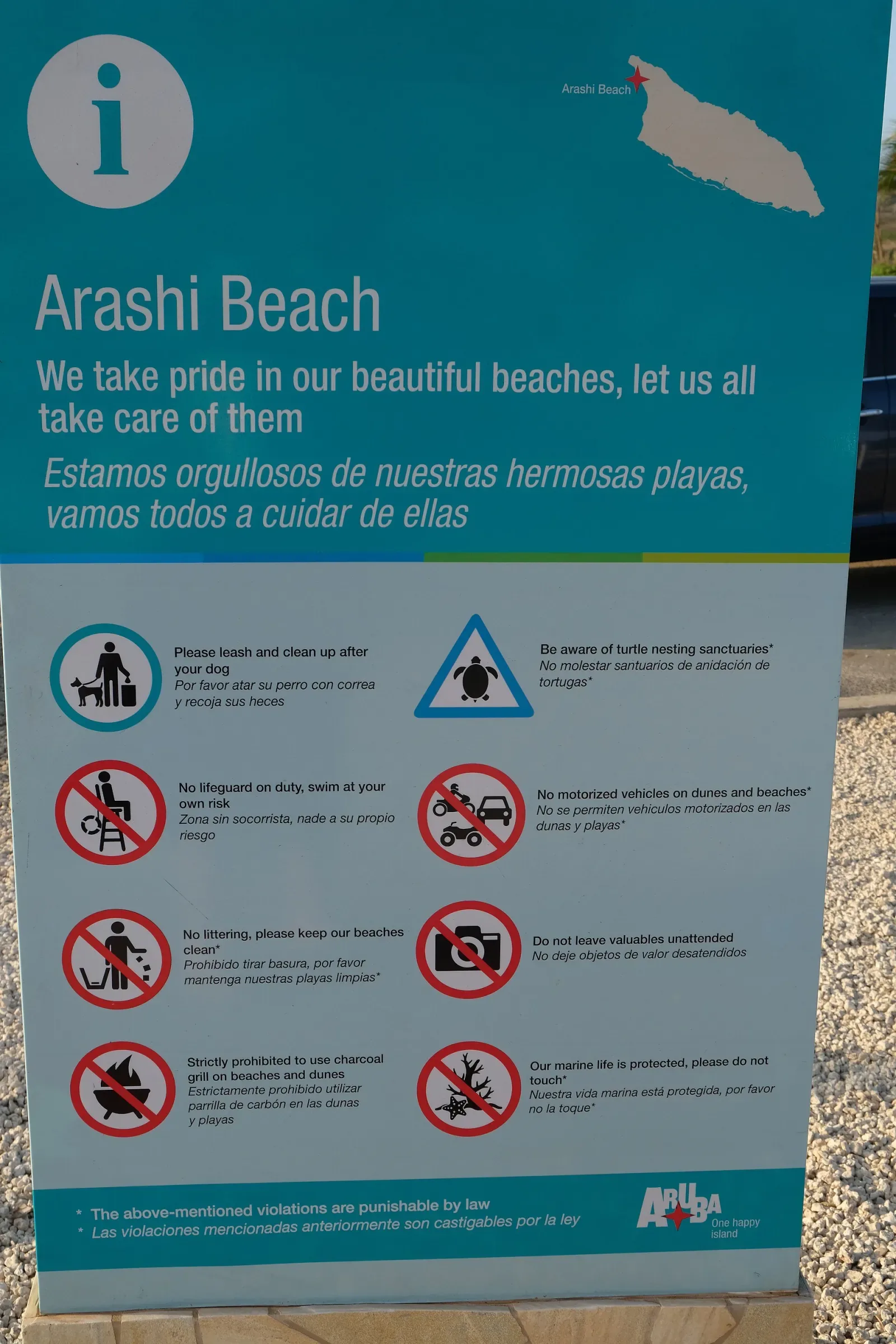
We found no official list of lifeguarded beaches in Aruba. A beach rules sign photographed at Arashi Beach in 2019 says it plainly: no lifeguard on duty, swim at your own risk. Canada’s travel advice adds that rescue services may not match what you’re used to at home. Plan as if nobody is watching: swim where others are swimming, stay within your depth on unfamiliar beaches, and keep kids within arm’s reach.
If a current pulls you out
The US National Hurricane Center’s rip current advice is short and worth memorizing:
- Relax and float. A rip current pulls you away from shore, not under.
- Swim parallel to the shoreline, then angle back in. Don’t swim straight against it.
- Wave and call for help if you can’t get out.
If someone else is in trouble, throw them something that floats and call for help rather than swimming out. In Aruba, dial 911 for an ambulance. For the coast-by-coast picture, our best beaches in Aruba guide marks which beaches suit swimmers and which are for views, and our north coast guide covers the rugged side of the island.
If you’d rather leave the reading of the water to people who do it every day, a guided beach or snorkel trip is the easy option. A few worth a look:
Theft: the real crime risk on the beach
VisitAruba calls Aruba one of the safest destinations in the Caribbean, but petty theft happens. Canada’s travel advice lists pickpocketing and purse snatching, plus theft from vehicles, hotel rooms and rental units. The UK government’s advice is simple: don’t take valuables or cash to the beach, and don’t leave bags in your vehicle. The Aruba Tourism Authority’s own code of conduct asks you to always lock your car and leave nothing of value in it.
A bag on a towel while everyone swims is the classic target; so is a phone on the dashboard of a rental car. VisitAruba notes that rental insurance doesn’t cover personal belongings.
A simple beach-day routine
- Bring the minimum: one card, a little cash, your phone, the car key. Leave passports and spare cards in the hotel safe.
- Swim in shifts if you’re in a group, so someone always stays with the bags.
- Lock the car and leave it bare: nothing on the seats, the dashboard or the floor.
- Skip empty beaches after dark. Canada advises avoiding unpopulated areas and unpatrolled beaches at night.
If something goes missing, call the police on 100.
Other things worth knowing
- Sea urchins and sharp rocks. The tourism authority warns that Malmok Beach has a lot of sea urchins and sharp rocks near the shore, and that Mangel Halto’s rocky entry can be tricky. Water shoes help at rocky snorkel spots; our snorkeling guide covers the entries.
- Look, don’t touch. The tourism authority asks you to admire marine life from a distance: no touching coral, no starfish selfies, no stacking rocks and no taking shells home.
- Turtle nests. Marked-off nests are protected, so give them space. Our Eagle Beach guide has the nesting season and the night-time rules.
For what to pack for all of this, from water shoes to a sun shirt, see our Aruba packing list.
Want one less thing to plan? Reserve an umbrella and chairs on Eagle Beach, already set up from 9 AM to 5 PM, $120 a day, all in.
FAQ
What should I be most careful about in Aruba?
The sun. The average daily peak UV index is 9 to 11+ in every month, and the cooling trade winds make it easy to burn without noticing. Use SPF 30+, reapply often and sit in shade at midday.
Is it safe to swim in Aruba?
On the calm west coast, such as Eagle Beach, Palm Beach and Arashi, the water is usually gentle. On the north and east coasts, currents and undertow are strong, swimming is strongly discouraged at Boca Grandi, and the park sign at Dos Playa says no swimming.
Are there lifeguards on Aruba’s beaches?
Don’t count on it. We found no official list of guarded beaches, and the rules sign at Arashi Beach states that no lifeguard is on duty. Swim where others are swimming and stay within your depth.
Is theft a problem on Aruba’s beaches?
Petty theft is the main risk, mostly from unattended bags and parked cars. Bring only what you need, keep someone with your things, and leave nothing visible in the car.
Do I need special sunscreen in Aruba?
Choose an oxybenzone-free, mineral sunscreen with zinc oxide or titanium dioxide. Aruba has penalized the import, sale and production of sunscreen with oxybenzone since July 2020.
Sources
- Aruba weather by month, weather2travel
- Radiation: The ultraviolet (UV) index, World Health Organization
- Tanning advice, VisitAruba
- Aruba Promise, Aruba Tourism Authority
- Aruba Gedragscode (code of conduct, Dutch), Aruba Tourism Authority
- Código de conduta de Aruba (code of conduct, Portuguese), Aruba Tourism Authority
- Aruba Officially Bans Plastics and Oxybenzone, VisitAruba
- Aruba Weather, Aruba Tourism Authority
- Windsurfing and Kiteboarding, Aruba Tourism Authority
- Drinking Water in Aruba, Aruba Tourism Authority
- Aruba Beach Guidelines 2026, Aruba Tourism Authority
- Boca Grandi, Aruba Tourism Authority
- Dos Playa, Aruba Tourism Authority
- Aruba’s Top-Rated Snorkeling Beaches, Aruba Tourism Authority
- Arashi Beach rules sign (photo, 2019), Wikimedia Commons
- Dos Playa rules sign (photo, April 2026), Wikimedia Commons
- Survive a Rip Current, US National Hurricane Center
- Travel advice and advisories for Aruba, Government of Canada
- Aruba: Safety and security, UK Foreign, Commonwealth & Development Office
- General Aruba Facts, VisitAruba
- Driving in Aruba, VisitAruba