The best tours in Aruba all fall into a few groups. You can head out on the calm west-coast water by catamaran, bounce along the wild north and east coasts in an off-road vehicle, walk into the caves and dry hills of Arikok National Park, or slow down for culture, wildlife and food. This guide covers 20 experiences that are worth your vacation time. For each one you get what it’s like, who it suits, and the rules and prices we could confirm, so you can build a week that doesn’t repeat itself.
Quick answer: the best tours in Aruba at a glance
- Best first tour: a half-day island sightseeing tour that covers the California Lighthouse, Alto Vista Chapel, the gold mill ruins and the rock formations.
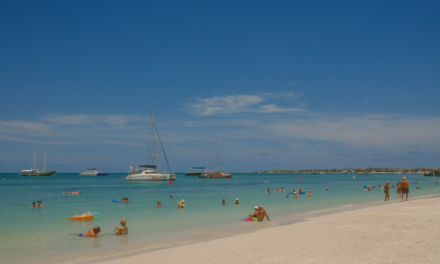
- Best on the water: a morning catamaran snorkel sail, then a sunset sail later in the week.
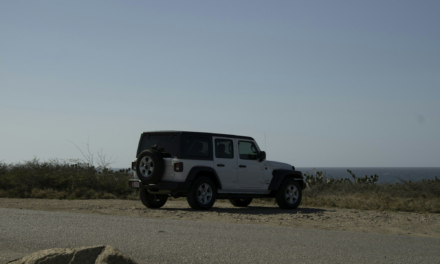
- Best adventure: a jeep tour into Arikok National Park. ATVs, UTVs and motorbikes aren’t allowed in the park’s protected areas, so off-road tours in those vehicles stick to routes outside it.
- Best for nature lovers: a ranger-led hike in Arikok, which costs $25 per person on top of the park’s conservation pass (as of October 2026, per the Aruba Conservation Foundation).
- Best with kids: the Butterfly Farm, a calm-water snorkel stop, or a sunset sail with child pricing.
How to choose the best tours in Aruba for your trip
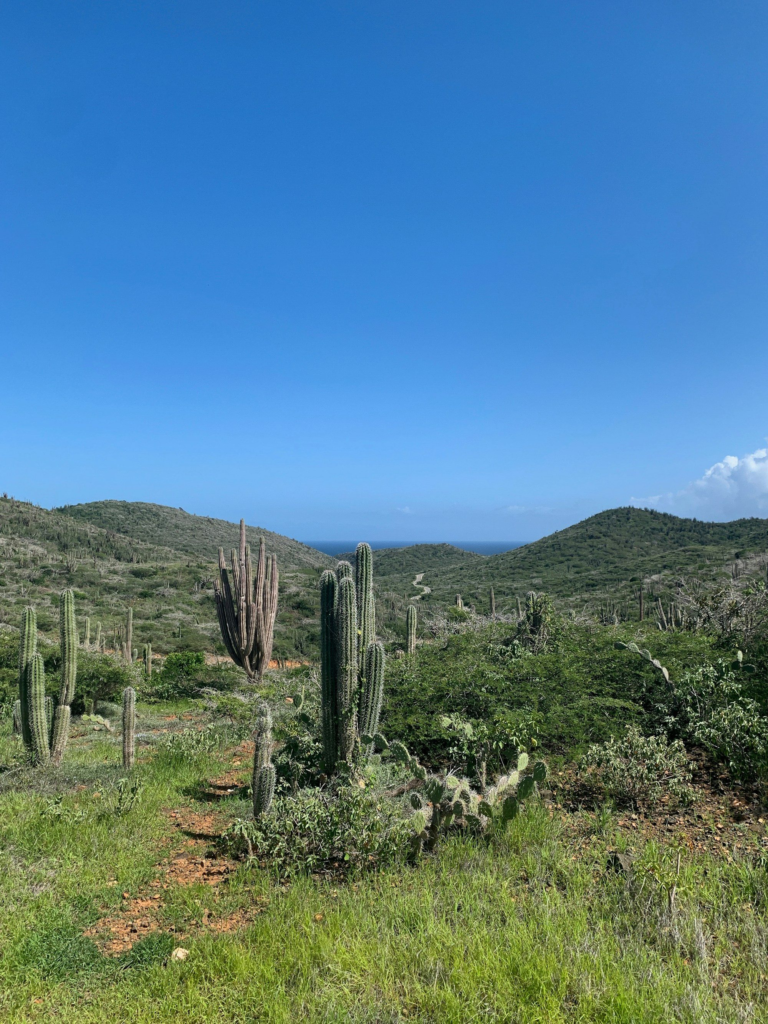
Aruba is small, but its two coastlines are very different. The west and south coasts are sheltered, with calm turquoise water, which is where most boat trips and snorkel stops happen. The north and east coasts take the full force of the trade winds and are rocky, dusty and dramatic, which makes them land-tour country. A good week usually mixes one tour from each side of the island.
A few planning rules help:
- Do the water early in your trip. If a boat day gets cancelled for weather, you’ll still have time to reschedule.
- Put the off-road day in the middle. It’s the most tiring and dustiest outing, so you’ll want a beach day afterward.
- Save a sunset for the last night or two. Aruba doesn’t use daylight saving time, so sunset happens somewhere between about 6:10 and 7:10 PM all year, depending on the season.
- Bring reef-safe, oxybenzone-free sunscreen. Aruba moved to penalize the import, sale and production of sunscreens containing oxybenzone starting in July 2020.
On the water: boat, catamaran and snorkel tours
1. Morning catamaran snorkel sail
This is the classic Aruba boat day. You board along the hotel coast, sail down the calm west side, and stop at one or more snorkel sites. It’s the tour to book if snorkeling is the main goal, and it leaves your afternoon free. Ask before you book whether gear and flotation vests are included, which matters for first-time snorkelers. To see which reefs and wrecks these trips visit, read our guide to the best snorkeling spots in Aruba.
2. Sunset sail
A sunset sail is about two hours of drinks, light bites and color in the sky as you cruise past the hotel beaches. Tour listings we reviewed (October 2026) ran from about 5:00 or 5:30 PM to 7:00 or 7:30 PM, with an open bar and snacks included. Our full Aruba sunset cruise guide covers what’s included, what to wear and how to time it.
3. Dinner, dance and moonlight cruises
Tour listings we reviewed (October 2026) also include dinner cruises, dance cruises and moonlight cruises. They’re worth it if you’d rather spend a whole evening on the water instead of fitting dinner in after a sunset sail. Dinner cruises suit couples, and party-style cruises suit groups.
4. Shipwreck snorkel trip
If seeing a wreck is on your list, ask whether a snorkel trip includes one before you book.
5. Catamaran comparison: morning, afternoon or sunset
If you can only book one boat, decide whether snorkeling or the evening atmosphere matters more to you. Our catamaran cruise comparison breaks down the trade-offs.
Off-road and island tours
6. Island sightseeing tour
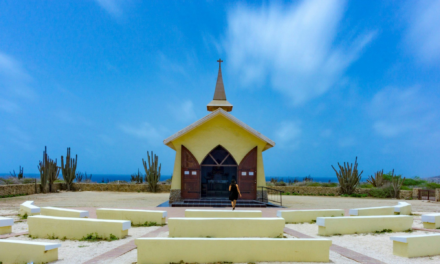
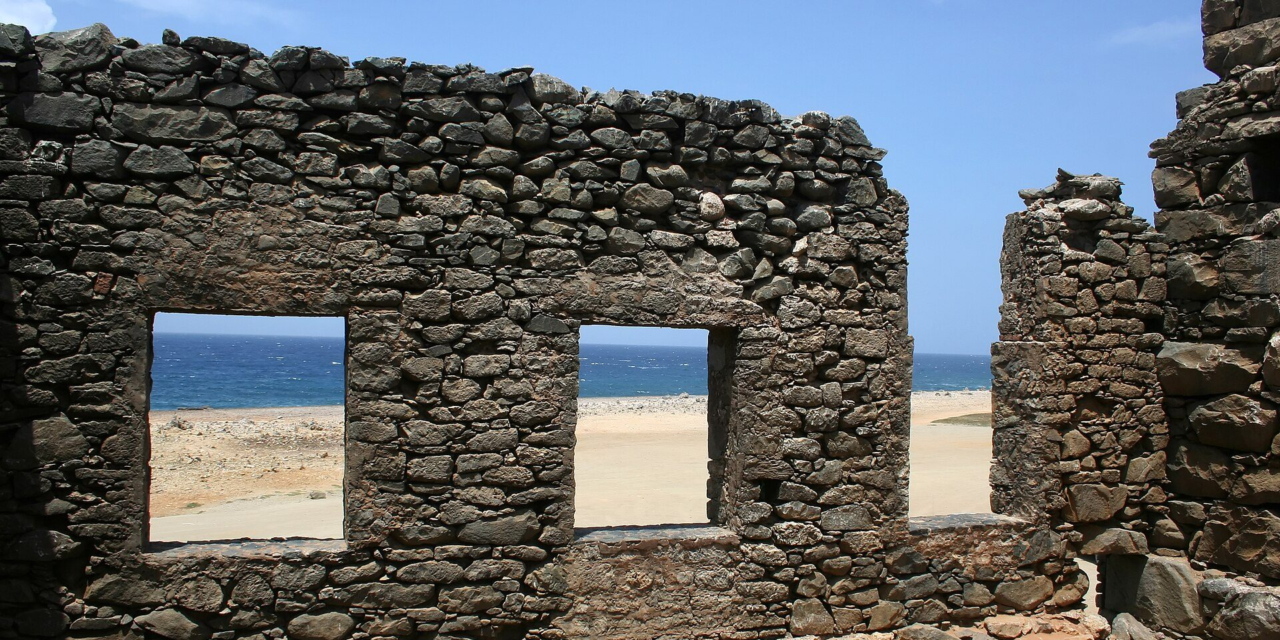
If you only book one land tour, make it this one. A standard island tour links the main landmarks in a few hours. You’ll usually see the California Lighthouse at the northwest tip, the yellow Alto Vista Chapel, the stone ruins of the Bushiribana gold mill, the boulders at Casibari or Ayo, and the north coast where the Natural Bridge used to stand. We’ve written up every stop on an Aruba island tour so you know what you’re looking at.
7. Jeep tour into Arikok and the Natural Pool
Arikok National Park covers nearly 20% of Aruba, according to the island’s tourism authority. Inside the park, ATVs, UTVs and motorbikes are prohibited in the protected nature areas, per the Aruba Conservation Foundation, so jeeps and 4×4 vehicles are the way to explore it. The Natural Pool is the prize. Among vehicles, only jeeps and 4-wheel-drive cars can reach it, and the last stretch is a short hike down steep, narrow stairs. You can’t go in when the tide is strong or the waves are high. Our Natural Pool guide covers the details, and if you’re torn on vehicles, read jeep vs UTV tours.
8. UTV or buggy tour of the north coast
UTVs can’t enter the park’s protected nature areas, so UTV tours focus on routes outside it, such as the north coast landmarks. Expect to get dusty. Bring a bandana or buff and closed shoes.
9. North coast landmarks tour
Some tours focus on the north coast landmarks: the lighthouse, the chapel, the gold mill ruins and the Baby Bridge. Swimming isn’t the point here, because the water on this side is rough.
Nature, hiking and caves
10. Ranger-led hike in Arikok
The Aruba Conservation Foundation runs guided hikes led by Nature Experience Rangers, priced at $25 per person with a maximum of 10 people per group (as of October 2026). Options listed include:
| Hike | Distance | Time | Difficulty |
|---|---|---|---|
| Miralamar | 2 km / 1.2 mi | 1.5 hr | Easy |
| Cunucu Arikok | 5 km / 3.1 mi | 1.5 hr | Easy |
| Jamanota Hill | 4.8 km / 2.9 mi | 2 hr | Hard |
| Rooi Tambu & Dos Playa | 7.5 km / 4.6 mi | 3.5 hr | Hard |
Source: Aruba Conservation Foundation experiences, as of October 2026. Hikes start between 7:00 and 8:00 AM, before the heat builds.
11. Cave visit: Fontein and Quadirikiri
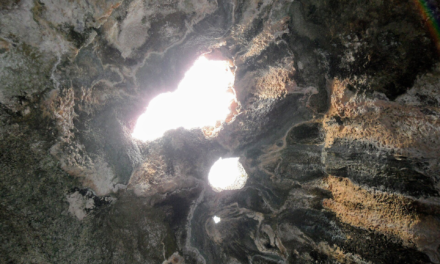
Arikok’s caves hold some of the island’s oldest history. Fontein Cave has pictographs attributed to the Arawak, and it’s gated, so you can enter only with park staff. Rangers are stationed at the cave entrances to explain the drawings. Visitor guidance for the park says flashlights aren’t allowed in Quadirikiri Cave because they disturb the bats. Our Aruba caves guide explains how the caves differ.
12. Hooiberg climb
Hooiberg, the cone-shaped hill in the middle of the island, rises about 540 feet. Roughly 600 steps (about 587 by a 2022 count cited on Wikipedia) lead to a panoramic view, and goats and parakeets are among the wildlife you may see on the climb. No admission fee is listed, and it works well as a quick add-on to an island tour.
Iconic landmarks worth a stop
13. Climb the California Lighthouse
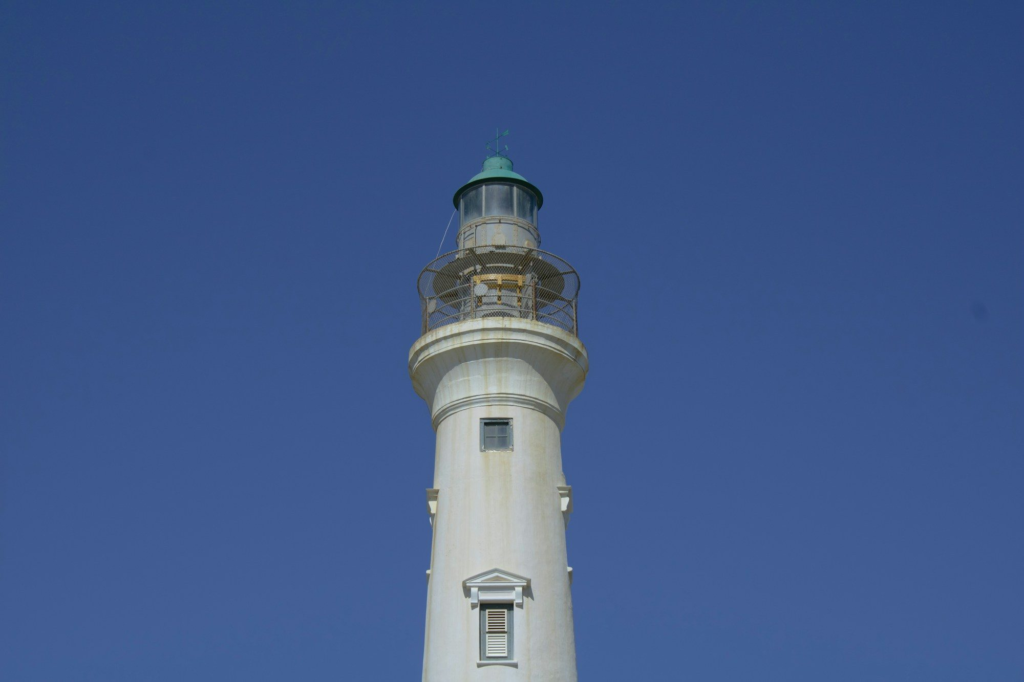
The lighthouse was completed in 1916 and is named after the steamship SS California, which was wrecked off Aruba in 1891. Aruba’s tourism authority says you can climb to the top and lists a $5 admission fee, no reservations needed, and hours of 9:00 AM to 7:00 PM daily (as of October 2026). Check current status before you go. Go late in the day and you’ll be ready for sunset at the beaches below.
14. The Natural Bridge site and Baby Bridge
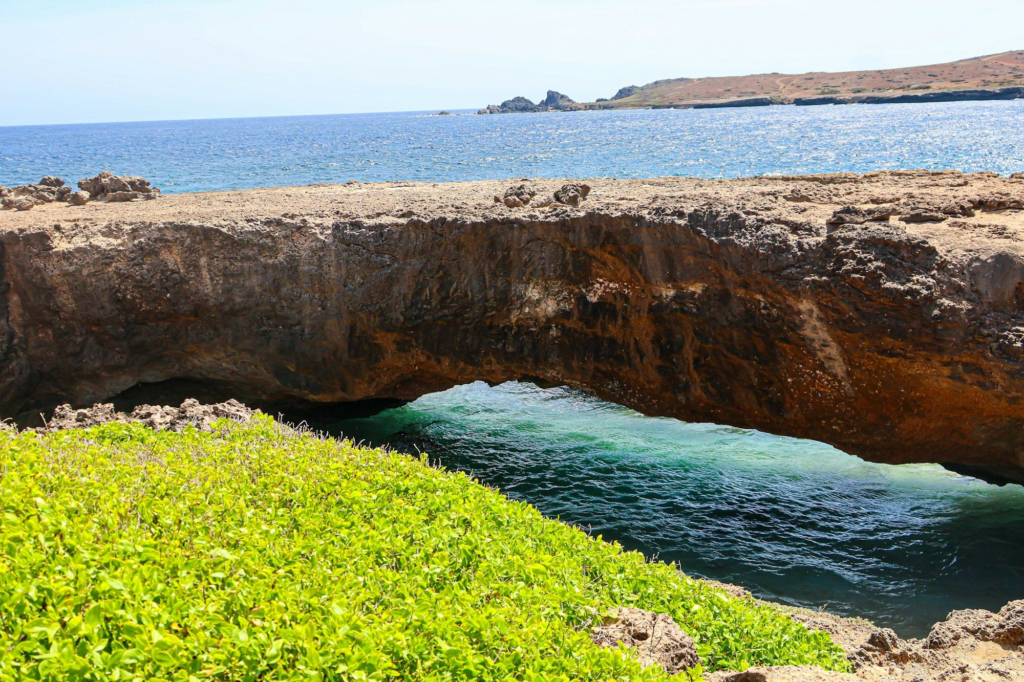
Aruba’s famous Natural Bridge, which stretched over 100 feet (30 m), collapsed in September 2005. A smaller arch called the Baby Bridge still stands nearby, and the coastline around it is a reliably dramatic photo stop.
15. Casibari and Ayo rock formations
These piles of giant boulders sit inland. Casibari’s are tonalite, with carved steps and trails up to a 360-degree view. Ayo’s boulders carry rock art left by the Arawak. Expect a short scramble, and wear closed shoes.
Culture, wildlife and slower experiences
16. Butterfly Farm
The Butterfly Farm is in the Palm Beach area. Guided tours there take about 20–25 minutes and are included with admission. Your ticket works as a return pass for the rest of your vacation, so come back early one morning, when butterflies that have just emerged are making their first flights.
17. San Nicolaas murals
Aruba’s tourism board features a peacock mural in the southern town of San Nicolaas. Give yourself time to wander on foot and see what else is painted on its walls.
18. Oranjestad history walk
The capital is home to Fort Zoutman, described as the oldest structure on the island. It makes a good half-day outing, especially on a cruise-ship day.
19. A food tour or local lunch
Some of the best meals in Aruba are at local spots, not hotel restaurants. Pair a land tour with lunch at a local kitchen.
20. Sunset photoshoot
A professional shoot at golden hour is one of the few experiences that gives you something to take home. Eagle Beach is a popular backdrop.
Sample week: combining the best tours
| Day | Morning | Afternoon/Evening |
|---|---|---|
| 1 | Beach and rest | Lighthouse climb before sunset |
| 2 | Catamaran snorkel sail | Free afternoon |
| 3 | Jeep tour to Arikok and the Natural Pool | Beach recovery |
| 4 | Butterfly Farm | Island sightseeing tour |
| 5 | Ranger hike (early start) | San Nicolaas murals |
| 6 | Beach day | Sunset sail |
For a more detailed plan, see our 5-day Aruba itinerary.
Safety notes before you book
- North and east coast water is rough. Swimming at Boca Prins is strictly prohibited, and swimming in the park’s bays is strongly discouraged because of currents.
- Respect park rules. Arikok’s rules bar you from bothering, taking or feeding any plants or animals, and visitor guidance says littering is strictly forbidden.
- Plan for limited facilities. Restrooms in the park are at the visitor center and at the restaurant between Boca Prins and the Fontein cave.
- Motion sickness. The bumpy 4×4 tracks may not suit everyone, so take precautions if you’re prone to it.
- Sun. Highs average from the mid-80s to around 90°F year-round, so bring a hat, water and sunscreen on every tour.
FAQ
What are the most popular types of tours in Aruba?
Catamaran trips (morning snorkel sails and sunset sails), off-road tours to the north coast and Arikok National Park, and island sightseeing tours are the staples. An island sightseeing tour is the quickest way to see the main landmarks in one outing.
Can you take a UTV or ATV into Arikok National Park?
No. The Aruba Conservation Foundation prohibits ATVs, UTVs and motorbikes in its protected nature areas. Jeep and 4×4 tours or hiking are the ways to explore the park.
How much does it cost to enter Arikok National Park?
As of October 2026, the Aruba Conservation Foundation lists the conservation day pass at $22 per adult, with visitors under 17 free and a discount for residents of Aruba, Bonaire and Curaçao with ID. Guided ranger hikes cost $25 per person.
Is the California Lighthouse worth visiting?
Yes, especially near sunset. Aruba’s tourism authority lists climbing to the top for a $5 admission fee (as of October 2026), open 9:00 AM to 7:00 PM daily, with no reservation needed. Check current status before you go.
How many tours should I book for a week in Aruba?
Three or four is a comfortable number: one boat trip, one off-road or island tour, one nature or culture experience, and a sunset outing. Leave beach days in between so you don’t wear yourself out.
Sources
- Experiences and Parke Nacional Arikok conservation pass – Aruba Conservation Foundation
- Aruba Conservation Foundation – visitor center hours
- Arikok National Park – Aruba Tourism Authority
- California Lighthouse – Aruba Tourism Authority
- California Lighthouse – Wikipedia
- Hooiberg – Aruba Tourism Authority
- Casibari Rock Formations – Aruba Tourism Authority
- Ayo Rock Formations – Wikipedia
- Arikok National Park – Wikipedia
- Fort Zoutman – Wikipedia
- Natural Bridge – VisitAruba
- Butterfly Farm – Aruba Tourism Authority
- FAQ about visiting the farm – The Butterfly Farm
- Arikok National Park in Aruba, An Introduction – Boardwalk (Feb 2025)
- Guide to Arikok National Park – Lonely Planet
- Aruba officially bans plastics and oxybenzone – VisitAruba
- Climate and average weather year-round in Oranjestad – Weather Spark