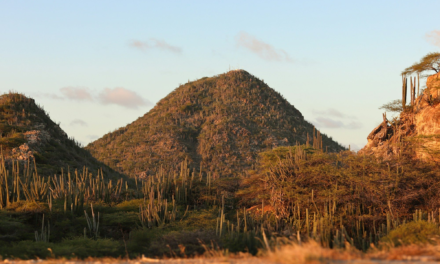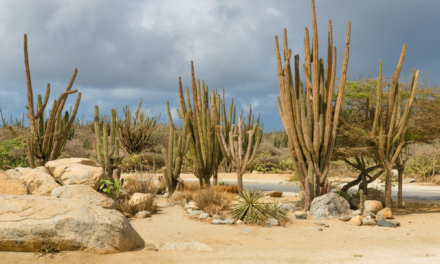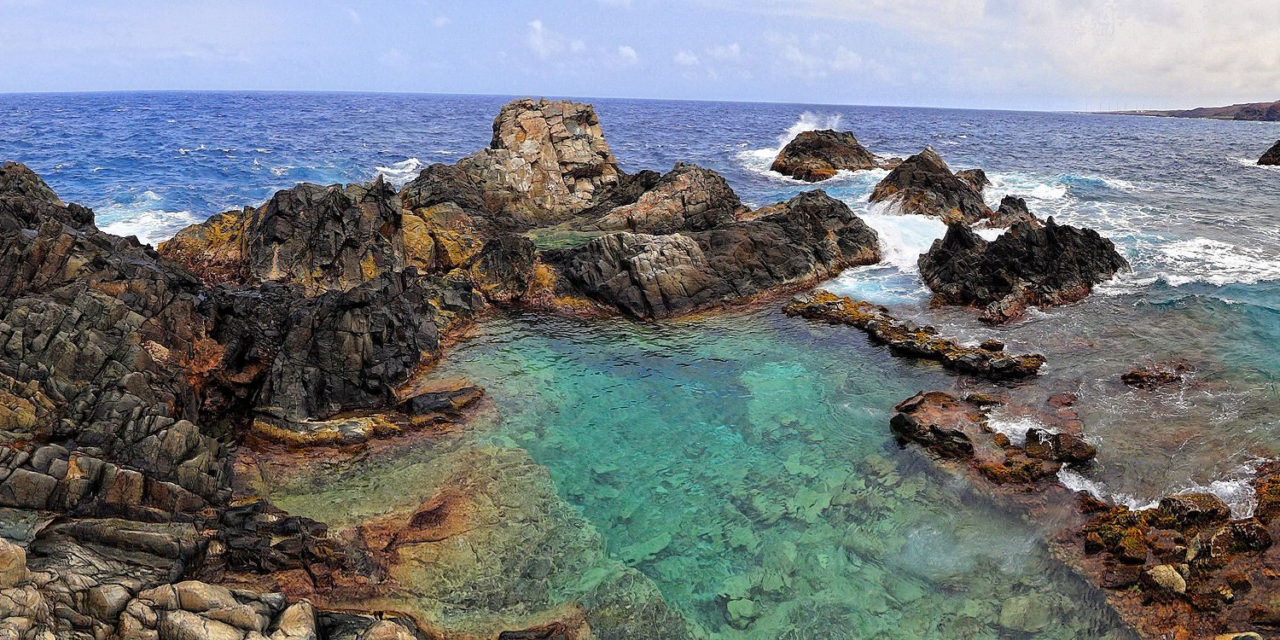
The natural pool in Aruba, known locally as Conchi, is a small saltwater basin ringed by dark volcanic rock on the island’s wild northeast coast. Open ocean breaks against the outer wall while the water inside stays fairly calm. It’s one of the island’s best-known sights, and one of the hardest to reach: no paved road goes there, and a regular rental car won’t make it. Here’s how to get there, what it costs and what to expect when you arrive.
Quick facts: the natural pool in Aruba
- Names: Conchi (“bowl”) and Cura di Tortuga. The Aruba Tourism Authority translates the second name as “Turtles Cove,” and Wikipedia gives “Turtle Pen.”
- Where: inside Arikok National Park, in its North conservation zone on the northeast coast.
- How to get there: by 4×4, on horseback or on foot. Regular cars can’t reach it.
- Entry: you need an Arikok conservation pass, USD 22 for adults with under-17s free (as of October 2026, Aruba Conservation Foundation).
- Not allowed: UTVs, ATVs and motorbikes in the park’s protected areas.
- Best time: early morning, for calmer water and fewer people.
- Bring: water shoes, sunscreen, plenty of water.
What the natural pool actually is
Conchi is a saltwater pool that fills and drains with the tide, walled in by pillow lava. That ring of rock is all that stands between you and the ocean. On calm days you can float and snorkel inside the basin and spot small tropical fish. On rougher days waves crash over the rim and fill the pool with white water, which is the scene in most of the dramatic photos.
Facilities are basic. According to the tourism authority, you can buy a snack or a drink during the day near the head of the steps above the pool. For anything else, bring your own.
How to get to the natural pool
There are four realistic ways in. Your choice depends on how confident you are driving off-road, how fit you are, and whether you’re happy to be guided.
| Option | Best for | Things to know |
|---|---|---|
| Guided 4×4 jeep tour | Most visitors, first-timers, families | The tourism authority recommends it for inexperienced drivers. The guide handles the rough road. |
| Self-drive 4×4 | Experienced off-road drivers | Check that your rental company allows it. The road is rutted, rocky and steep in places. |
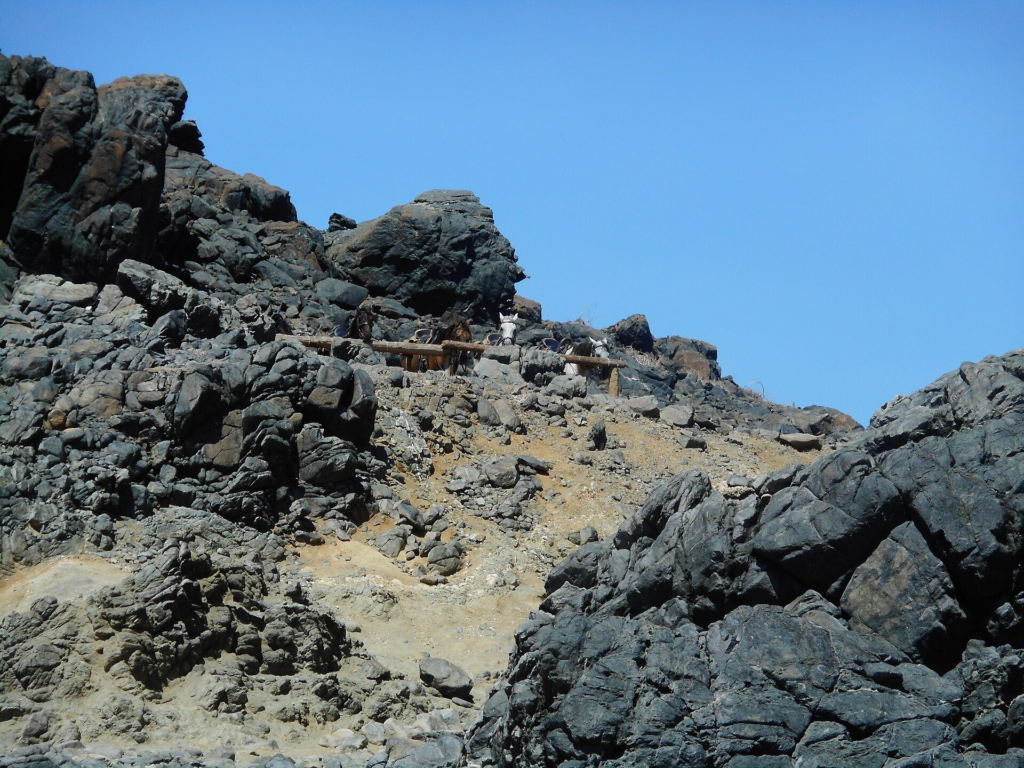
| Horseback ride | Riders who want a slower, scenic approach | Listed by the tourism authority as one of the main ways to visit. |
| Hike | Fit, experienced hikers | The tourism authority describes a 3 to 4-hour round trip. There’s little shade. |
By guided jeep tour
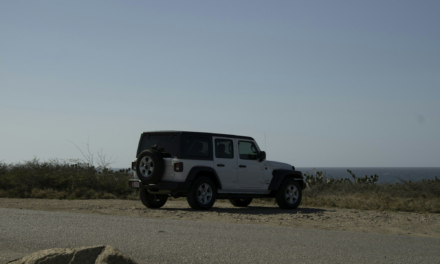
This is the most common way to go, and the easiest if you don’t want to risk a rental car on the park’s tracks. Jeep tours to Conchi usually combine it with other stops in the park or along the north coast. Our jeep vs UTV comparison explains why it has to be a jeep: the Aruba Conservation Foundation prohibits ATVs, UTVs and motorbikes in its protected nature areas. UTV tours don’t go into the park or to the Natural Pool, so book a guided jeep tour for this trip.
By self-drive 4×4
According to the tourism authority, this is 4×4 territory: ordinary cars get turned back at the park checkpoints, and only four-wheel-drive vehicles carry on toward Conchi. Before you go:
- Confirm your rental contract allows off-road driving in the park. Earth Trekkers stresses getting the rental company’s authorization first.
- Buy your conservation pass at the San Fuego visitor center or the Vader Piet entrance.
- Keep to the park speed limit of 20 km/h (12 mph), stay on park roads and park only in marked areas, as the park rules require.
- Download offline maps before you go.
On foot
Hiking in is possible but hard. One route described by Earth Trekkers starts in the Daimari area on the north coast. You drive a rough dirt road to a hilltop, walk down to the coast, and then follow the shoreline south over a sand dune, a second beach and sharp volcanic rock. The stretch between Daimari Beach and the pool is about a mile. The author suggests allowing three to four hours in total, and says most people spend 30 to 45 minutes at the pool. There’s no ticket booth or ranger on this route, so buy your pass at the visitor center first. Earth Trekkers also notes that this way into the park is an unauthorized access point, so check with ACF before you use it. Carry at least a liter of water per person.
The last stretch: stairs and rocks
Even with a 4×4, you’ll still walk the final part. Lonely Planet describes a short hike that includes steep, narrow stairs. The rocky path and steep stone steps mean wheelchairs can’t get down, and the tourism authority advises against the visit for anyone who has trouble walking. Wear shoes with good grip and keep your hands free on the way down.
Swimming safety at Conchi
The basin is protected, not sealed off. Take these points seriously:
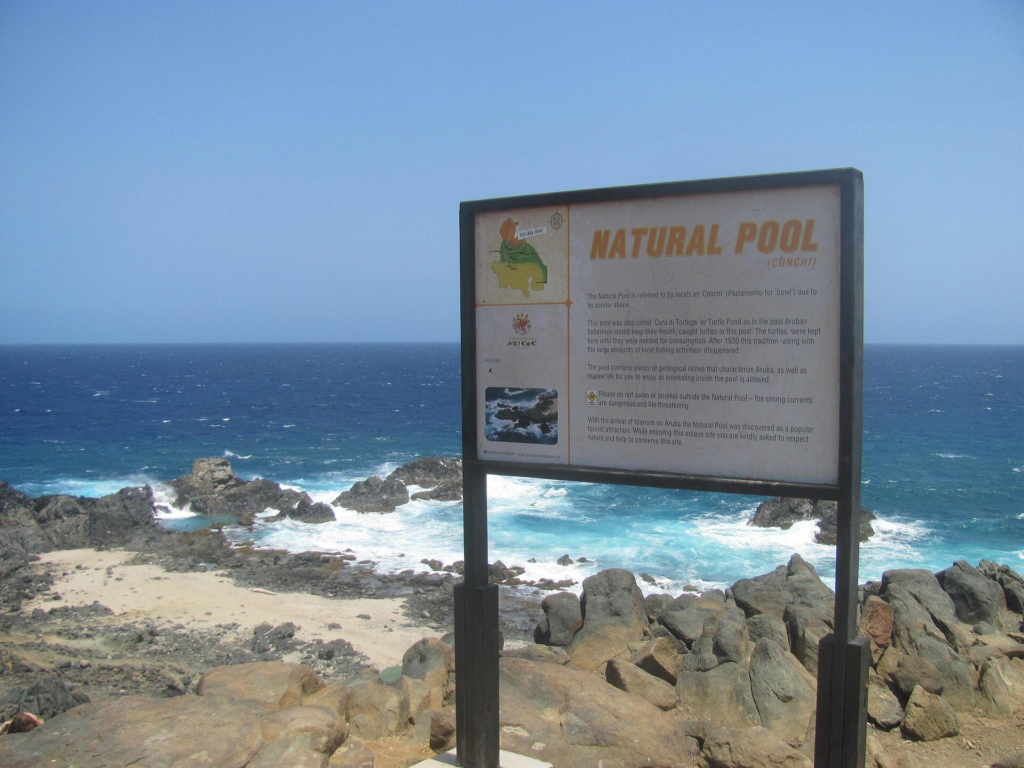
- Only swim when the sea is calm. The tourism authority warns that waves sometimes crash over the rocks and that conditions can change fast.
- Rangers may close it. Park rangers may close the pool when the weather is extreme.
- Rocks are slippery. Take care climbing in and out. Water shoes help.
- Follow posted warnings and ranger advice at all times.
- Use reef-safe sunscreen. Aruba has penalized the import, sale and production of sunscreen with oxybenzone since July 2020, so pack an oxybenzone-free one (VisitAruba).
Don’t treat the nearby north coast beaches as swimming spots either. The tourism authority warns of strong undertow at Boca Prins, where a sign advises staying out of the water, and at Dos Playa, which it says isn’t suited to inexperienced swimmers.
What to bring
- Water shoes, or sturdy shoes with good grip for the walk
- Swimsuit, worn under your clothes
- Mask and snorkel if you want to look at fish
- Oxybenzone-free sunscreen, a hat and sunglasses (there’s very little shade)
- At least one liter of water per person, more if you’re hiking
- A dry bag or zip pouch for your phone
- Your conservation pass or tour confirmation
Our Aruba packing list covers the rest of your suitcase.
Timing your visit
Go early. Local guidance points to early morning for calmer water and fewer people, and Lonely Planet gives the same advice for the park generally, to beat the tour crowds. The park’s San Fuego visitor center is open daily from 8:00 am to 3:30 pm, according to ACF. Check current hours before you go. The park has no lighting, according to Nomadic Niko, so plan to be out well before dark.
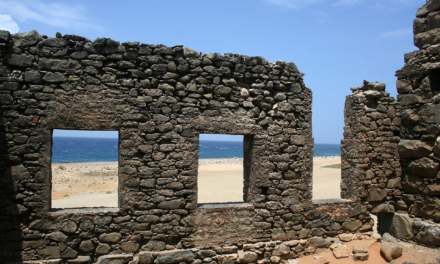
Make a day of it. Conchi works well with the caves and trails of Arikok National Park, or with a loop of the north coast’s chapel, ruins and lighthouse. If you’d rather snorkel in reliably calm water, see the beaches in our guide to snorkeling spots in Aruba.
FAQ
Can you drive a regular car to the natural pool in Aruba?
No. According to the Aruba Tourism Authority, only 4×4 vehicles can make the trip, and ordinary cars are stopped at the park checkpoints.
How much does it cost to visit the natural pool?
There’s no separate fee for the pool, but you need an Arikok National Park conservation pass. As of October 2026, the Aruba Conservation Foundation lists it at USD 22 for adults, with children under 17 free.
Can UTV tours go to the natural pool?
No. The Aruba Conservation Foundation prohibits UTVs, ATVs and motorbikes in its protected nature areas, which include the part of Arikok National Park where Conchi is. Book a guided jeep tour instead, or go on horseback or on foot.
Is the natural pool safe for swimming?
It can be when the ocean is calm, but waves sometimes break over the rocks and conditions change quickly. Follow ranger warnings, because rangers may close the pool in extreme weather. Wear water shoes on the slippery rocks.
How long is the hike to the natural pool?
The Aruba Tourism Authority describes it as a 3 to 4-hour round trip for experienced hikers. On the route from Daimari, the coastal stretch between Daimari Beach and the pool is about a mile.
Is the natural pool good for kids?
The steep stone steps, rough ground and changing sea conditions make it a better fit for older kids who are confident swimmers. The site isn’t wheelchair accessible.
Sources
- Natural Pool – Aruba Tourism Authority
- Natural Pool (Aruba) – Wikipedia
- Tour listings and local guides we reviewed (October 2026)
- Experiences – Aruba Conservation Foundation
- Rules & Regulations, Parke Nacional Arikok – ACF (PDF)
- Adventure in Aruba: How to Visit Natural Pool – Earth Trekkers
- Guide to Arikok National Park – Lonely Planet
- Aruba Officially Bans Plastics and Oxybenzone – VisitAruba News
- Boca Prins – Aruba Tourism Authority
- Dos Playa – Aruba Tourism Authority
- Arikok National Park: Aruba’s Rugged Natural Landscape – Nomadic Niko