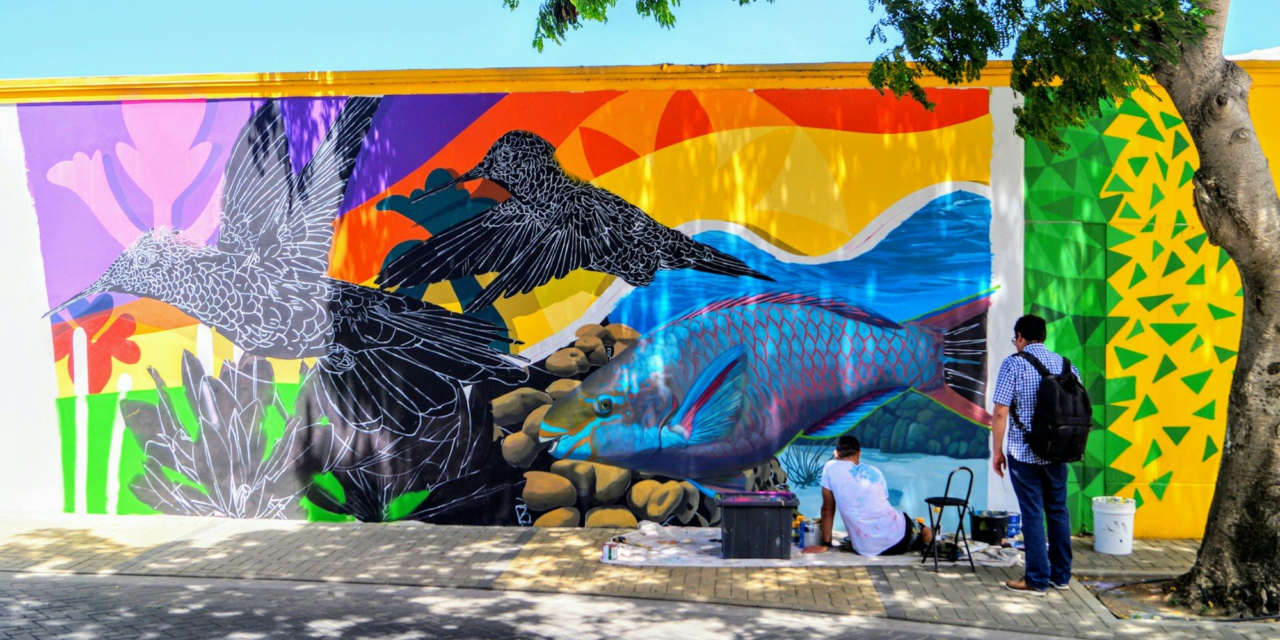
Palm Beach and Eagle Beach are beautiful, but they’re only one side of the island. Head away from the resort strip and you’ll find a fishermen’s pier where locals shoot pool over plates of fresh fish, a town covered in murals, a factory still processing the plant that once covered the island, and a winter carnival that has been running since the 1950s. This guide rounds up the best local experiences in Aruba, organized by type, with practical details and sources so you can plan with confidence.
Local experiences in Aruba: quick answer
- Eat: Fresh fish at Zeerovers in Savaneta; pastechi and keshi yena in Oranjestad’s backstreets.
- See: The murals of San Nicolas, Fort Zoutman and the Archaeological Museum in Oranjestad.
- Learn: A free tour of the Aruba Aloe Museum & Factory in Hato.
- Celebrate: Carnival (January to February), Art Week Aruba (early September).
- Speak: A few words of Papiamento: bon dia (good morning), danki (thank you), bon bini (welcome).
- Get around like a local: Arubus public buses; a single ride is $2.60 (as of October 2026, per Arubus).
Learn a little Papiamento first
The single easiest way to connect with Arubans is to try their language. Papiamento has been the native tongue here for more than 300 years and became an official language alongside Dutch in 2003. It’s an Afro-Portuguese creole with words borrowed from Dutch, English and Spanish, and it’s spoken only on Aruba, Bonaire and Curaçao. Good news for beginners: it’s mostly pronounced the way it’s spelled.
A starter set, from aruba.com’s Papiamento page:
| Papiamento | English |
|---|---|
| Bon bini | Welcome |
| Bon dia / Bon tardi / Bon nochi | Good morning / afternoon / evening |
| Con ta bai? | How are you? |
| Mi ta bon | I’m well |
| Por fabor | Please |
| Danki / Mashi danki | Thank you / Thank you very much |
| Te oro | See you later |
| Aruba ta dushi | Aruba is lovely |
Use them at a snack bar, a bus stop or a small shop and you’ll usually get a smile. For more practical advice before your trip, see our first-time Aruba travel tips.
Eat where the locals eat
Zeerovers, Savaneta
If you do one local food experience, make it Zeerovers. This no-frills spot sits on a fishing pier in Savaneta, the island’s original capital, and it draws locals and visitors alike. The menu is whatever local fishermen have caught that day, and you eat it out by the water. Bring cash; some visitors report cards being accepted, but don’t count on it. Aruba.com lists the kitchen as open 11 a.m. to 9 p.m. and closed Mondays. A 2026 AP report on Aruba’s food scene suggested arriving before 11 a.m. to avoid long lines. Read our full Zeerovers guide for ordering tips.
Oranjestad’s backstreets
Downtown Oranjestad has a handful of no-frills spots that locals love, highlighted in a February 2026 guide by food writer Sue Campbell (A Taste for Travel):
- The Pastechi House for pastechi, the filled pastry that is Aruba’s favorite snack.
- Happy Spot for batidos, fresh fruit shakes.
- City Garden Bistro de Suikertuin for keshi yena, the island’s famous stuffed cheese dish.
- The Little Fish on the harborfront for take-out mochi pisca, small pieces of fresh fish.
New to the island’s cuisine? Our guide to Aruban food and local dishes explains what to order.
Charlie’s Bar, San Nicolas
Open since 1941, Charlie’s Bar on Main Street in San Nicolas started as a hangout for refinery workers and sailors and is widely called the oldest bar on the island. Every surface is covered in mementos left by visitors over the decades, and you’re invited to add your own. A 2024 Caribbean Journal visit listed hours of 11:30 a.m. to 6 p.m., so make it a lunch stop.
Rum from Aruban sugarcane
At Alto Vista Winery & Distillery, near the Alto Vista Chapel, a small estate grows its own sugarcane for rum and grapes in desert sand, according to a February 2026 AP report. The same report notes that most of Aruba’s food is imported, which makes island-grown produce like this all the more interesting.
Explore San Nicolas, the Sunrise City
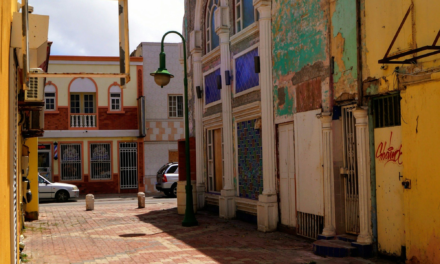
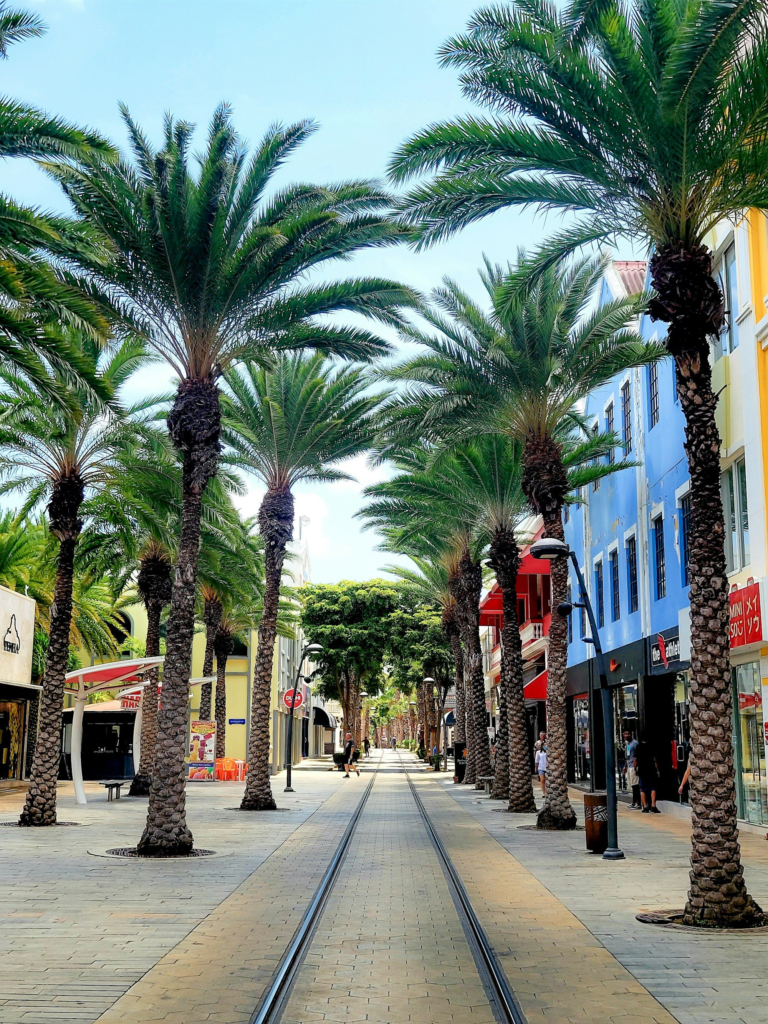
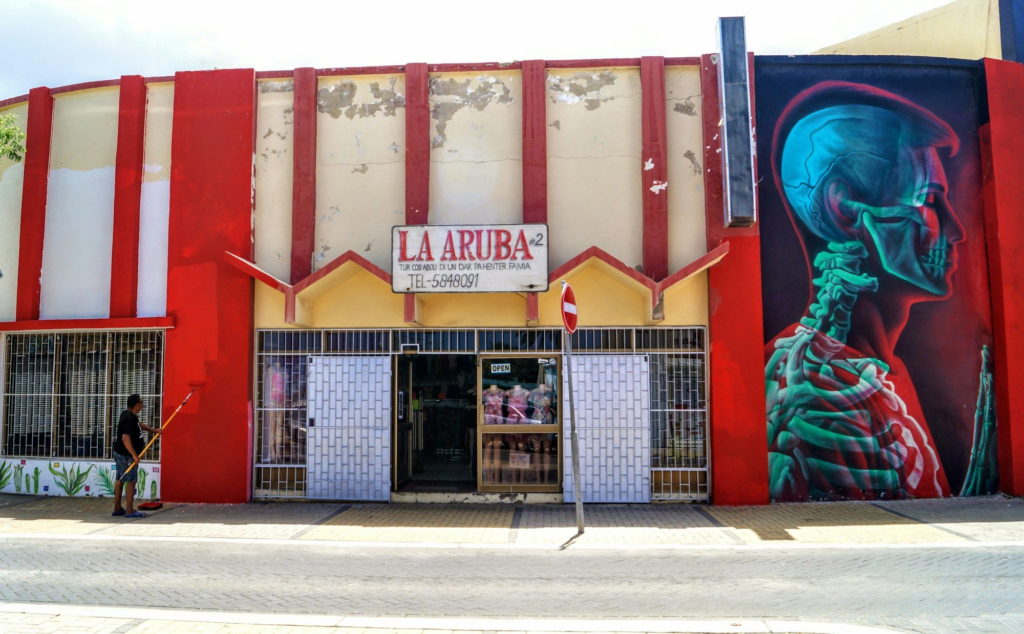
San Nicolas, at the island’s southeastern end, grew up around the Lago oil refinery, which opened in 1924. Workers came from across the Caribbean, and the town’s steel bands, calypso and carnival traditions came with them. Since the first Aruba Art Fair in 2016, the town has become an open-air gallery: aruba.com counted more than 40 large murals in 2019, and Forbes called Aruba the “Street Art Capital of the Caribbean” on the strength of San Nicolas’s walls.
A good San Nicolas day looks like this:
- Walk the murals around Main Street in the morning, when it’s cooler.
- Visit the Museum of Industry, inside the old water tower, for the story of gold, aloe, phosphate, oil and tourism on the island ($5 as of October 2026, per aruba.com).
- Stop at the Community Museum in the restored Nicolaas Store for local history, and grab a coffee at Kulture Café in the same building.
- Lunch at Charlie’s Bar, then spend the afternoon at Baby Beach or Rodger’s Beach, where local fishermen moor their colorful boats.
Our San Nicolas street art guide has a full self-guided route and photo tips.
Discover Savaneta, Aruba’s first capital
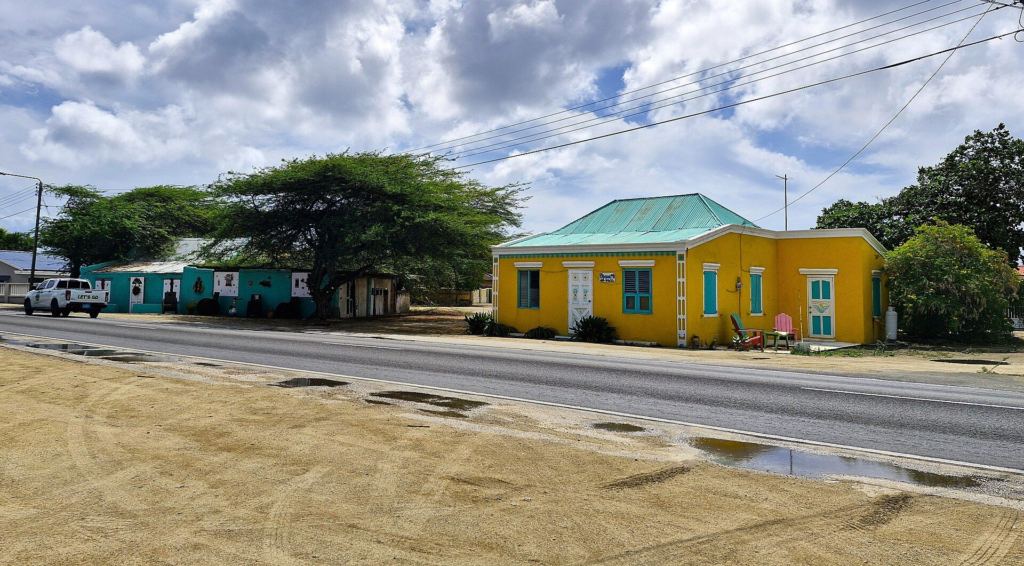
Savaneta was the island’s capital until 1797, when the role passed to Oranjestad. Today it’s a quiet seaside village with no large resorts, just small guesthouses, holiday rentals and a strong fishing tradition. According to aruba.com, Aruba’s oldest house, a roughly 150-year-old cas di torto (mud hut), still stands here.
Just north of the village, Mangel Halto is a calm, shallow beach backed by mangroves and protected by an offshore reef. It’s good for snorkeling, kayaking and paddleboarding. Combine it with lunch at Zeerovers for an easy half day.
See Oranjestad through its history
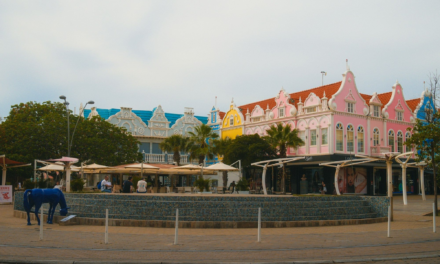
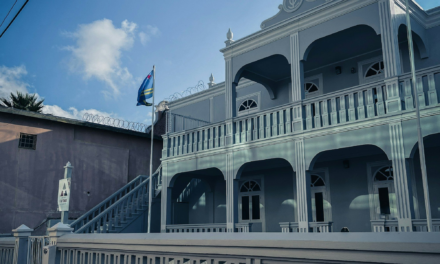
The capital is more than shopping. Fort Zoutman, built between 1796 and 1798, is Aruba’s oldest building, and together with the 1868 Willem III Tower it houses the Historical Museum of Aruba. A short walk away, the National Archaeological Museum Aruba tells the story of the island’s Amerindian people, with collections spanning roughly 2500 BCE to the 19th century. Look out for the eight blue horse sculptures around downtown, part of the Paardenbaai Aruba project and a nod to the town’s old name, Paardenbaai.
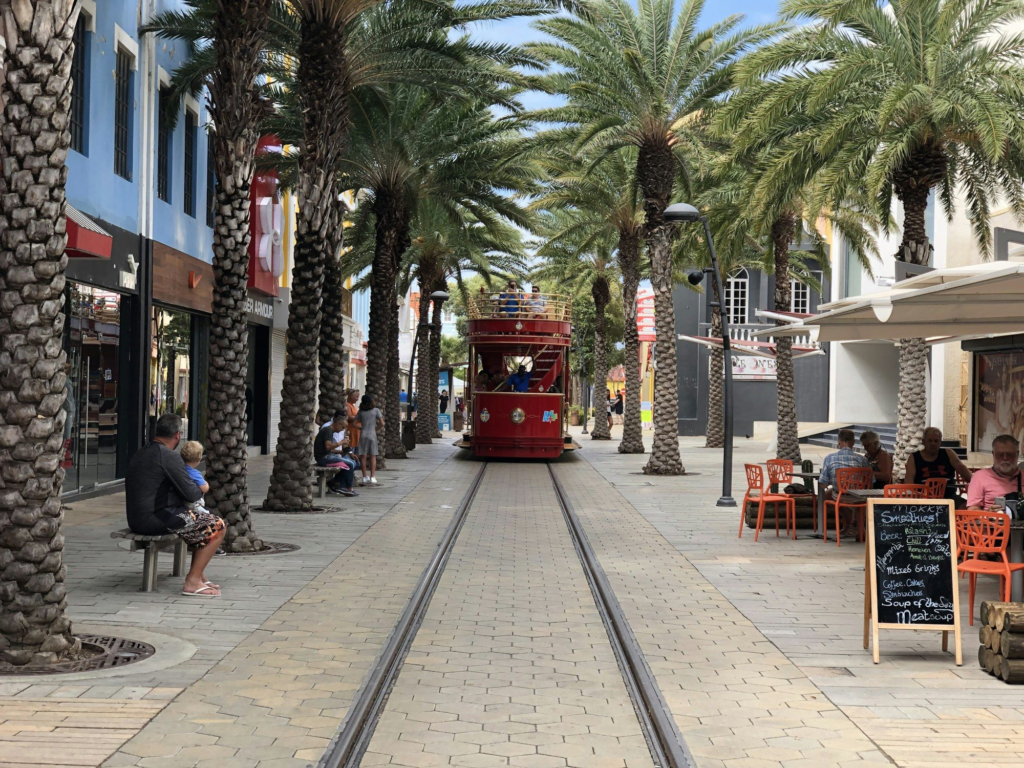
Our guide to Oranjestad in a day lays out a full walking plan, opening hours and how to use the free downtown trolley.
Tour the aloe factory
Aloe arrived on Aruba in 1840 and soon covered about two-thirds of the island, making Aruba the world’s largest aloe exporter, according to the Aruba Tourism Authority. You can see how the plant is processed today on a free tour of the Aruba Aloe Museum & Factory at Pitastraat 115 in Hato, near the hotel area. Tours run about every 15 minutes in English, Dutch, Spanish and Papiamento, and finish in the factory store (free as of October 2026, per Aruba Aloe). It’s a good choice on a cloudy day. See our Aruba aloe and local souvenirs guide for what to buy.
Buy from local artisans
Much of what’s sold as “Aruban” in tourist shops is imported. To support local makers, look for the national handicraft seal, Seyo Nacional pa Artesania, or a “Made in Aruba” label. Aruba.com lists Cosecha, with shops in Oranjestad and San Nicolas, as a place to find locally made crafts; check current hours before you go.
For a market experience, aruba.com lists the monthly Taste-Like-Buy Festival in Palm Beach for tasting and buying local products, and the Ostrich Farm in Santa Cruz runs a monthly farmers market with farm produce, homemade sauces, herbal teas and crafts. Dates vary, so check before you go.
Time your trip for a festival
| Event | When | Where | What to expect |
|---|---|---|---|
| Aruba Carnival | Season opens Nov 11; main events January to February | Oranjestad, San Nicolas, Noord, Savaneta | Parades, Jouvert pajama party, music contests |
| Art Week Aruba and Aruba Art Fair | Early September (Sept 7–13 in 2026) | San Nicolas | New murals painted live, music, food trucks |
| Autentico Festival | Late fall (October in 2025) | Various venues | Pop-up dinners and chef events showcasing Aruban cuisine |
Carnival is the big one. According to VisitAruba and aruba.com, it traces back to refinery workers in San Nicolas and became an island-wide celebration in the mid-1950s. Visitors can watch from the roadside for free, buy a ticket for a reserved viewing spot or pay to march with a carnival group. Read our Aruba Carnival guide for dates and tips.
A note on weekly events: Visit Aruba lists the Bon Bini Festival at Fort Zoutman as on a short break, and the Carubbian Festival, a weekly street party in San Nicolas, was on hiatus at last report. Check whether either is running during your stay.
Ride the bus like a local
Taking the public bus is cheap, easy and a small window into everyday island life. Arubus buses link the hotel areas, Oranjestad and San Nicolas. As of October 2026, a single trip is $2.60, a retour card $5 and a day pass $15, per Arubus. You can pay cash on board for single trips, and passes are sold at several hotel gift shops and the Oranjestad bus station booth. The main station is across from the cruise terminal in Oranjestad, and San Nicolas has its own station in the town center. Our getting around Aruba guide covers routes and alternatives.
If you’d rather have a local explain what you’re seeing, a guided island tour is a good way to combine several of these stops, from Oranjestad’s landmarks to the south coast, in one day.
Be a good guest
- Greet people. A “bon dia” before asking a question goes a long way.
- Carry cash for small local spots like Zeerovers.
- Ask before photographing people or homes, especially in residential areas of San Nicolas.
- Respect the sun. Use reef-safe, oxybenzone-free sunscreen, wear a hat and drink plenty of water.
- Buy local. Look for the Seyo seal on crafts and eat at family-run places.
FAQ
What is the most authentic thing to do in Aruba?
Eating fresh fish at Zeerovers in Savaneta and spending a day in San Nicolas, with its murals, museums and Charlie’s Bar, are two of the most local experiences on the island. If you’re visiting in January or February, Carnival is the biggest cultural event of the year.
What language do they speak in Aruba?
Papiamento and Dutch are the official languages. Papiamento has been the native language of Arubans for more than 300 years, and it became official alongside Dutch in 2003.
How do you say thank you in Papiamento?
“Danki” means thank you, and “mashi danki” means thank you very much.
Do I need cash at Zeerovers?
Bring cash; some visitors report cards being accepted, but don’t count on it. Aruba.com lists the kitchen as open 11 a.m. to 9 p.m. and closed on Mondays.
Can I visit San Nicolas without a car?
Yes. Arubus runs buses to San Nicolas, arriving at the main station in the town center. As of October 2026, a single ride costs $2.60.
What local festivals happen in Aruba?
The biggest are Carnival (main events in January and February) and Art Week Aruba with the Aruba Art Fair in early September in San Nicolas. The Autentico culinary festival takes place in late fall.
Sources
- Papiamento – aruba.com
- Zeerover – aruba.com
- Savaneta – aruba.com
- San Nicolas – aruba.com
- Aruba Drives Street Art to International Accolade – aruba.com
- Alla scoperta di San Nicolas – aruba.com blog
- Museum of Industry – aruba.com
- Oranjestad – aruba.com
- Fort Zoutman – Wikipedia
- San Nicolaas – Wikipedia
- National Archaeological Museum Aruba
- Aruba Aloe Museum and Factory – aruba.com
- Factory & Museum Tour – Aruba Aloe
- Authentisches Aruba – aruba.com
- Mercado de Granjeros – aruba.com
- Eat Like a Local in Downtown Oranjestad Aruba – A Taste for Travel
- Journeying to Charlie’s, the Oldest Bar in Aruba – Caribbean Journal
- Foodie tourists head to Aruba (AP) – Washington Times
- Carnival in Aruba – aruba.com
- Aruba Art Fair 2026 – aruba.com
- Bon Bini Festival – VisitAruba
- Oranjestad, Aruba – Wikipedia
- Aruba’s Carnival History – VisitAruba
- FAQ – Arubus
- The Aruba Aloe Museum & Factory – VisitAruba
- Our Top 5 Local Gifts to Take Home – Aruba Sunset Beach
- Everything You Need to Know About Aruba’s Grand Carnival Experience – VisitAruba
- San Nicolas Art Murals – aruba.com
- Charlie’s Bar – aruba.com
- San Nicolas: Discover Aruba’s Street Art – VisitAruba
- Fares & Passes – Arubus