This page contains affiliate links; we may earn a commission from bookings. Ratings from Viator & Tripadvisor.
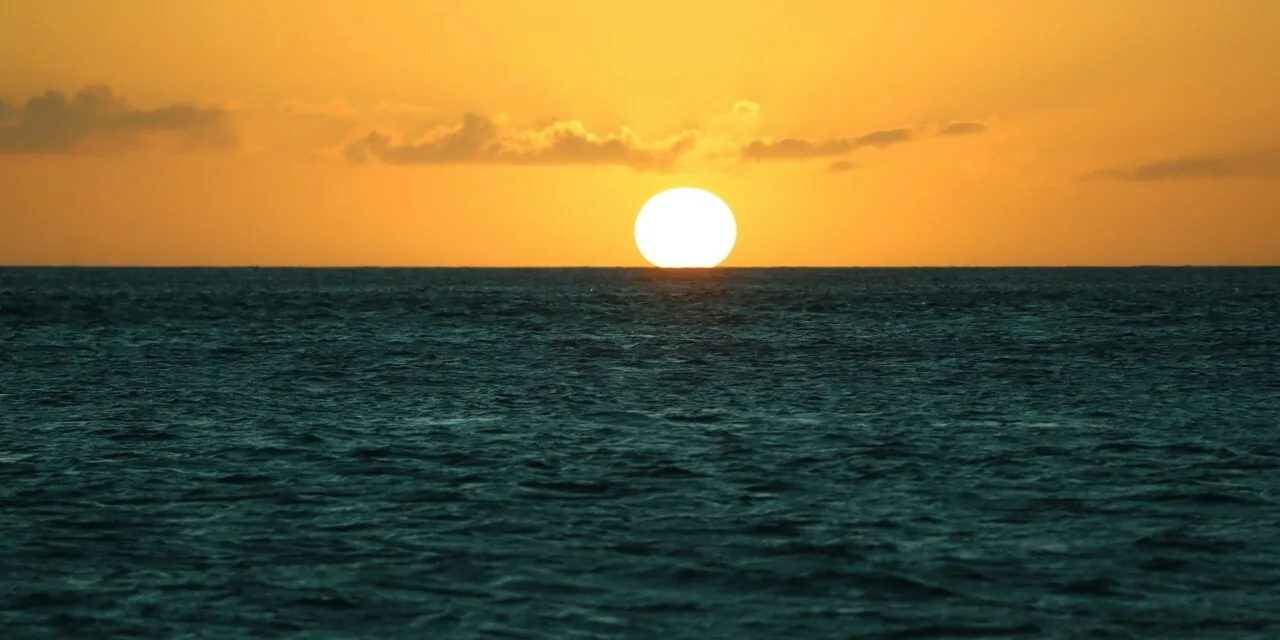
The Aruba sunset time stays between about 6:10 p.m. and 7:10 p.m. all year, earliest in mid-November and latest in early July. If you’re planning a sunset sail, a beach dinner or a photoshoot, that’s the one number to plan around, and it barely moves from week to week. Below is a month-by-month table with sunrise, sunset, golden hour and blue hour, plus why the times stay so steady and how to use them.
Quick answer: Aruba sunset time
- Range: about 6:10 p.m. (mid-November, the earliest) to about 7:10 p.m. (early to mid-July, the latest).
- By month (approx.): Jan 6:25–6:41 p.m., Feb 6:41–6:49, Mar 6:49–6:51, Apr 6:51–6:54, May 6:54–7:02, Jun 7:02–7:09, Jul 7:06–7:10, Aug 6:50–7:06, Sep 6:29–6:50, Oct 6:13–6:29, Nov 6:11–6:14, Dec 6:12–6:25.
- Example: on October 15, 2026, the sun rises at about 6:30 a.m. and sets at about 6:21 p.m. in Oranjestad.
- Golden hour: the warm, low light starts roughly 25 to 30 minutes before sunset.
- Blue hour: the deep-blue afterglow lasts until roughly 20 to 25 minutes after sunset.
- Time zone: Atlantic Standard Time (UTC−4) all year. Aruba does not use daylight saving time.
Aruba sunset times by month
These times were calculated for Oranjestad by All Tours Aruba for the 1st and 15th of each month. Aruba is small, so anywhere on the island will be within a minute or so. For an exact daily figure, check a daily sunset calculator such as timeanddate.com or sunrise-sunset.org for your date.
| Date | Sunrise | Sunset | Golden hour starts | Blue hour ends |
|---|---|---|---|---|
| Jan 1 | 7:01 a.m. | 6:25 p.m. | 5:55 p.m. | 6:49 p.m. |
| Jan 15 | 7:05 a.m. | 6:33 p.m. | 6:04 p.m. | 6:56 p.m. |
| Feb 1 | 7:05 a.m. | 6:41 p.m. | 6:13 p.m. | 7:04 p.m. |
| Feb 15 | 7:02 a.m. | 6:46 p.m. | 6:18 p.m. | 7:08 p.m. |
| Mar 1 | 6:55 a.m. | 6:49 p.m. | 6:21 p.m. | 7:10 p.m. |
| Mar 15 | 6:47 a.m. | 6:50 p.m. | 6:23 p.m. | 7:12 p.m. |
| Apr 1 | 6:36 a.m. | 6:51 p.m. | 6:24 p.m. | 7:13 p.m. |
| Apr 15 | 6:28 a.m. | 6:52 p.m. | 6:24 p.m. | 7:14 p.m. |
| May 1 | 6:20 a.m. | 6:54 p.m. | 6:26 p.m. | 7:16 p.m. |
| May 15 | 6:15 a.m. | 6:57 p.m. | 6:28 p.m. | 7:20 p.m. |
| Jun 1 | 6:13 a.m. | 7:02 p.m. | 6:32 p.m. | 7:25 p.m. |
| Jun 15 | 6:15 a.m. | 7:06 p.m. | 6:36 p.m. | 7:30 p.m. |
| Jul 1 | 6:18 a.m. | 7:09 p.m. | 6:39 p.m. | 7:33 p.m. |
| Jul 15 | 6:22 a.m. | 7:09 p.m. | 6:40 p.m. | 7:33 p.m. |
| Aug 1 | 6:26 a.m. | 7:06 p.m. | 6:37 p.m. | 7:29 p.m. |
| Aug 15 | 6:28 a.m. | 7:00 p.m. | 6:32 p.m. | 7:22 p.m. |
| Sep 1 | 6:29 a.m. | 6:50 p.m. | 6:22 p.m. | 7:12 p.m. |
| Sep 15 | 6:29 a.m. | 6:40 p.m. | 6:13 p.m. | 7:02 p.m. |
| Oct 1 | 6:29 a.m. | 6:29 p.m. | 6:02 p.m. | 6:51 p.m. |
| Oct 15 | 6:30 a.m. | 6:21 p.m. | 5:53 p.m. | 6:43 p.m. |
| Nov 1 | 6:33 a.m. | 6:13 p.m. | 5:45 p.m. | 6:35 p.m. |
| Nov 15 | 6:38 a.m. | 6:11 p.m. | 5:42 p.m. | 6:33 p.m. |
| Dec 1 | 6:46 a.m. | 6:12 p.m. | 5:42 p.m. | 6:35 p.m. |
| Dec 15 | 6:53 a.m. | 6:17 p.m. | 5:47 p.m. | 6:40 p.m. |
A few patterns stand out. Sunsets are earliest from November into early December and latest in late June and July. Sunrises are latest in January and early February, a little after 7 a.m., and earliest in early June, a little after 6:10 a.m. Daylight runs from about 11.5 to 13 hours depending on the month.
Why sunset barely changes in Aruba
Oranjestad sits at roughly 12.5 degrees north of the equator. Near the equator, day length swings far less between seasons than at higher latitudes, so Aruba’s whole sunset spread is about an hour. The Aruba Tourism Authority credits the island’s near-equatorial location for its steady day lengths.
Aruba also never changes its clocks. It stays on Atlantic Standard Time, four hours behind UTC, all year. For visitors from the US East Coast, that means:
- Second Sunday in March to first Sunday in November: the East Coast is on daylight time (UTC−4), so Aruba’s clocks match New York’s.
- Early November to mid-March: the East Coast is on standard time (UTC−5), so Aruba is one hour ahead.
If you book a sunset activity from home in winter, make sure you’re reading Aruba time.
Golden hour and blue hour in Aruba
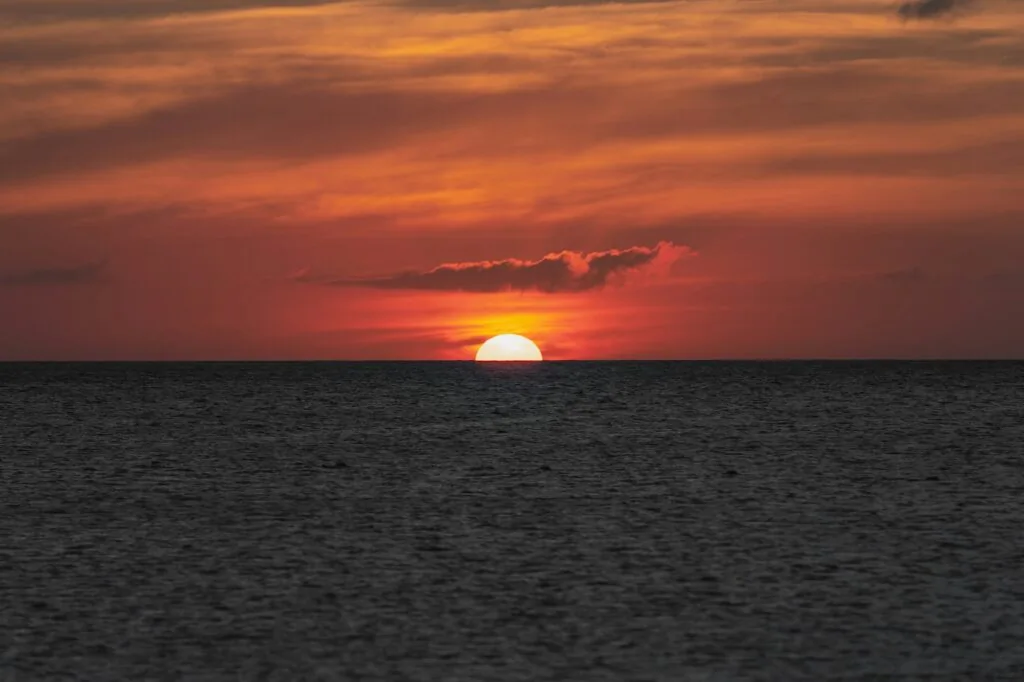
Golden hour is short this close to the equator because the sun drops steeply toward the horizon. In the table, it starts when the sun is about 6 degrees up, roughly 25 to 30 minutes before sunset. That’s when skin tones warm up, shadows stretch and the sea turns gold.
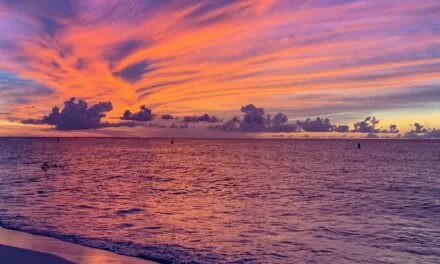
Blue hour follows sunset, as the sky shifts from orange to pink to deep blue. In the table it ends when the sun is about 6 degrees below the horizon, roughly 20 to 25 minutes after sunset. On October 15, 2026, for example, sunset is at about 6:21 p.m. and civil twilight ends at about 6:43 p.m. Some of the best color arrives in that window, so don’t leave the moment the sun disappears.
Mornings have a version too: the first half hour or so after sunrise brings similar soft light, cooler air and emptier beaches. For phone and camera settings, see how to photograph a sunset in Aruba.
Planning your evening around the sunset
Once you know the sunset time for your dates, work backward from it.
A sunset sail
Because sunset moves through the year, departure times for sunset sails can shift with the season. Confirm your check-in time the day before. A boat also gives you an uncluttered horizon, which helps if you’re hoping to spot the green flash. Our guide to Aruba sunset cruises covers what’s included and what to wear, and our catamaran tour guide compares sunset sails with snorkel trips. To weigh a sail against other evening plans, see the best tours in Aruba.
Dinner with a view
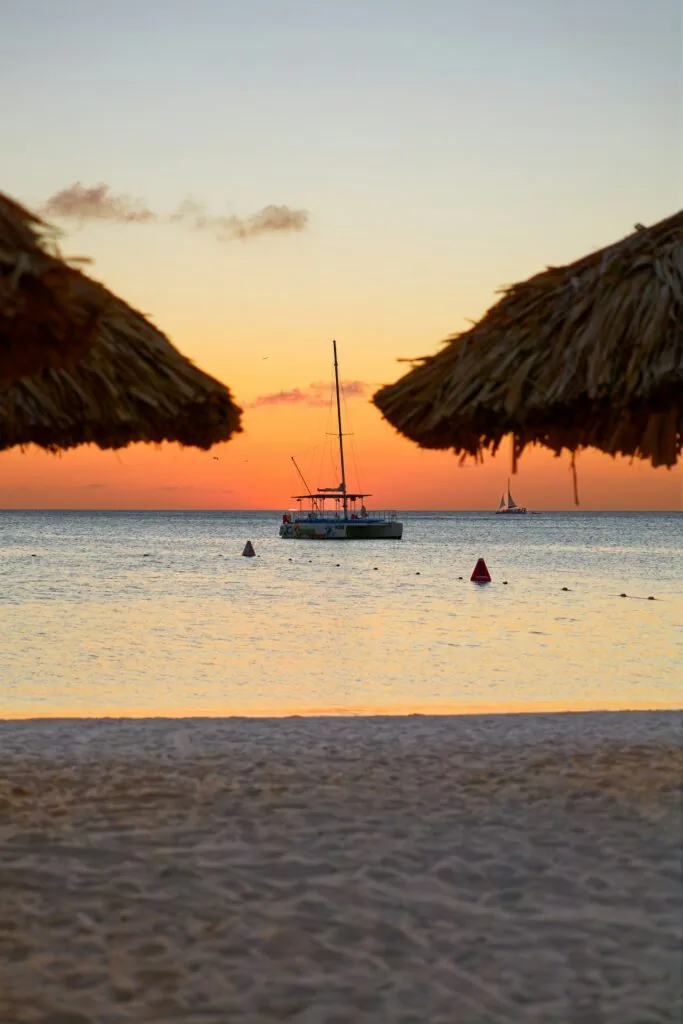
For a table on the sand, book about 30 to 45 minutes before sunset so you can order and settle in before the sky gets interesting. In November that can mean sitting down before 5:45 p.m.; in July, closer to 6:30 p.m. See our picks of beach bars for sunset drinks and our ranking of the best sunset spots in Aruba.
A sunset photoshoot
Plan to start about an hour before sunset so you can work through brighter light, golden hour and the afterglow in one session. If you’re booking a professional photographer, ask what start time they recommend for your date and book dinner after it. Our guide to hiring a photographer in Aruba lists other questions to ask. A guided sunset photoshoot is the easiest way to come home with photos of the two of you together, not just of each other.
Our sunset photoshoot planning guide covers locations and what to wear.
Can you see the green flash in Aruba?
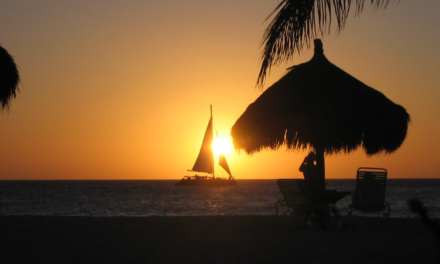
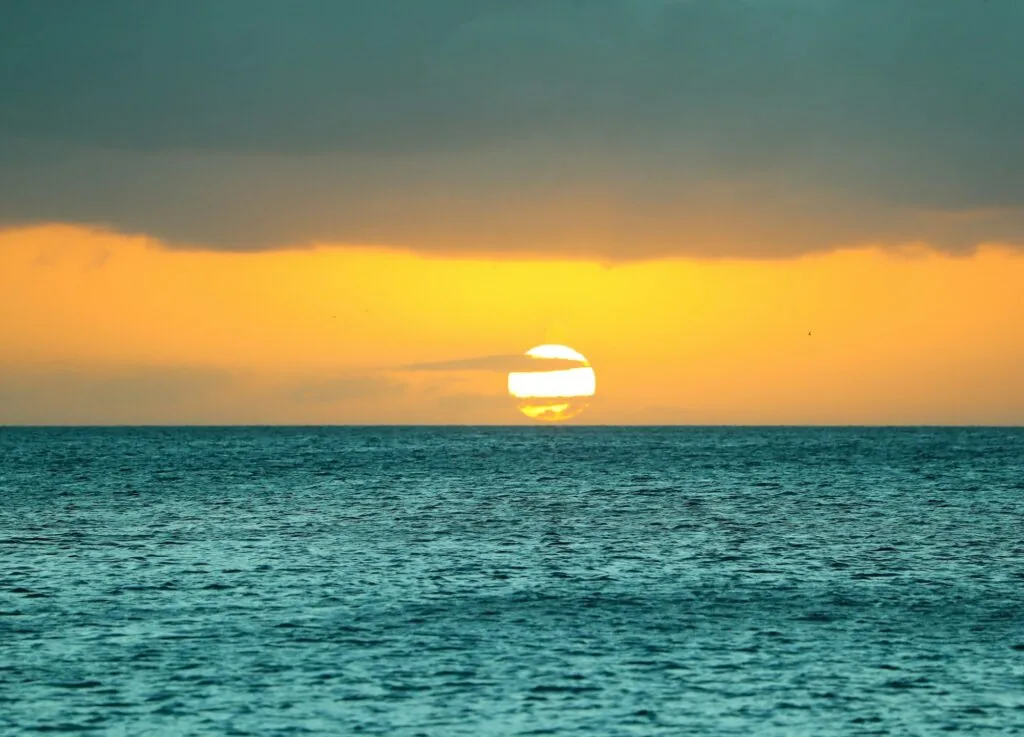
Sometimes. The green flash is a brief green spot or rim at the top of the sun just as it disappears, caused by the atmosphere bending light like a prism near the horizon. The Aruba Tourism Authority even tells visitors at the California Lighthouse to watch for it. To improve your odds:
- Pick a spot with a clean sea horizon and nothing in the way, such as a west-facing beach or a boat.
- Hope for clear, stable air. Low clouds on the horizon will hide the moment.
- Watch the very last sliver of sun. The effect usually lasts no more than a couple of seconds, and near the equator it rarely lasts more than a second.
- Protect your eyes. Don’t stare at the sun before it’s down, and never look at it through binoculars or a camera’s optical viewfinder.
Clouds, rain and haze by season
Aruba is dry. The Aruba Tourism Authority gives average annual rainfall of about 18 inches and a rainy season from October to December, with mostly short showers. Wikipedia puts the short rainy season at September to January and notes the island stays dry even then. A rained-out sunset is the exception.
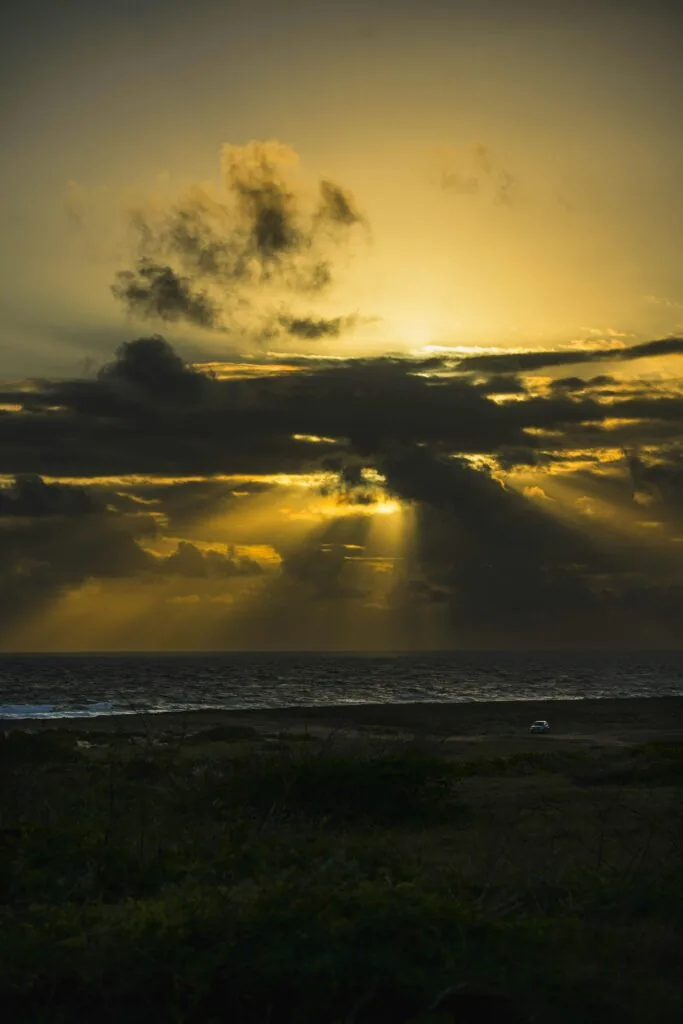
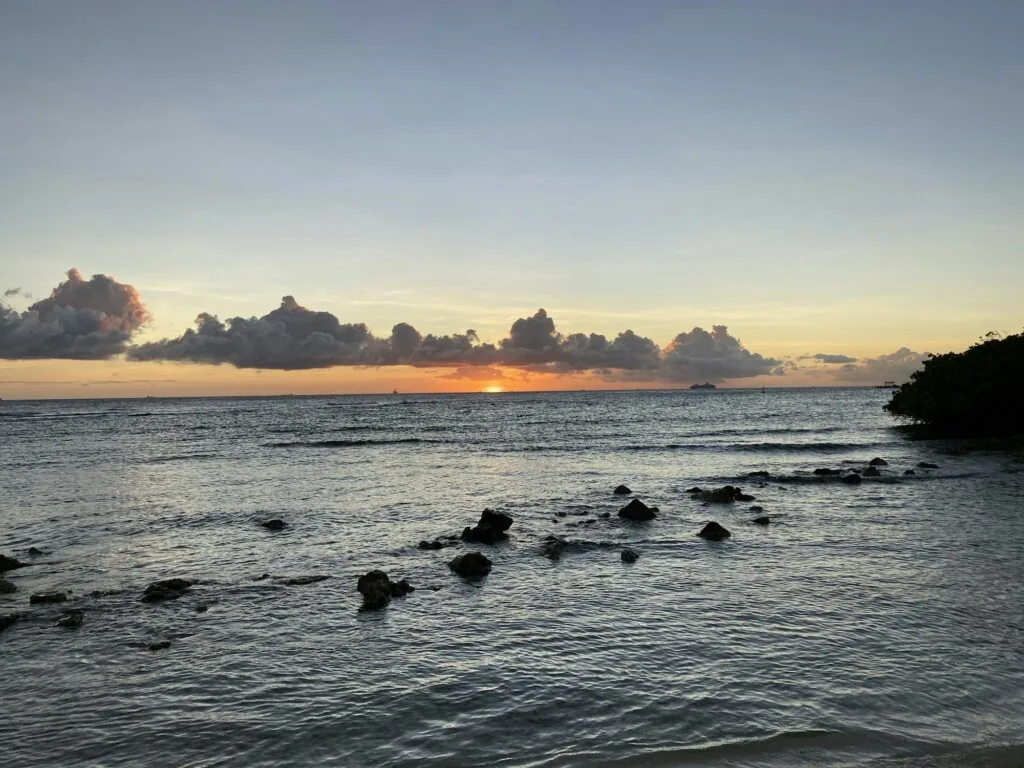
Clouds matter more than rain. WeatherSpark’s long-term averages show the clearer part of the year running from about mid-December to early April, with October the cloudiest month. High, scattered clouds are a bonus because they catch color after sundown; a thick bank on the horizon is what spoils the show.
Haze is the other variable. Saharan dust sometimes drifts across the Caribbean to the ABC islands; one event in June 2024 brought forecasts of poor visibility and air quality. On dusty days the sky can look washed out.
For more on weather by month, see our guide to the best time to visit Aruba, and for storm risk, Aruba’s hurricane season explained.
FAQ
What time is sunset in Aruba?
Between about 6:10 p.m. and 7:10 p.m., depending on the time of year. The earliest sunsets are in mid-November and the latest in early to mid-July.
What time is sunset in Aruba in November?
About 6:11 to 6:14 p.m. November has the earliest sunsets of the year, around 6:11 p.m. in mid-month (sunrise-sunset.org, checked November 9, 2026).
What time is sunset in Aruba in December?
About 6:12 p.m. at the start of December, moving to about 6:25 p.m. by New Year’s Eve (sunrise-sunset.org, checked November 9, 2026).
What time is sunset in Aruba in February?
About 6:41 p.m. on February 1, moving to about 6:49 p.m. by the end of the month (sunrise-sunset.org, checked November 9, 2026).
Does Aruba change its clocks for daylight saving time?
No. Aruba stays on Atlantic Standard Time (UTC−4) all year. From early November to mid-March it is one hour ahead of the US East Coast; the rest of the year the clocks match.
When is golden hour in Aruba?
Golden hour starts roughly 25 to 30 minutes before sunset, when the sun is about 6 degrees above the horizon. On October 1 and October 15, 2026, that’s about 6:02 p.m. and 5:53 p.m.
What time is sunrise in Aruba?
Between about 6:13 a.m. (early June) and about 7:05 a.m. (mid-January to early February).
What is the best month for sunsets in Aruba?
Any month works. If you want the best odds of a clear horizon, WeatherSpark’s averages show the clearer part of the year running from about mid-December to early April. October is the cloudiest month on average.
Sources
- Oranjestad Sunrise and Sunset Times (sunrise-sunset.org)
- Aruba Sunset and Sunrise Time (Aruba Tourism Authority)
- Weather and Climate (Aruba Tourism Authority)
- California Lighthouse (Aruba Tourism Authority)
- Aruba (Wikipedia)
- Eastern Time Zone (Wikipedia)
- Green flash (Wikipedia)
- Climate and Average Weather Year Round in Aruba (WeatherSpark)
- Air quality and visibility deteriorate due to Sahara dust (Curaçao Chronicle)