For several weeks every winter, Aruba turns its main roads into parade routes. Costumes covered in feathers, sequins and lights, floats blasting road march songs, a pajama party that runs all night until sunrise: Aruba Carnival is the island’s biggest celebration, and visitors are welcome to watch, dance along and even march in a group. This guide covers the history, the main parades, how the season’s dates work and how you can join in.
Aruba Carnival: quick answer
- When: The season officially opens on November 11 at 11:11 a.m. Most events fall in January and February, building to the Grand Parades on the weekend before Ash Wednesday.
- 2026 recap: Events ran January 3 to February 16, 2026, ending with the Oranjestad Grand Carnival Parade on February 15 and Carnival Monday on February 16 (per aruba.com).
- 2027: Ash Wednesday falls on February 10, 2027, so expect the Grand Parade weekend around February 6–7, 2027. Wait for the official schedule before booking.
- Big events: Torch Parade, Jouvert Morning, the Lighting Parades, the San Nicolas and Oranjestad Grand Carnival Parades and the Burning of King Momo.
- Can visitors take part? Yes. You can watch for free from the roadside, buy a ticket for a reserved viewing spot (a “kavel”), or pay to join a carnival group.
A short history of Aruba Carnival
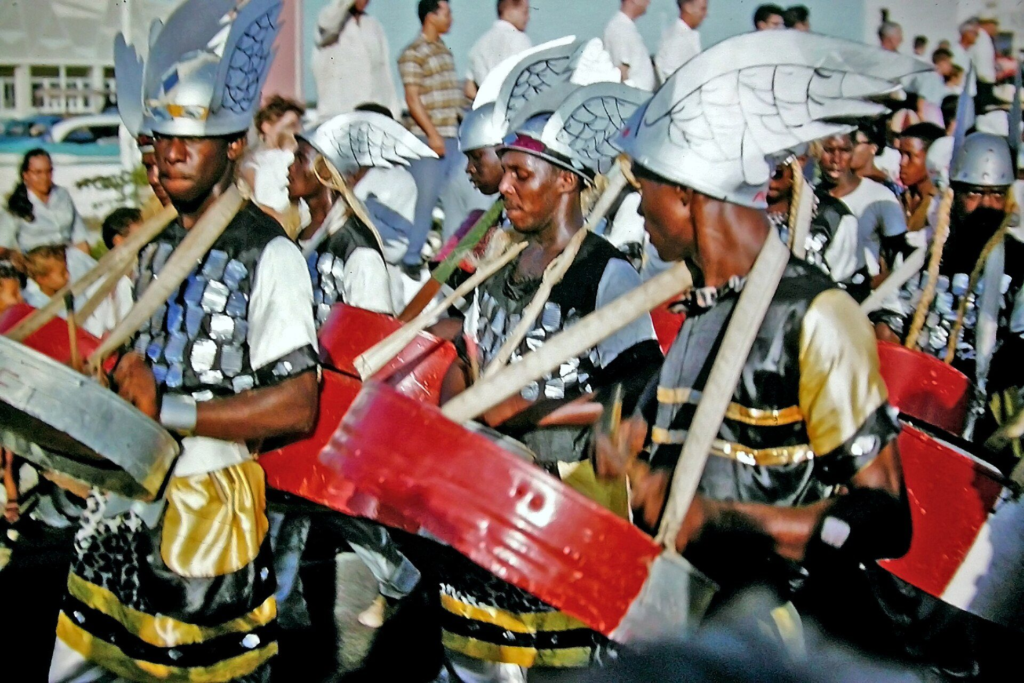
Carnival’s roots on the island run through San Nicolas and the Lago oil refinery. According to VisitAruba’s carnival history, costumed balls were held at social clubs as early as 1921, and American refinery workers brought their own fancy-dress parties. Workers recruited from Trinidad, Jamaica and British Guiana then organized the first parade in San Nicolas to celebrate the Allied victory in World War II, and their steel bands and masquerade (mas) bands became part of Aruba’s carnival.
The Aruba Tourism Authority dates small street festivals to 1954 and the first public island-wide carnival, with clubs, districts and the first official Carnival Queen, to 1955. By 1957 there were Grand Parades in both San Nicolas and Oranjestad. The Stichting Arubaanse Carnaval (Aruban Carnival Foundation), still the main organizer, was founded in 1966, at 11:11 a.m. on November 11, which is why the season still opens at that exact time. The Tivoli social club added the nighttime Lighting Parade in 1981.
Aruba Carnival dates: how the season works
Carnival is tied to the Christian calendar. The season ends the night before Ash Wednesday, so the dates move each year. The general rhythm, based on the 2026 schedule published by aruba.com, looks like this:
- November 11, 11:11 a.m.: The season opens.
- Early January: The Torch Parade in Oranjestad kicks off the public events (January 3 in 2026, at 8 p.m.).
- January: Calypso, road march and Tumba music contests, the queen elections and the children’s Fantasy Parade.
- Late January to early February: Children’s parades in Noord, Oranjestad and San Nicolas, the Noord Sunset Parade and a Mascarade Parade in Savaneta.
- The weekend before the Grand Parades: Jouvert Morning and the Grand Lighting Parade.
- Final weekend: The San Nicolas Grand Carnival Parade on Saturday and the Oranjestad Grand Carnival Parade on Sunday.
- Carnival Monday: An official holiday, per aruba.com.
The 2026 schedule at a glance
| Date (2026) | Event | Where and when |
|---|---|---|
| Jan 3 | Torch Parade | Oranjestad, 8 p.m. |
| Jan 18 | Fantasy Parade | Children’s parade |
| Feb 1 | Children’s Grand Carnival Parade | Downtown Oranjestad, 1 p.m. |
| Feb 4 | Noord International Sunset Parade | Noord, 6 p.m. |
| Feb 6–7 | Jouvert Morning | Downtown San Nicolas, overnight until sunrise |
| Feb 7 | Grand Lighting Parade | Oranjestad, 8 p.m. |
| Feb 12 | San Nicolas Lighting Parade | San Nicolas, 8 p.m. |
| Feb 14 | 72nd San Nicolas Grand Carnival Parade | San Nicolas, noon until sunset |
| Feb 15 | Grand Carnival Parade | Oranjestad, from 10 a.m. into the evening |
| Feb 16 | Carnival Monday | Official holiday |
For 2027, Ash Wednesday falls on February 10 (per the Old Farmer’s Almanac), which puts the final parade weekend around February 6–7, 2027. That’s our estimate from the calendar, not an official announcement. Check aruba.com’s carnival calendar before you book flights.
For more on weather and crowds through the year, see our guide to the best time to visit Aruba.
The main events, explained
Torch Parade
The season’s opening parade through Oranjestad, originally organized by the Tivoli social club. It’s a more casual parade than the Grand Parades, and it’s one that visitors can join with a carnival group for a small fee.
Jouvert Morning
Jouvert is the pajama party of Carnival. In 2026 it started at 8 p.m. on February 6 in downtown San Nicolas and ran until sunrise, with live-music trucks moving slowly through the streets and crowds following them. People turn up in pajamas or playful variations. The crowd skews younger and the music is loud. If you go, set an alarm and plan your ride home in advance.
Lighting Parades
Nighttime parades where costumes and floats are covered in lights. Oranjestad’s Grand Lighting Parade starts at 8 p.m. and can run late into the night. Because it’s after dark, you avoid the midday sun.
The Grand Carnival Parades
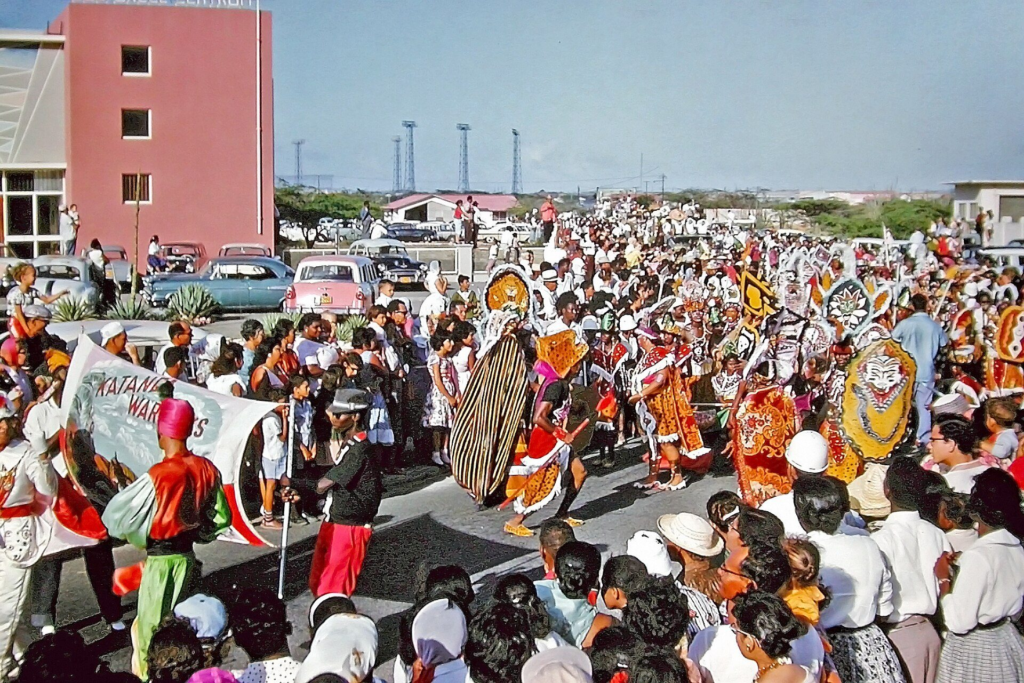
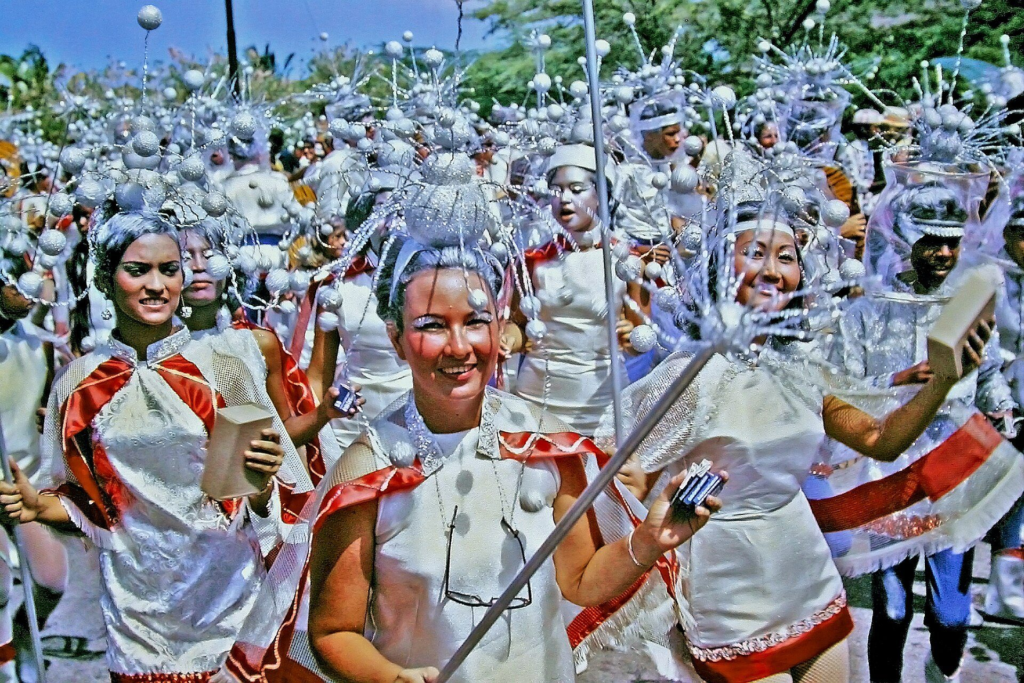
The two marathon parades on the final weekend are the main event. San Nicolas goes first on Saturday, with its own long tradition (2026 was the 72nd edition), then Oranjestad hosts the finale on Sunday. The Aruba Tourism Authority calls the Oranjestad parade the island’s largest. Expect hours of elaborate costumes decorated with stones, sequins and feathers, themed floats and live bands.
The Burning of King Momo
Carnival ends with the burning of King Momo, a life-size effigy representing the spirit of Carnival. Traditionally the effigy burns at midnight before Ash Wednesday; in 2026, aruba.com’s schedule placed it right after the Oranjestad Grand Parade, at the harbor arena. The idea is that Momo’s spirit returns when the next season begins.
How visitors can join in
There are three levels of participation, from free to fully costumed.
1. Watch from the roadside (free)
Anyone can watch. Arrive early to claim a spot behind the barriers. For Oranjestad parades, Boardwalk Aruba suggests L.G. Smith Boulevard as a viewing area, or Vondellaan if you’d like an earlier night during the Lighting Parade. Routes can shift slightly from year to year.
2. Buy a ticket for a kavel
If you’d rather not stand behind the barriers all day, look for a kavel: a ticketed spot along the route set up by a local business, club or family. What you get varies. Some offer seating under shade with food, drinks, a DJ and toilets; others are closer to bring-your-own. Either way, tickets sell in advance, so ask your hotel or local contacts which ones are open to visitors.
3. March with a carnival group
This is the real thing. Local carnival groups design their own costumes and floats, and you can ask a group whether it has places for visitors. According to VisitAruba, joining the casual Torch Parade (Fakkel parade) with a group usually just requires a ticket for a small fee and comes with the group’s T-shirt, while fully joining a group costs more and covers the main parades, a full costume and an open bar. Contact a group directly to ask about availability. Aruba.com also reported in 2023 on a carnival group set up specifically for visitors, where you can sign up for individual parades rather than the whole season.
Prices change each year and depend on the group, so ask when you contact them. Groups also hold fundraising parties around the start of the season, which are a fun way to meet members.
Carnival survival tips
- Plan your ride first. Roads along the routes close, so you’ll walk more than you expect. Don’t drink and drive; book a taxi or pick a designated driver, especially for Jouvert and the Lighting Parades.
- Treat the daytime parades like a long beach day. They go on for hours, so bring lots of water, a hat and sunglasses, and keep topping up oxybenzone-free, reef-safe sunscreen.
- Protect your ears. Earplugs make the speaker trucks much easier to enjoy up close.
- Bring your own comfort if you’re not in a kavel: a folding chair and a small cooler go a long way.
If you’d like to keep the party going, our Aruba nightlife guide covers bars and clubs year-round.
Missed Carnival? Get a taste year-round
If your trip doesn’t line up with the season, you can still catch some of the atmosphere. San Nicolas has been home to the Carubbian Festival, a Thursday-evening street party with live music, dancers, local food and craft stalls. VisitAruba reported in 2020 that it was on hiatus, so ask locally whether it has returned. Fort Zoutman’s Bon Bini Festival, which Visit Aruba says offers a taste of Carnaval alongside folkloric music and dance, is listed as on a short break; check whether it’s running. Either way, San Nicolas, the birthplace of Aruba’s carnival, is worth a visit; see our San Nicolas street art guide. For more ways to connect with island culture, try our list of authentic local experiences in Aruba.
FAQ
When is Aruba Carnival 2027?
The official schedule wasn’t published as of October 2026. The season opens November 11, and the finale is the weekend before Ash Wednesday. With Ash Wednesday on February 10, 2027, the Grand Parade weekend should fall around February 6–7, 2027. Confirm with aruba.com before booking.
What is the biggest Aruba Carnival parade?
The Grand Carnival Parade in Oranjestad, held on the Sunday before Ash Wednesday, is the finale and the largest. The San Nicolas Grand Carnival Parade takes place the day before.
Can tourists be in the Aruba Carnival parade?
Yes. You can contact local carnival groups about joining; according to VisitAruba, full membership covers the main parades, a costume and an open bar, and aruba.com has reported on a visitor-focused group that lets you join individual parades. Contact groups well before your trip.
What is Jouvert in Aruba?
Jouvert Morning is an all-night pajama party held in downtown San Nicolas on the weekend before the Grand Parades. Music trucks lead crowds through the streets from evening until sunrise.
Is Carnival Monday a holiday in Aruba?
Yes. Carnival Monday, the day after the Oranjestad Grand Parade, is an official holiday. Expect some businesses to be closed.
What is the Burning of King Momo?
It’s the symbolic end of Carnival: a life-size effigy of King Momo is burned to mark the close of the season, traditionally at midnight before Ash Wednesday, with the promise that the Carnival spirit returns the following year.
Sources
- Aruba Carnival (2026 calendar) – aruba.com
- Carnival in Aruba – aruba.com
- Aruba’s Carnival History – VisitAruba
- Everything You Need to Know About Aruba’s Grand Carnival Experience – VisitAruba
- Aruba’s Carnival Groups – VisitAruba
- Carnival group for visitors – aruba.com
- Carnaval in Aruba: The Ultimate Short Guide – Boardwalk Aruba
- Aruba Carnival 2027 – Carnifest
- February 10, 2027 – The Old Farmer’s Almanac
- Aruba Holidays 2026 – Calendarific
- San Nicolas: Discover Aruba’s Street Art – VisitAruba
- Carubbian Festival – In Your Pocket
- Bon Bini Festival – VisitAruba