Aruban food is a mix of everything that has passed through the island: Dutch cheese and pancakes, South American cornmeal and stews, Caribbean fried fish and plantain, and even an Indonesian-style filling in a favorite breakfast snack. It’s easy to eat only at resort restaurants and miss most of it. This guide covers 15 local dishes, snacks and drinks worth looking for, and where the Aruba Tourism Authority and recent reviews say to find them.
Aruban food: quick answer
- National dish: Keshi yena, spiced meat or chicken baked inside a crust of Gouda or Edam cheese.
- Classic breakfast snack: Pastechi, a fried, half-moon pastry with fillings like cheese, beef, chicken or tuna.
- Sides you’ll see everywhere: Funchi (cornmeal) and pan bati (a slightly sweet, pancake-like flatbread).
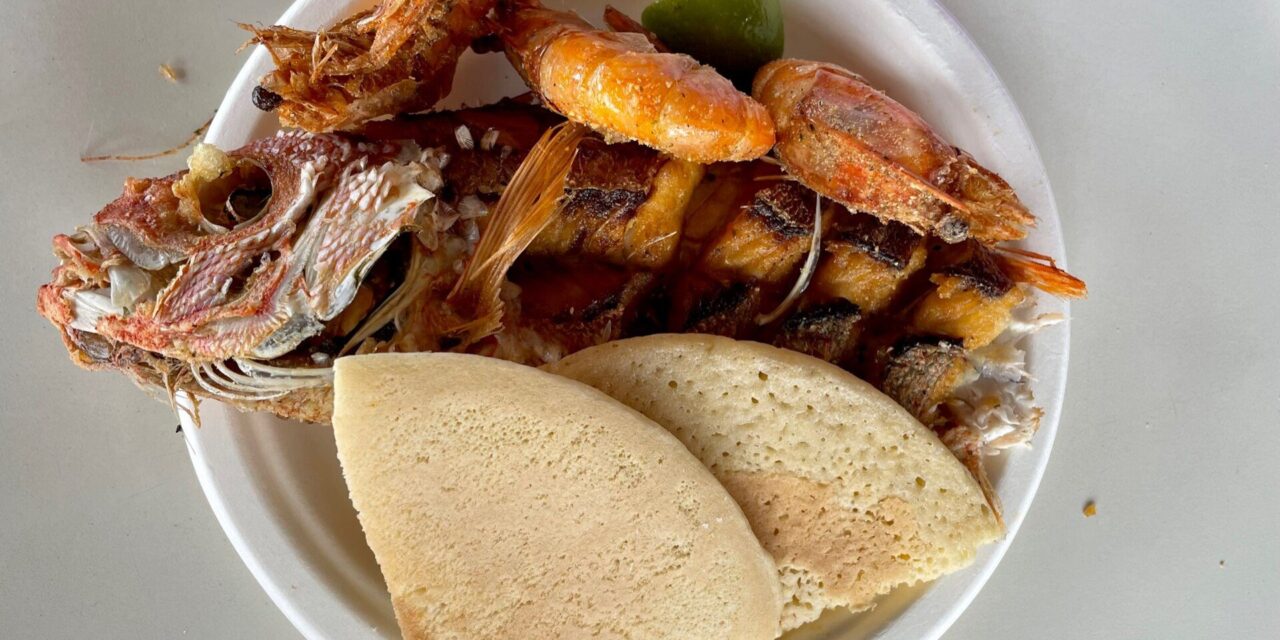
- Must-try seafood: Pisca hasa, the lightly fried catch of the day.
- Signature drinks: Balashi beer, the Aruba Ariba cocktail and Coecoei liqueur.
What makes Aruban food different
The island’s cooking borrows from all directions. Gouda and Edam cheese and Dutch snacks like bitterballen and poffertjes come from the Netherlands. Ayaca comes from Venezuela, where it’s called hallaca. Pastechi can come with an Indonesian-style chop suey filling. And fresh fish, fried and served with cornmeal and plantain, ties it all together. Many of these dishes are simple, filling home cooking. Keshi yena, for example, is often made as a casserole of leftovers baked in a cheese crust, according to Marriott Traveler.
Look for it at local restaurants in Noord, Oranjestad, Savaneta and San Nicolas, and at bakeries and snack spots. The places named below come from the Aruba Tourism Authority’s July 2025 local food guide unless another source is credited. Hours change and small local spots come and go, so check before you go.
Main dishes
1. Keshi yena
The national dish. Keshi yena means “stuffed cheese”: spiced beef or chicken, often with olives and raisins, is packed into a crust of Gouda or Edam and baked until the cheese melts. Some restaurants make seafood or vegetarian versions.
Where to try it: Papiamento (Noord), The Old Cunucu House (Palm Beach area) and Gasparito (Noord).
2. Stoba
Slow-cooked stews in a tomato-based gravy. Cabrito stoba is goat, the beef version is common, and calco stoba is made with conch. Stoba usually comes with rice, funchi or pan bati.
Where to try it: Kamini’s Kitchen (San Nicolas), The West Deck (Oranjestad waterfront), O’Niel Caribbean Kitchen (San Nicolas).
3. Pisca hasa
Fried fish, usually the catch of the day, such as grouper, red snapper or mahi mahi. It’s commonly served with plantain, pickled onions and pan bati. This is the dish to order at the island’s famous fish house; see our Zeerovers guide for how ordering works there.
Where to try it: Zeerovers (Savaneta), Fish House Aruba (Varadero), Red Fish (Eagle), and Boca Prins Restaurant near Arikok.
4. Sopi (soups)
Arubans love a hearty soup, even in the heat. The three to know:
- Sopi di mondongo: Tripe slow-cooked with vegetables.
- Sopi di pisca: Fish soup, sometimes spicy.
- Sopi di pampuna: Pumpkin soup with tomato and onion.
Where to try it: The Old Cunucu House, Peanuts Restaurant (Oranjestad), and local food trucks in San Nicolas on weekends.
5. Ayaca
Originally from Venezuela (where it’s called hallaca), ayaca is cornmeal dough wrapped around seasoned meat, olives, raisins and capers, folded in a banana leaf and cooked. It’s a Christmas dish, so you’ll mostly find it in December from home cooks and on hotel holiday buffets.
Sides and breads
6. Funchi
Think of it as Aruba’s polenta: cornmeal that turns up soft on the plate, or firmed up and then grilled or fried. Cut into sticks and fried, it becomes funchi fries, a local swap for potato fries. It sits beside stews and fish.
7. Pan bati
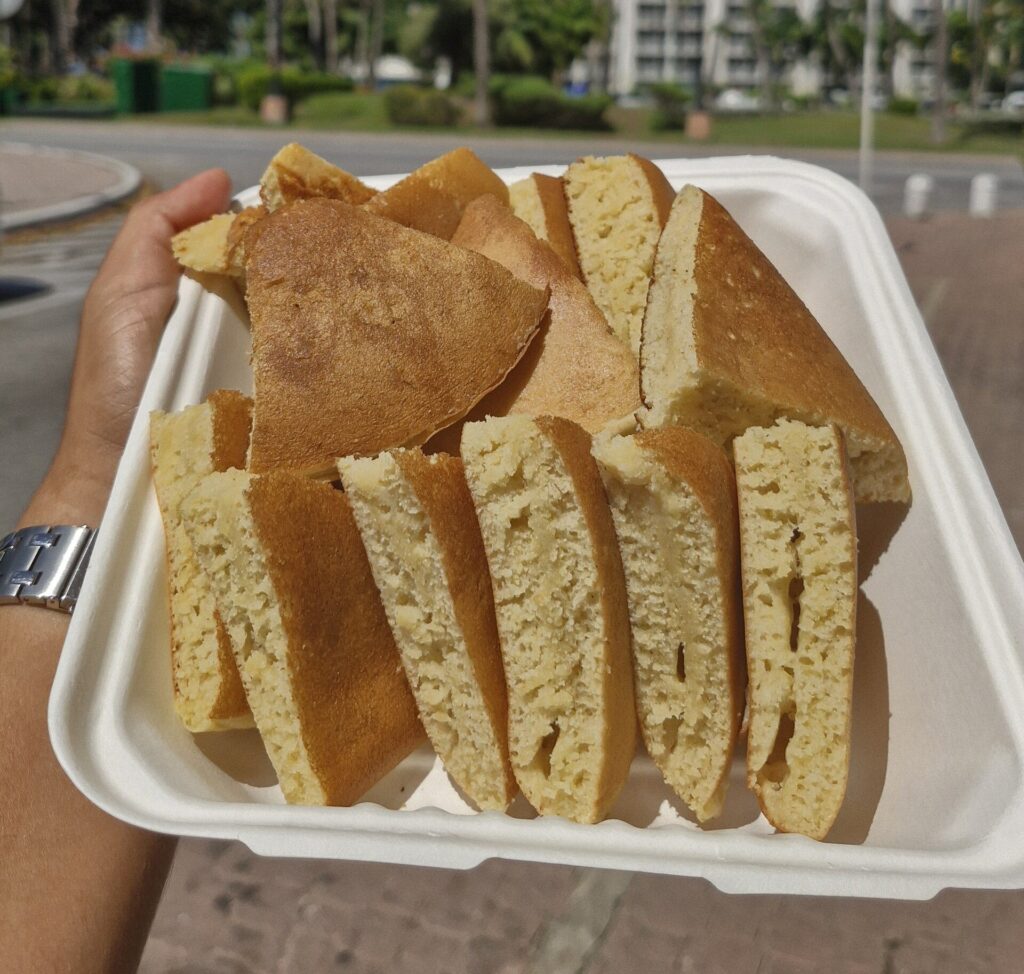
A slightly sweet, pancake-like flatbread. You’ll get it with soups, stews and fried fish.
Where to try funchi and pan bati: Kamini’s Kitchen (San Nicolas), Gostoso (Oranjestad), Local Store (Noord) and Zeerovers (Savaneta).
8. Banana hasa
Fried ripe plantain, sweet and caramelized. It comes with almost every plate of fried fish. Frommer’s and AFAR both list it among the standard sides at Zeerovers.
Snacks and street food
9. Pastechi
If you only try one local snack, make it pastechi. Picture a half-moon of fried dough, flaky and a little sweet, with cheese, beef, chicken, tuna or an Indonesian-style chop suey inside. Arubans eat it for breakfast and as a snack throughout the day.
Where to try it: The Pastechi House (Oranjestad), Huchada Bakery (Santa Cruz) and Bright Bakery (Santa Cruz). A Marriott Traveler guide notes that Bright Bakery has been around since 1949.
10. Johnny cakes
A dough of flour, sugar, salt, butter and baking powder, fried and stuffed with cheese, salt fish (bacao), ham or chicken. A guide to Aruba street food traces the name to the “journey cake,” eaten on the long trip to work on foot or by donkey.
11. Saco
A classic late-night snack: a brown paper bag (saco) typically filled with fries, ribs, chicken and a johnny cake. The Boardwalk street-food guide points to San Nicolas as the place to find it. Ask locally which saco stands are open, since hours vary.
12. Frituras: cala, bolita di keshi and bitterballen
- Cala: Black-eyed pea fritters.
- Bolita di keshi: Fried cheese balls.
- Balchi di pisca: Fried fish balls.
- Bitterballen: Breadcrumbed, deep-fried balls of ragout, from the Netherlands. Usually served with mustard.
Where to try them: Dutch Pancake House (Oranjestad) and Café The Plaza (Renaissance Marketplace) for Dutch snacks, or bars like Local Store and 5 O’Clock Somewhere for beer and bites. Fish House Aruba is recommended for balchi di pisca.
Sweets
13. Bolo borracho, quesillo and cocada
- Bolo borracho: “Drunken cake,” a sponge soaked in rum.
- Quesillo: Aruba’s version of flan, made with eggs, sugar and condensed and evaporated milk.
- Cocada: Coconut candy made with brown sugar.
- Kashupete: Cashew cake with milk, rum and brown sugar.
Dutch sweets are everywhere too: poffertjes (mini pancakes) and stroopwafels (caramel-filled waffle cookies).
Where to try them: Bright Bakery (Santa Cruz), Caribbean Bakery (San Nicolas) and Wilhelmina Restaurant (Oranjestad).
Local drinks
14. Balashi beer
Balashi has been on the market since 1999, and the Aruba Tourism Authority describes it as the only beer brewed and bottled in Aruba. Its pilsner is made with desalinated seawater, Scottish malt and German hops (aruba.com, October 2026). The range also includes Chill, a light lager, and fruit-flavored Magic Mango. In October 2026 Balashi opened the Balashi Beer Experience, a self-guided tour for visitors 18 and older near Eagle Beach. Entry starts at $39 for visitors, as of October 2026 (aruba.com).
15. Aruba Ariba and Coecoei
The Aruba Ariba is the island’s signature cocktail: vodka, rum, crème de banana, fruit juices and grenadine. The tourism authority’s food specialties guide says it was invented at the Hilton in 1963, and you can still order it there and at Palm Beach bars like Bugaloe and MooMba. The tourism authority’s recipe also adds Coecoei, a bright red liqueur made from agave sap combined with rum and sugarcane, which local legend connects to the island’s Indigenous people. Around Christmas, look for ponche crema, Aruba’s rum eggnog.
For where to drink one with your feet in the sand, see our guide to the best beach bars in Aruba.
Aruban dishes at a glance
| Dish | What it is | When to eat it |
|---|---|---|
| Keshi yena | Meat baked in a cheese crust | Dinner |
| Pastechi | Fried, filled pastry | Breakfast or snack |
| Stoba | Goat, beef or conch stew | Lunch or dinner |
| Pisca hasa | Fried catch of the day | Lunch |
| Funchi / pan bati | Cornmeal side / sweet flatbread | With any main |
| Sopi | Tripe, fish or pumpkin soup | Lunch |
| Saco | Fried food in a paper bag | Late night |
| Ayaca | Cornmeal parcel in banana leaf | December |
| Bolo borracho | Rum-soaked cake | Dessert |
How to eat like a local
- Start at a bakery. A pastechi and a coffee is the classic island breakfast.
- Go to Noord for dinner. The Old Cunucu House, Papiamento and Gasparito all serve keshi yena. Our list of the best restaurants in Aruba has details.
- Spend a day in the south. Combine Zeerovers in Savaneta with lunch or saco in San Nicolas and a look at the San Nicolas murals. At Zeerovers, bring cash; some visitors report cards being accepted, but don’t count on it.
- Join a food tour. A guided food or culture tour is the easiest way to taste several of these dishes in one go, with someone to explain them. Our guide to authentic local experiences in Aruba has more ideas.
FAQ
What is the national dish of Aruba?
Keshi yena: spiced meat or chicken, often with olives and raisins, baked inside a Gouda or Edam cheese crust.
What do people eat for breakfast in Aruba?
Pastechi is the classic local breakfast. It’s a fried pastry filled with cheese, beef, chicken or tuna, sold at bakeries and snack shops.
What is funchi?
Funchi is Aruba’s take on polenta: cornmeal served soft, or firmed up and then grilled or fried. Funchi fries are a popular side.
What is pan bati?
Pan bati is a slightly sweet, pancake-like flatbread. It’s served with soups, stews and fried fish.
What is the local beer in Aruba?
Balashi. The Aruba Tourism Authority says it is the only beer brewed and bottled on the island, and its pilsner is made with desalinated seawater.
Where can I try Aruban food near Palm Beach?
The Old Cunucu House is in the Palm Beach area, Gasparito and Papiamento are in Noord, and Local Store, which is also in the Palm Beach area, is known for Caribbean dishes and barbecue.
Sources
- Food in Aruba – Aruba Tourism Authority (aruba.com)
- Aruba Food Specialties: A True Taste of the Island – aruba.com
- New in Aruba: Balashi Beer Experience – aruba.com
- Conheça os tradicionais coquetéis da ilha – aruba.com
- Aruba Local Food – Marriott Traveler
- Authentic Aruba: Food Trucks and Street Food – Boardwalk Boutique Hotel
- Zeerover Pescadería – Frommer’s
- Zeerovers, Savaneta – AFAR
- Zeerover – aruba.com