Aruba’s wildlife is easy to see once you know where to look. Iguanas sun themselves on rocks near the beach. Wild goats and donkeys wander Arikok’s hills. Pink flamingos stroll a private island beach. Small lizards dart across almost every trail. The island also has animals found nowhere else, including a rattlesnake, a burrowing owl and a blue lizard. This guide covers the animals you’re most likely to meet, where to see each one, and the rules that protect them.
Aruba wildlife: quick answer
- Donkeys: the Donkey Sanctuary in Bringamosa, and free-roaming donkeys in Arikok.
- Iguanas and lizards: almost everywhere. The endemic blue whiptail (cododo) is the island’s most common lizard.
- Flamingos: Renaissance Island, which is open only to guests of the Renaissance resort.
- Butterflies: the Butterfly Farm on J.E. Irausquin Boulevard in the Palm Beach area.
- Birds: Bubali Bird Sanctuary near Palm Beach, plus Arikok for the endemic shoco owl and prikichi parakeet.
- Sea turtles: nesting season runs March through December, according to Turtugaruba.
Aruba’s endemic animals
Aruba is home to 34 endemic species and 282 recorded bird species, according to the Aruba Conservation Foundation (ACF). Most of the famous endemics live in and around Arikok National Park:
- Cascabel (Aruba rattlesnake): Wikipedia says about 230 remain in the wild, making it one of the rarest rattlesnakes in the world. It lives in thornscrub on the island’s southeastern half. Leave any snake you see alone.
- Shoco (Aruban burrowing owl): an endangered, legally protected owl that nests in ground burrows. A 2013 estimate put the population below 200 breeding pairs. It also appears on the 50-florin banknote from the 1990 series (Wikipedia).
- Prikichi (Aruban parakeet): listed by ACF as endemic and endangered. Its subspecies has a yellow face with some brown mixed in (Wikipedia).
- Cododo (Aruba whiptail): the island’s most common lizard. Mature males turn bright blue in the September–October mating season (Wikipedia).
ACF also reintroduced the yellow-shouldered amazon, a parrot called the lora that had died out locally, into the wild in 2024.
Donkeys: where to see them
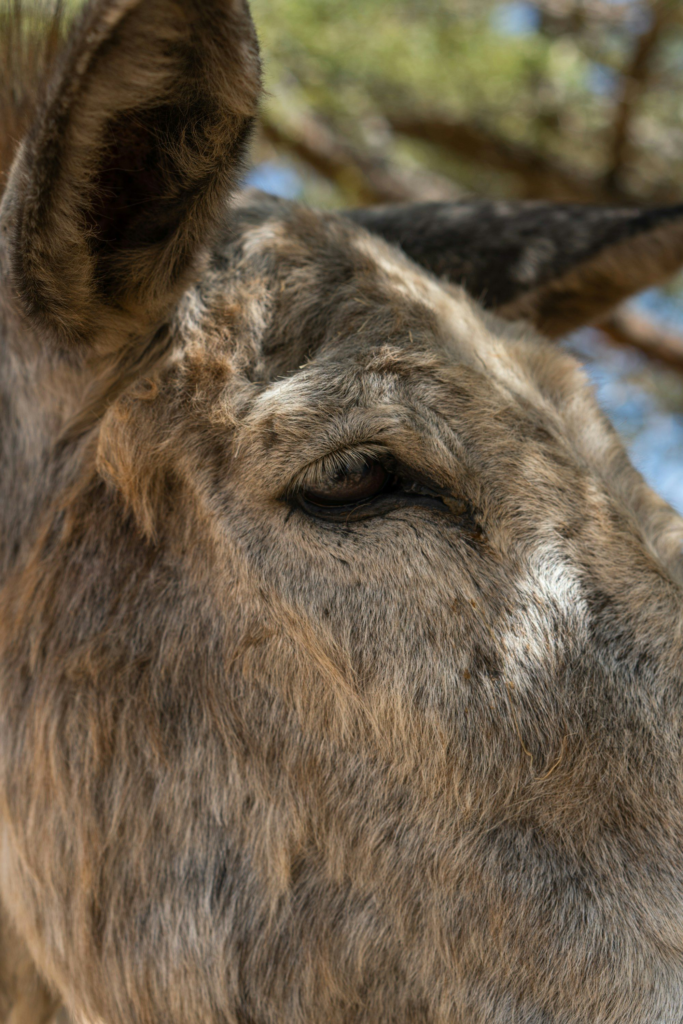
The Spanish brought donkeys to Aruba, and by 1816 they were helping workers gather salt (Wikipedia). For centuries they were the island’s main transport. Once cars took over, many were abandoned.
The Aruba Donkey Sanctuary started in 1997 to care for them. After nearly 20 years in Santa Lucia, it moved to Bringamosa 2 Z. Lonely Planet says to get there from Route 1 in Barcadera by taking Route 4 north and turning right on Bringamosa. Visitors can tour the grounds, relax at the visitor center and shop for donkey-themed gifts. The tourism authority’s page doesn’t list hours or a fixed admission price, so check before you go.
In the wild, you’ll also see donkeys and goats grazing on Arikok’s hills. Frommer’s mentions both in its park overview.
Iguanas and lizards
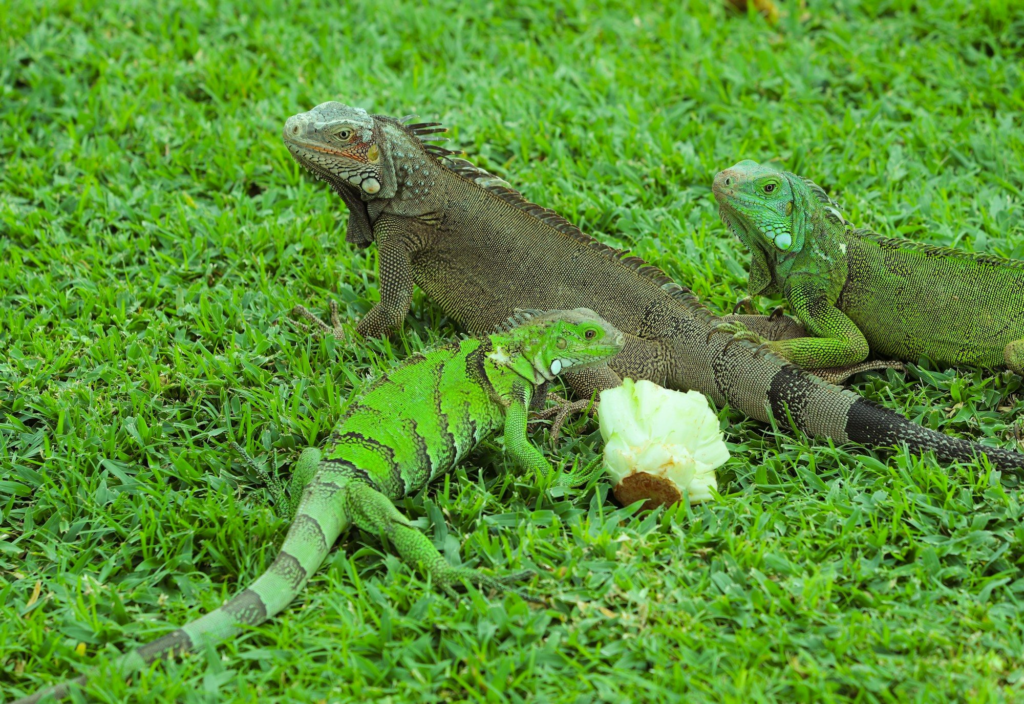
Green iguanas are native to Aruba, and Wikipedia notes their color here can range from green to lavender. You’ll find them on rocks, walls and trees near the beaches. Smaller whiptails dash across hiking trails. The tourism authority’s Hooiberg page says you might spot colorful lizards on the climb.
The cododo is worth watching for. Wikipedia says its diet is mostly plant material, including flowers, nectar, leaves and fruit, with insects making up the rest. The blue males stand out against the brown rock.
Flamingos on Renaissance Island
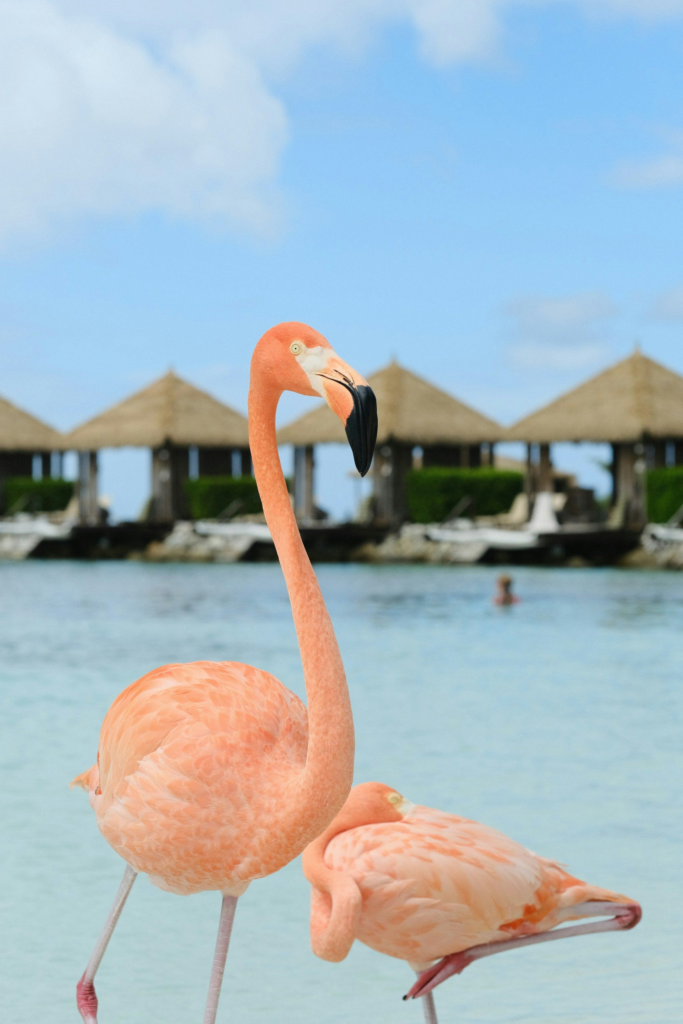
Flamingos roam freely on Renaissance Island, a private island off the Renaissance resort in Oranjestad. The tourism authority says that, as of October 2026, the island is open only to guests of the Renaissance Wind Creek Aruba Resort, from 7 a.m. to 7 p.m. daily. Complimentary water taxis run about every 15 minutes. Rules on day passes and ages change, so check directly with the resort. Our Flamingo Beach guide explains how access works.
Butterflies at the Butterfly Farm
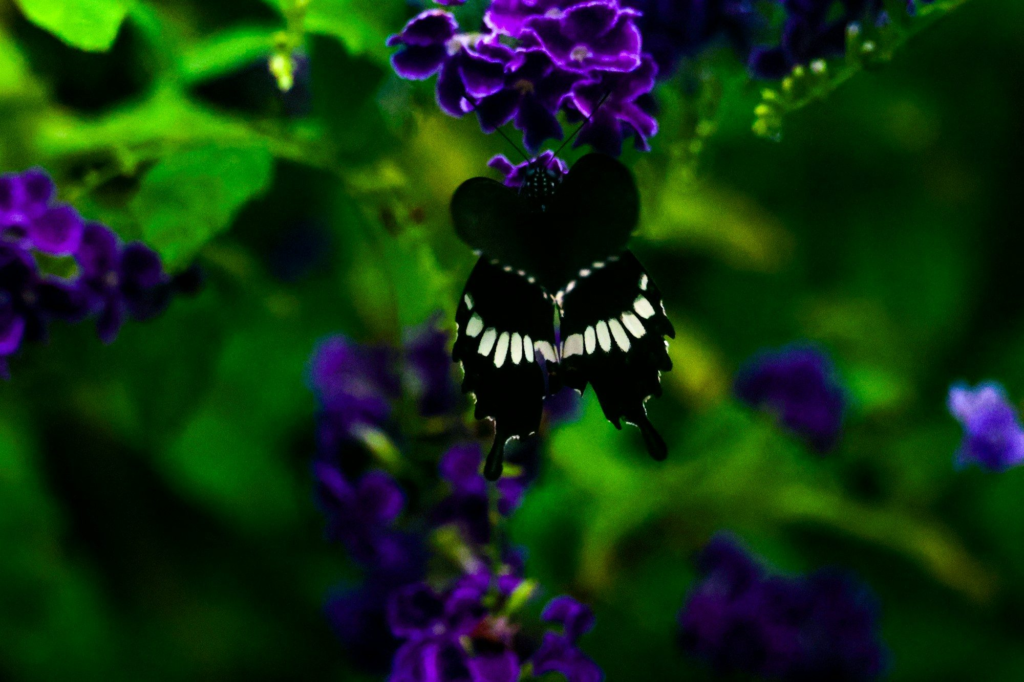
You’ll find the Butterfly Farm on J.E. Irausquin Boulevard in the Palm Beach area, opposite the Aruba Divi Phoenix. Guides explain how a caterpillar becomes a butterfly, and if you come early you may catch new butterflies taking their first flight. Your ticket is good for repeat visits for the rest of your stay. Check current hours and prices with the farm before you go.
Birdwatching in Aruba
Bubali Bird Sanctuary
The tourism authority’s bird-watching page calls Bubali the best place for birding on the island. Bubali Bird Sanctuary sits in Noord beside the Old Dutch Windmill, an easy walk from the Palm Beach hotels. Its two linked ponds draw herons, egrets, ducks and dozens of other migrants (the tourism authority counts more than 80 species), and an observation tower lets you watch without disturbing them. Wikipedia describes Bubali as a protected brackish lagoon.
Arikok and the coast
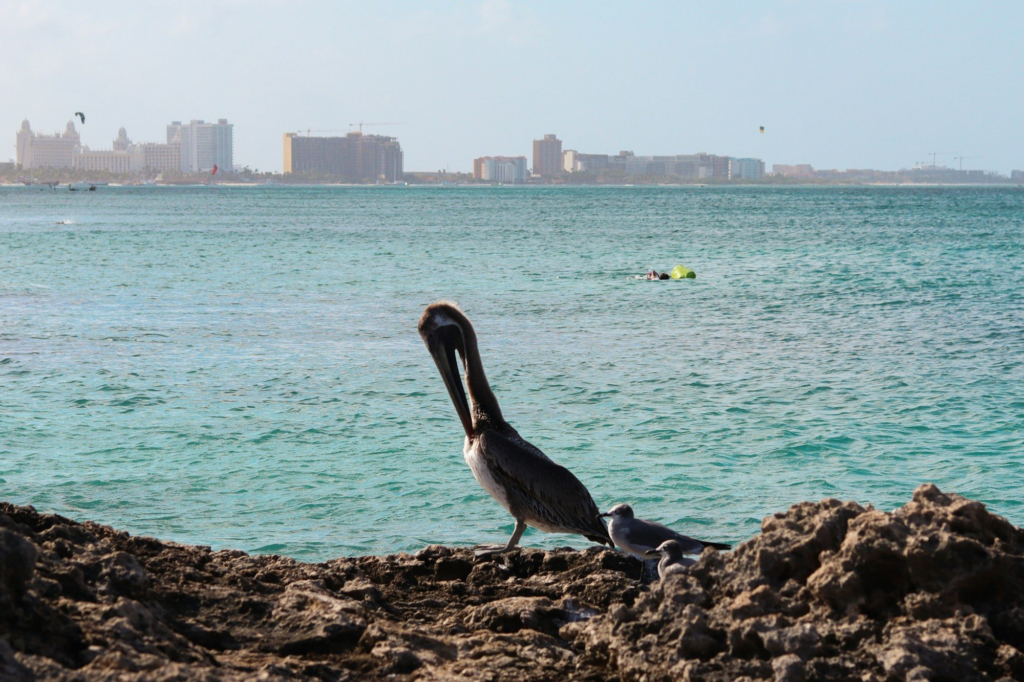
To look for the shoco, Arikok is a good start. The tourism authority says a bird-watching tour gives you a chance of spotting one. Frommer’s says birds and animals are most active in the morning. ACF also lists Spaans Lagoen (the Spanish Lagoon) as a Ramsar wetland of international importance. Along the shore, you may also spot pelicans.
Sea turtles
Four endangered sea turtle species nest on Aruba, and the season runs from March through December, according to Turtugaruba, the island’s sea turtle conservation group. Lonely Planet names the four species that nest at Dos Playa in Arikok: leatherback, hawksbill, green and loggerhead. If you see a nesting turtle or hatchlings, keep your distance and call Turtugaruba’s 24/7 hotline at +297 592 9393.
Other animal encounters
- Philip’s Animal Garden (Noord): a shelter and rehabilitation center for abused and abandoned animals. The tourism authority’s listing says it has over 50 species and offers guided tours. Check current times before you go.
It’s easy to add to a half-day island tour or a family-friendly day out.
Wildlife rules and etiquette
- Don’t feed or disturb wild animals in protected areas. ACF prohibits disturbing, trapping, collecting or feeding plants and animals in Arikok. Feeding wildlife is also strictly banned in Aruba’s marine parks.
- No pets in Arikok. The park rules don’t allow dogs, cats or other domestic animals.
- Give snakes and owls space. The cascabel and the shoco are both endangered. Stay on trails so you don’t trample burrows.
- Drive slowly. Arikok’s speed limit is 20 km/h (12 mph), and goats and donkeys graze nearby (Frommer’s), so watch for them on the road.
Planning more time in the park? See our Arikok National Park guide and Aruba hiking guide.
FAQ
What animals are native to Aruba?
Aruba’s endemic species include the Aruba rattlesnake (cascabel), the Aruban burrowing owl (shoco), the Aruban parakeet (prikichi) and the Aruba whiptail lizard (cododo). Green iguanas are also native.
Where can I see flamingos in Aruba?
On Renaissance Island, which the tourism authority says (as of October 2026) is open only to guests of the Renaissance Wind Creek Aruba Resort, from 7 a.m. to 7 p.m.
Are there wild donkeys in Aruba?
Yes. Donkeys roam parts of Arikok National Park, and the Donkey Sanctuary in Bringamosa cares for many that were abandoned once cars replaced them.
Are there snakes in Aruba?
Yes, including the endemic Aruba rattlesnake. Only about 230 are thought to remain in the wild, mostly in the dry southeast. Stay on trails and leave snakes alone.
When is sea turtle nesting season in Aruba?
March through December, according to Turtugaruba.
Can you feed the iguanas in Aruba?
It’s best not to. ACF prohibits feeding wildlife in Arikok and in Aruba’s marine parks.
Sources
- Nature & Conservation – Aruba Conservation Foundation
- Experiences – Aruba Conservation Foundation
- Parke Nacional Arikok Rules & Regulations – Aruba Conservation Foundation (PDF)
- Donkey Sanctuary – Aruba.com
- Renaissance Island – Aruba.com
- Butterfly Farm – Aruba.com
- Bubali Bird Sanctuary – Aruba.com
- Bird Watching – Aruba.com
- Hooiberg – Aruba.com
- Philip’s Animal Garden – Aruba.com
- Turtugaruba Foundation
- Aruba rattlesnake – Wikipedia
- Aruban burrowing owl – Wikipedia
- Brown-throated parakeet – Wikipedia
- Aruba whiptail (Cnemidophorus arubensis) – Wikipedia
- Green iguana – Wikipedia
- Aruba – Wikipedia
- Donkey Sanctuary – Lonely Planet
- Dos Playa – Lonely Planet
- Arikok National Park – Frommer’s