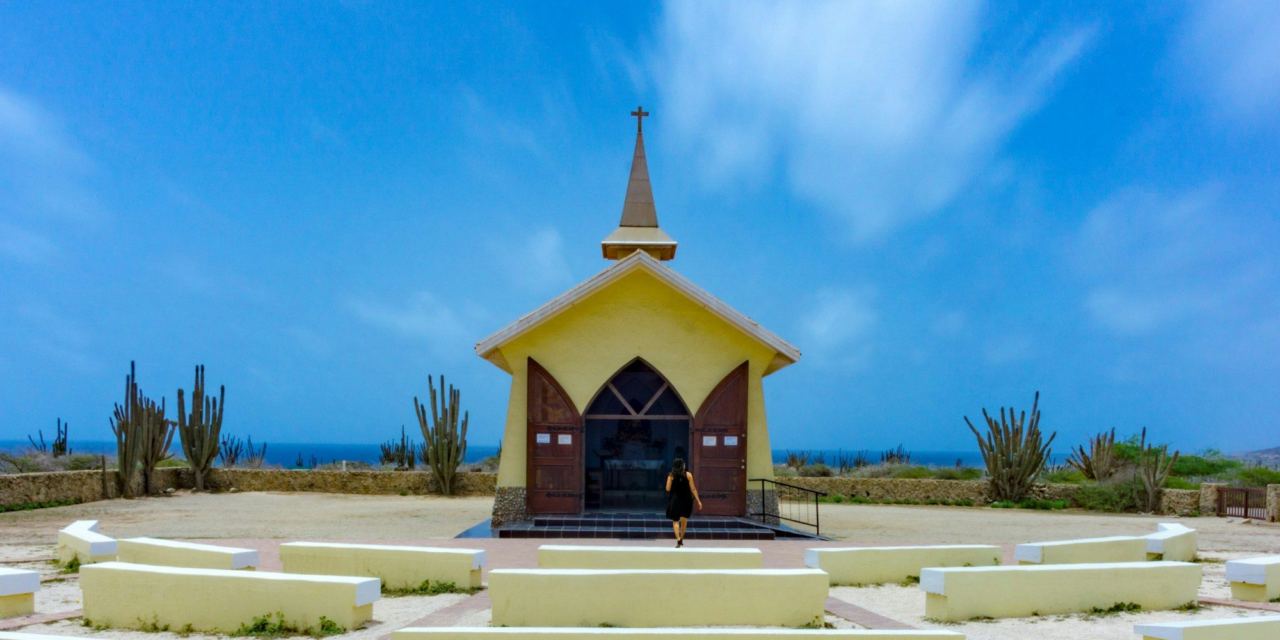
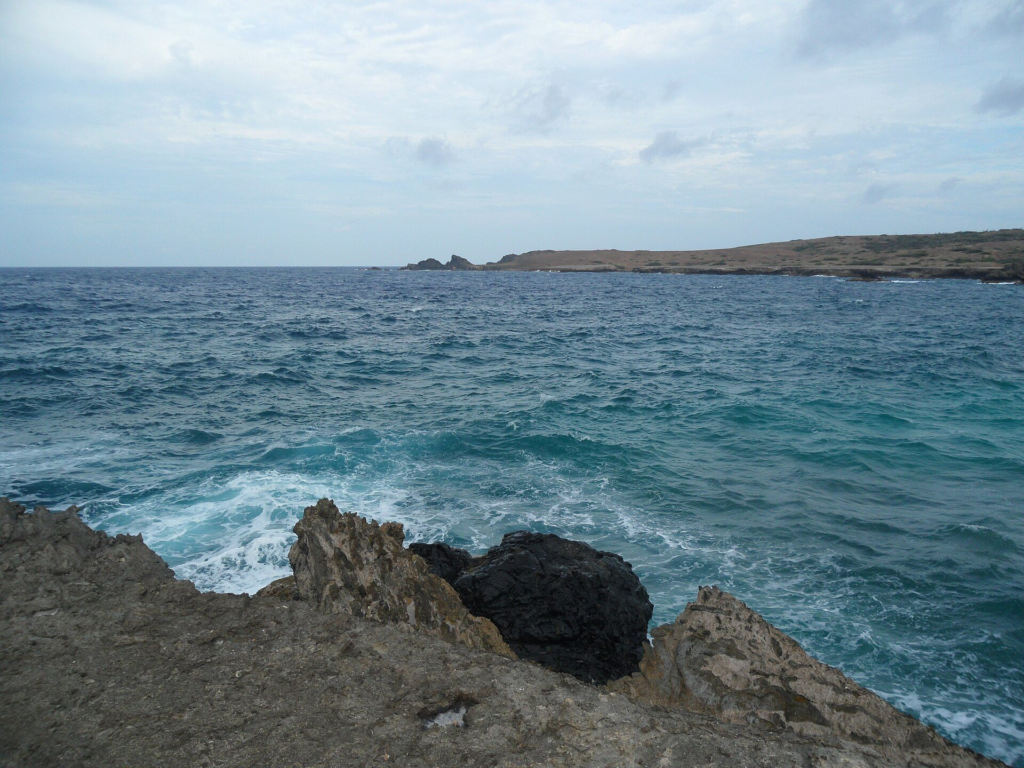
Aruba’s north coast is the island’s windward side. It’s rough limestone and coral rock where the trade winds push waves straight onto shore, with no calm turquoise shallows and almost no buildings. In about half a day you can climb a lighthouse, visit what Frommer’s calls Aruba’s first chapel, walk through gold-mill ruins and see what remains of the famous Natural Bridge. This guide covers each stop in order, what the roads are like, and why this coast is for looking at rather than swimming.
Quick answer: the Aruba north coast route
- California Lighthouse: at the northwest tip, open daily 9:00 am–7:00 pm, with a $5 climb (as of October 2026, Aruba Tourism Authority; check current status before you go).
- Alto Vista Chapel: on a hilltop above the coast, about 8 km from the lighthouse.
- Bushiribana Gold Mill Ruins: stone ruins from the 19th-century gold era.
- Natural Bridge and Baby Bridge: the big arch collapsed in 2005, and the smaller Baby Bridge still stands.
- Andicuri Beach: a cove known for body-boarding. Experienced swimmers can go in but need to watch for currents.
Time: allow at least half a day. Vehicle: a 4×4 is recommended for the dirt sections. Swimming: generally not advised.
What makes the north coast different
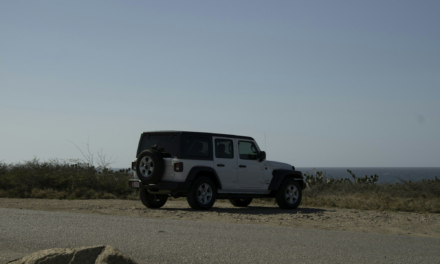
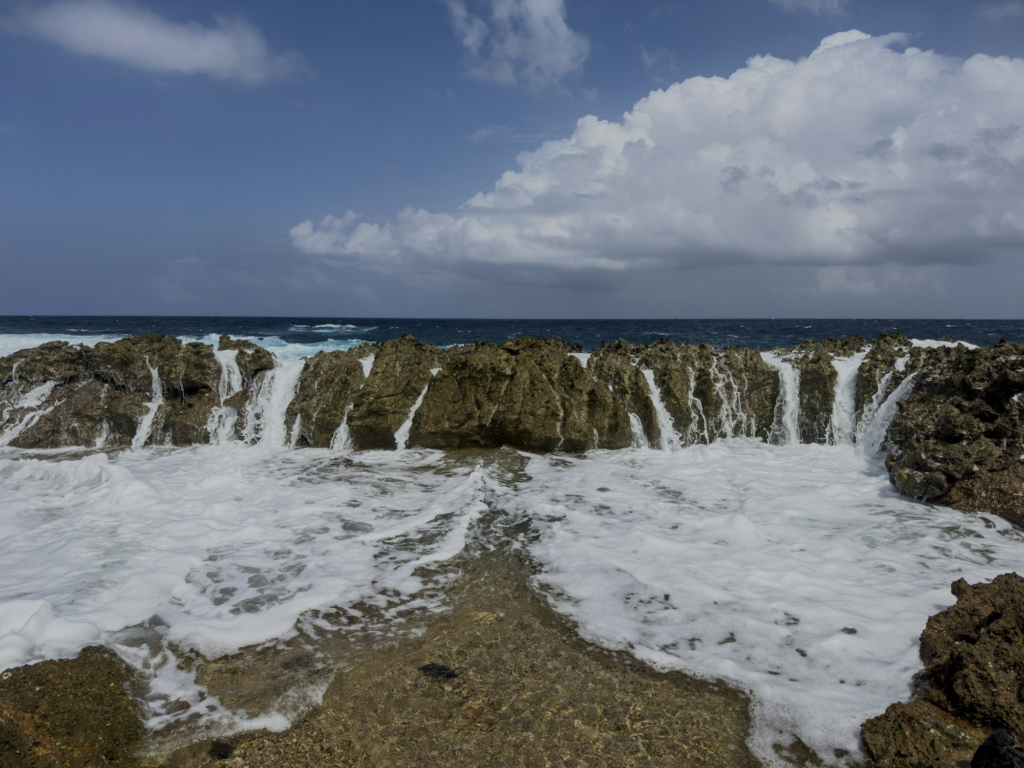
The west and south coasts are where you’ll find Aruba’s calm beaches. The north and east coasts take the trade winds head-on. The tourism authority describes winds that blow steadily and get stronger from May to October. On this side you get cliffs, crashing surf and a dry landscape of cactus and rock instead of hotels. Frommer’s describes the route as dirt roads that follow the island’s edge and recommends a four-wheel-drive vehicle.
Stop 1: California Lighthouse
The lighthouse stands on high ground at Hudishibana, near the island’s northwestern tip. It’s named after the S.S. California, a steamship that sank offshore. Wikipedia dates the wreck to 1891, says the tower was finished in 1916, and gives its height as 30 meters (98 feet), making it the tallest structure on the island. The site was restored in 2016 for its 100th anniversary.
You can climb it. The tourism authority lists the lighthouse as open daily from 9:00 am to 7:00 pm with a $5 admission fee and no reservation needed (as of October 2026). Some older guidebooks say it’s closed to visitors, but the official tourism page now says you can go up to the top. Check current status before you go. The tourism authority calls sunset the best time to visit. It’s a classic spot to watch the sun drop into the Caribbean, so if you can, do this stop last. Our ranking of Aruba’s sunset spots has more ideas.
Stop 2: Alto Vista Chapel
From the lighthouse area, dirt roads head east and inland to a small yellow chapel on a cactus-covered hill. The tourism authority dates the chapel’s origins to 1750, when a Spanish missionary built it. The Wikipedia entry adds that the original was abandoned in the early 1800s and that the present building went up in 1952 on the same site. Crosses line the winding road up to it, and more crosses marking the Stations of the Cross surround the chapel.
It’s a working place of worship. The tourism authority notes that an annual pilgrimage takes place there every January 18 for the Feast of Santa Filomena. Dress modestly, keep your voice down inside, and take your photos from the grounds, where there are wide views of the coast.
Stop 3: Bushiribana Gold Mill Ruins
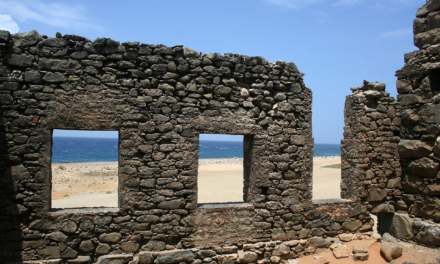
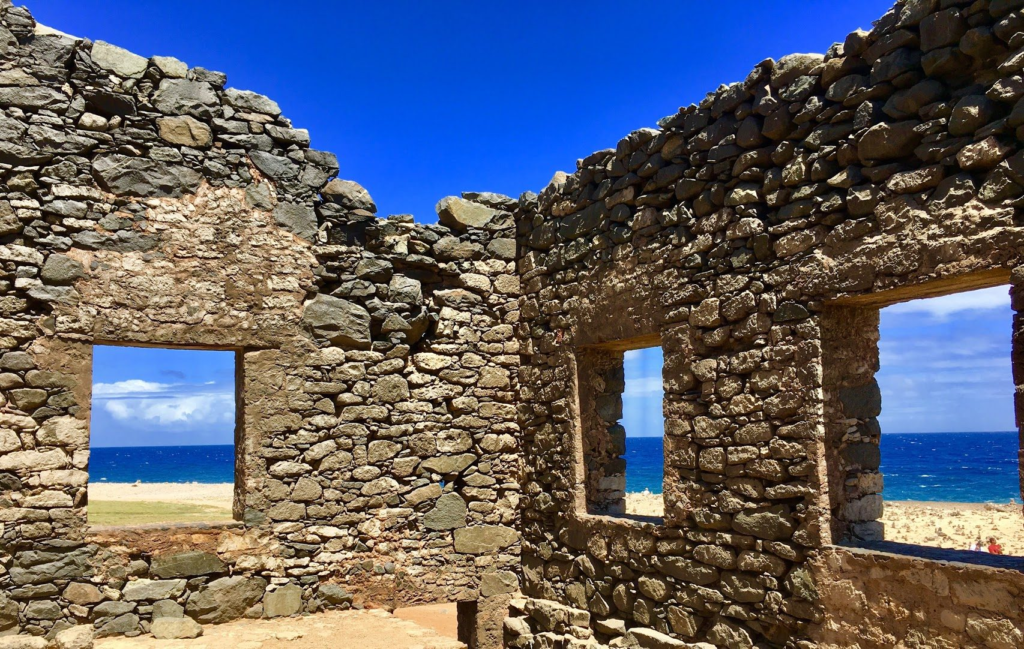
Back toward the coast, the stone walls of the Bushiribana gold mill rise out of bare, rocky ground. The tourism authority’s page says Aruba’s gold rush began in 1824 and that gold mining continued until 1916. Sources differ on when this mill was built. Wikipedia credits the Aruba Island Gold Mining Company and says it ran for about ten years. Frommer’s says you can climb the multi-level ruin for sea views but warns that the walls are covered in graffiti. Watch your footing on the uneven stone.
Stop 4: Natural Bridge and Baby Bridge
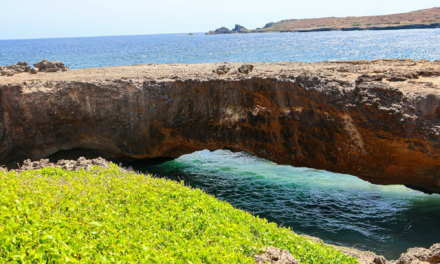
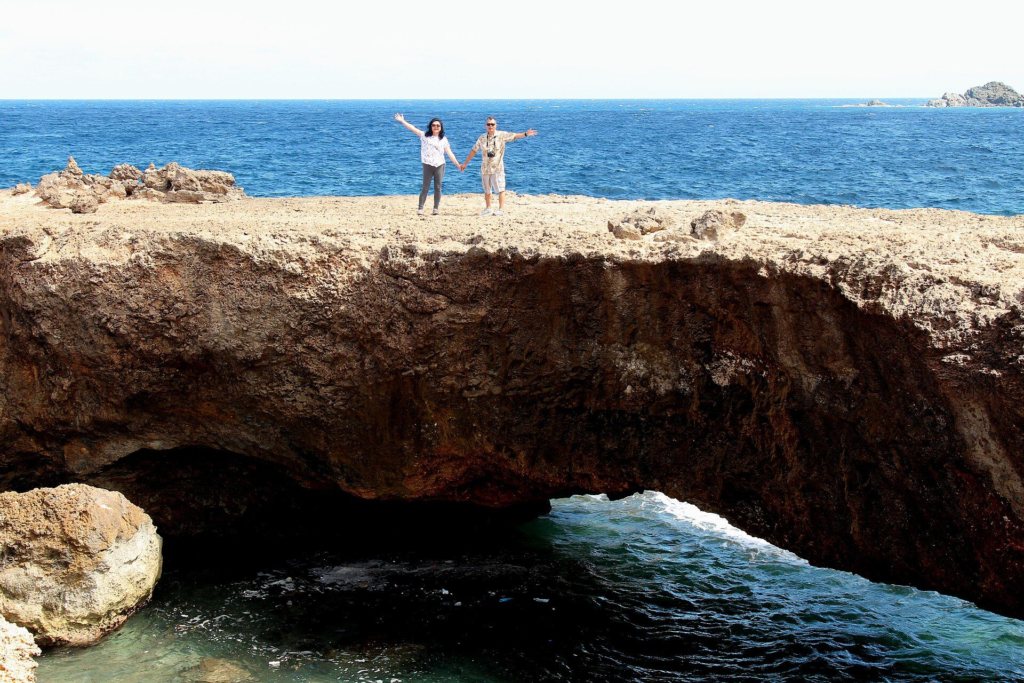
Aruba’s Natural Bridge was long one of its best-known sights: a coral limestone arch over the surf. Wikipedia says it was about 25 feet high and 100 feet long, and that it collapsed on September 2, 2005. The smaller Baby Bridge close by is still standing, according to VisitAruba. Frommer’s has described it as solid enough to walk on, but take care near any cliff edge when waves are rolling in.
Stop 5: Andicuri Beach
A short way south of the Natural Bridge site, Andicuri is a sandy cove between coral-stone cliffs. Its strong surf makes it a favorite with body-boarders, and it hosts local body-boarding competitions. The tourism authority says experienced swimmers can go in but need to watch for currents. There’s nothing to buy there, so bring a picnic and water. Driving on the sand isn’t allowed. For more beaches like this, see our list of hidden beaches in Aruba.
Optional detours inland
- Casibari Rock Formations: huge tonalite boulders with stairs and paths to a 360-degree view from the top (Aruba Tourism Authority). Frommer’s warns of low clearance in some of the tunnels.
- Ayo Rock Formations: another boulder field with old petroglyphs, which Frommer’s lists alongside Casibari.
- Arikok National Park: farther southeast, home to the Natural Pool and the caves. It’s a separate trip with its own entry pass. See our Arikok National Park guide.
Getting there: self-drive or tour?
| Self-drive | Guided jeep or UTV tour | |
|---|---|---|
| Roads | Mixed paved and rough dirt, 4×4 recommended | The guide picks the route |
| Navigation | Signs are limited on some stretches (Frommer’s) | Handled for you |
| Rental rules | Check whether off-road driving is covered | Not your problem |
| Flexibility | Stay at each stop as long as you like | Fixed schedule, commentary included |
The north coast stops are outside Arikok National Park, so UTVs can visit them. That’s why many UTV routes are built around this coast. If you want to add the Natural Pool, book a guided jeep tour, because UTV tours never go into Arikok or to the pool. Our jeep vs UTV comparison walks through the choice, and the UTV packing list covers dust, shoes and sun. If you’d rather not risk a rental car on those roads, a guided tour is the easiest way to see the whole coast in one go.
Safety and practical tips
- Treat the sea as off-limits unless you’re an experienced ocean swimmer and conditions are calm. Strong currents are common on this coast.
- Stay back from cliff edges, especially on windy days and at the Baby Bridge.
- Sun: there’s almost no shade. VisitAruba advises SPF 30 or higher, reapplied about every two hours. Choose a reef-safe, oxybenzone-free sunscreen: Aruba has penalized the import, sale and production of sunscreen with oxybenzone since July 2020 (VisitAruba).
- Water and snacks: facilities are scarce, so carry what you need.
- Timing: do the dusty stops in the morning and save the lighthouse for sunset.
FAQ
Can you swim on Aruba’s north coast?
Generally, no. Strong surf and currents are common. At Andicuri Beach, the tourism authority says experienced swimmers can go in but need to watch for currents. Calm swimming is on the west and south coasts.
Can you climb the California Lighthouse?
Yes. As of October 2026, the Aruba Tourism Authority lists it as open daily from 9:00 am to 7:00 pm with a $5 admission fee and no reservation needed. Check current status before you go.
Is the Natural Bridge in Aruba still there?
The main Natural Bridge collapsed on September 2, 2005. The smaller Baby Bridge nearby is still standing and can be visited.
Do I need a 4×4 for the north coast?
A 4×4 is recommended for the dirt road sections between the lighthouse, Alto Vista and Bushiribana. Some stops have paved access, but check your rental agreement before going off pavement.
How old is the Alto Vista Chapel?
The tourism authority dates its origins to 1750. The original building fell into ruin, and the present chapel was built on the same site in 1952.
Sources
- California Lighthouse – Aruba Tourism Authority
- California Lighthouse – Wikipedia
- Alto Vista Chapel – Aruba Tourism Authority
- Alto Vista Chapel – Wikipedia
- Bushiribana Gold Mill Ruins – Aruba Tourism Authority
- Bushiribana – Wikipedia
- Aruba Natural Bridge – Wikipedia
- Natural Bridge – VisitAruba
- Andicuri Beach – Aruba Tourism Authority
- Casibari Rock Formations – Aruba Tourism Authority
- Along the Northwest Coast in Aruba – Frommer’s
- Weather and Climate – Aruba Tourism Authority
- Tanning Advice – VisitAruba
- Aruba Officially Bans Plastics and Oxybenzone – VisitAruba News
- Experiences – Aruba Conservation Foundation