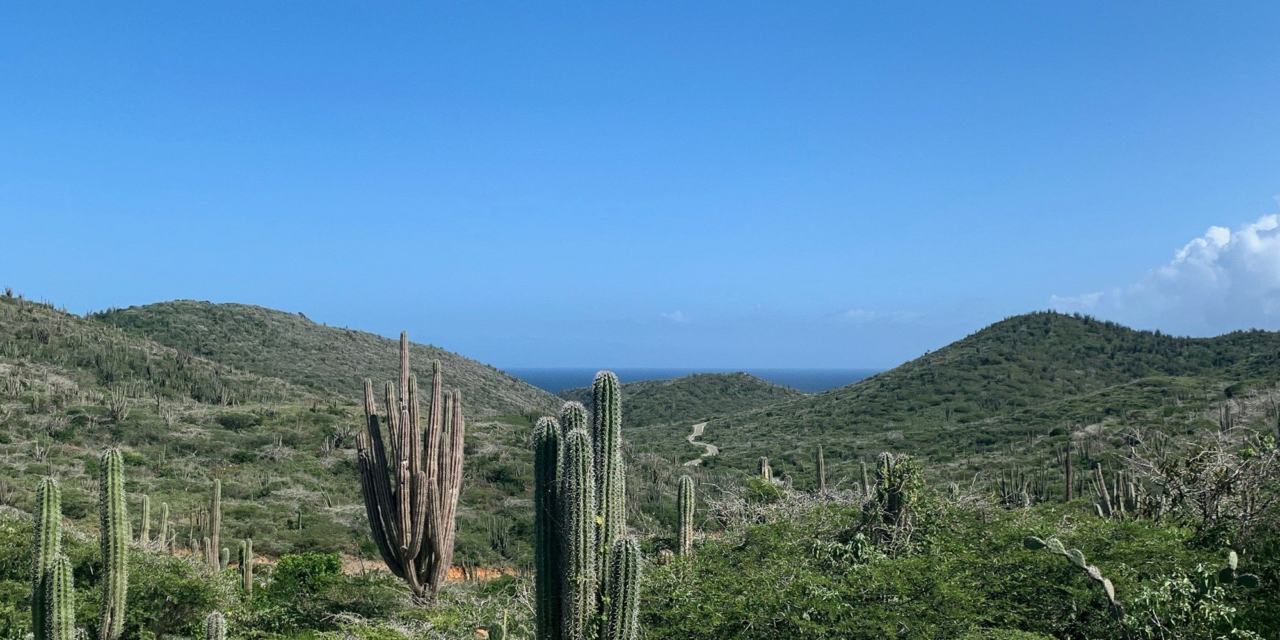
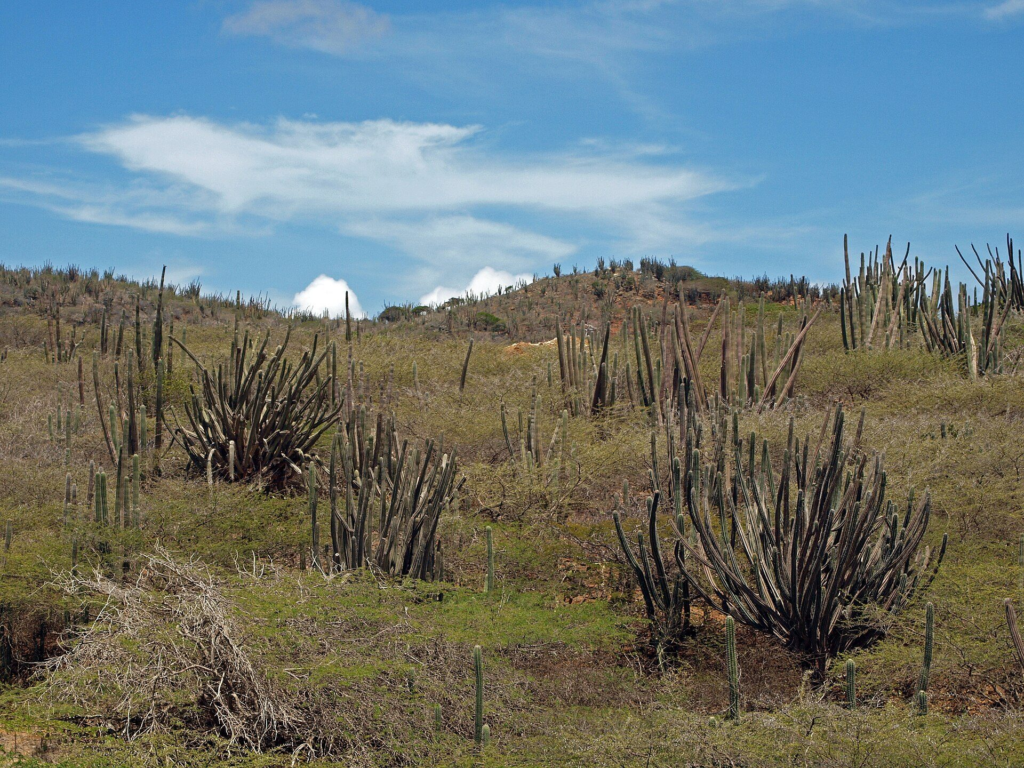
Arikok National Park is where Aruba stops looking like a beach resort. Inside you’ll find cactus-covered hills, caves with ancient rock paintings, a natural pool in volcanic rock, white dunes and surf-pounded coves where sea turtles nest. It covers a large share of the island’s northeast and is managed by the Aruba Conservation Foundation (ACF). This guide covers the fees, hours and rules, the caves and trails worth your time, and how to fit it all into one day.
Arikok National Park: quick facts
| Size | About 34 km² in northeastern Aruba (ACF). The tourism authority describes it as nearly 20% of the island. |
|---|---|
| Protected since | 2000 (Lonely Planet) |
| Entry fee | Conservation pass USD 22 per adult, children under 17 free. Residents of Aruba, Bonaire and Curaçao get a discount with valid ID (as of October 2026, ACF). |
| Visitor center hours | San Fuego: 8:00 am–3:30 pm daily. Vader Piet entrance closes at 3:00 pm (ACF). Check current hours before you go. |
| Vehicles | ATVs, UTVs and motorbikes prohibited (ACF). Speed limit 20 km/h (12 mph) (ACF rules). |
| Highest point | Jamanota Hill, 188 m (617 ft), Aruba’s highest point (ACF) |
| Public transport | Public buses don’t serve the park (Lonely Planet) |
Fees, hours and entrances
Every visitor needs a conservation pass. ACF sells passes at both entrances: the main San Fuego visitor center in Santa Cruz (VisitAruba lists it at San Fuego 71), and the Vader Piet booth at the park’s other entrance. The adult price is USD 22 per person and children under 17 enter free (as of October 2026, per the ACF Experiences page). ACF also sells an annual pass at the visitor center. Older articles quote lower prices, so go by ACF’s current figure.
Some routes into the park, like the hike in from Daimari on the north coast, have no ticket booth or ranger. Earth Trekkers advises buying your pass at the visitor center first, and notes that the Daimari route is an unauthorized access point rather than an official entrance, so check with ACF before using it.
The park itself has no lighting, according to Nomadic Niko, so plan to leave well before sunset. The drive from the hotel area takes about 40 minutes, according to Lonely Planet.
Park rules worth knowing
ACF’s posted rules and regulations are short and strict:
- Carry a valid conservation pass.
- Stay on park roads and park only in marked areas. The speed limit is 20 km/h (12 mph).
- No drones, no metal detectors, no removing geological material, no rock stacking.
- No pets, other domestic animals or exotic species.
- Don’t disturb, hunt, trap or collect animals, plants or other objects, and take your litter with you.
- Keep the noise down, and respect areas with limited access.
Violations can carry fines of up to $100,000 under the national ordinance cited on the rules sheet. Separately, ACF’s visitor page bans ATVs, UTVs and motorbikes from its protected nature areas, which is why off-road tours inside the park use 4×4 jeeps. Our jeep vs UTV guide explains how this affects your tour choice.
Getting around inside the park
You have three options: a guided 4×4 tour, your own vehicle or your own feet.
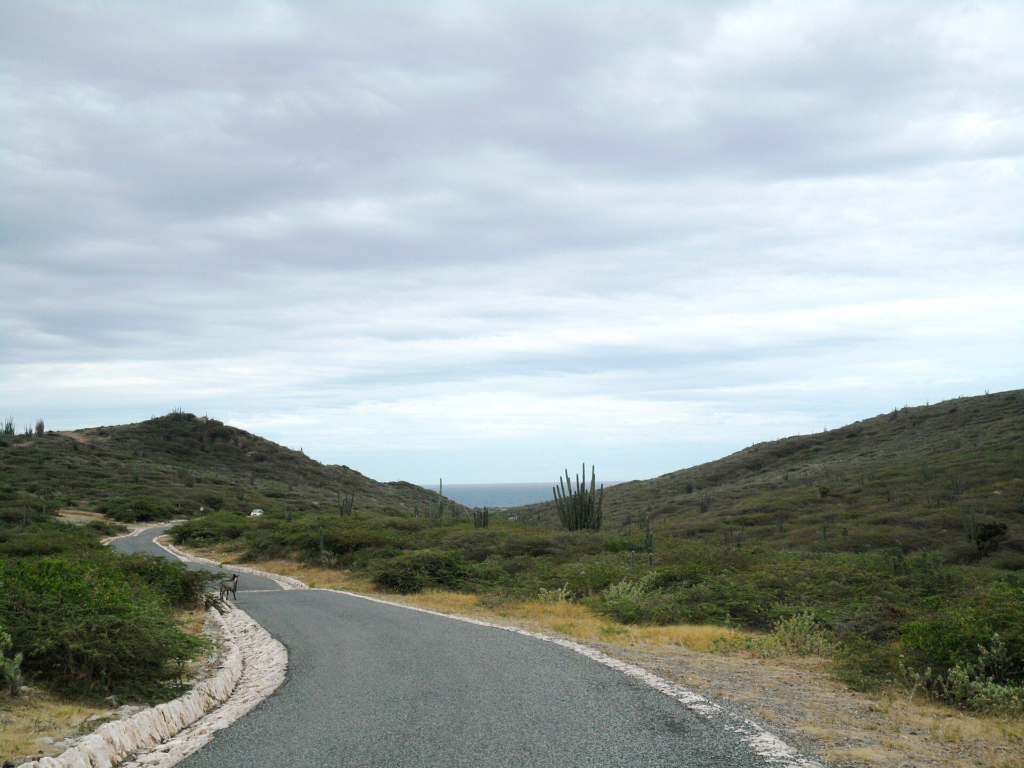
- Guided jeep tour: the easiest way to reach the remote north side, including the Natural Pool. The guide deals with the rocky tracks.
- Self-drive: Lonely Planet recommends a 4WD for the rocky tracks. Nomadic Niko reports that the North Conservation Zone is 4×4-only and that a small rental car couldn’t reach some sites. Check your rental agreement before going off pavement.
- Hiking: trails range from easy loops to full-morning climbs. See the trails section below.
Must-see stops in Arikok
Fontein Cave
Fontein is the park’s rock-art cave. According to the Aruba Tourism Authority, reddish-brown rock paintings left by Amerindians cover parts of the walls and ceiling, and the cave runs about 95 meters (312 feet). Nomadic Niko notes graffiti from the late 19th and early 20th centuries alongside the much older drawings. Park rangers are often around to answer questions. The interior is hot, dark and humid, and parts of it are low.
Quadirikiri Cave
Quadirikiri is the more dramatic of the two. The tourism authority describes three large domed chambers linked by tunnels, about 490 feet in total. Sunlight comes through holes in the limestone ceiling, and bats roost inside. Nomadic Niko reports that flashlights aren’t allowed because they disturb the bats. The roof openings light the first two chambers. For more on both caves, see our guide to Aruba’s caves.
The Natural Pool (Conchi)
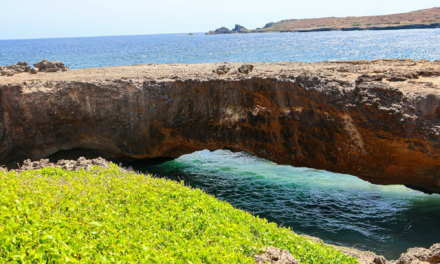
This rock-rimmed saltwater pool on the north coast is the park’s best-known sight, and it’s 4×4, horseback or hike access only. Swim only when the sea is calm, and wear water shoes. Our Natural Pool guide covers every way to get there.
Boca Prins and Dos Playa
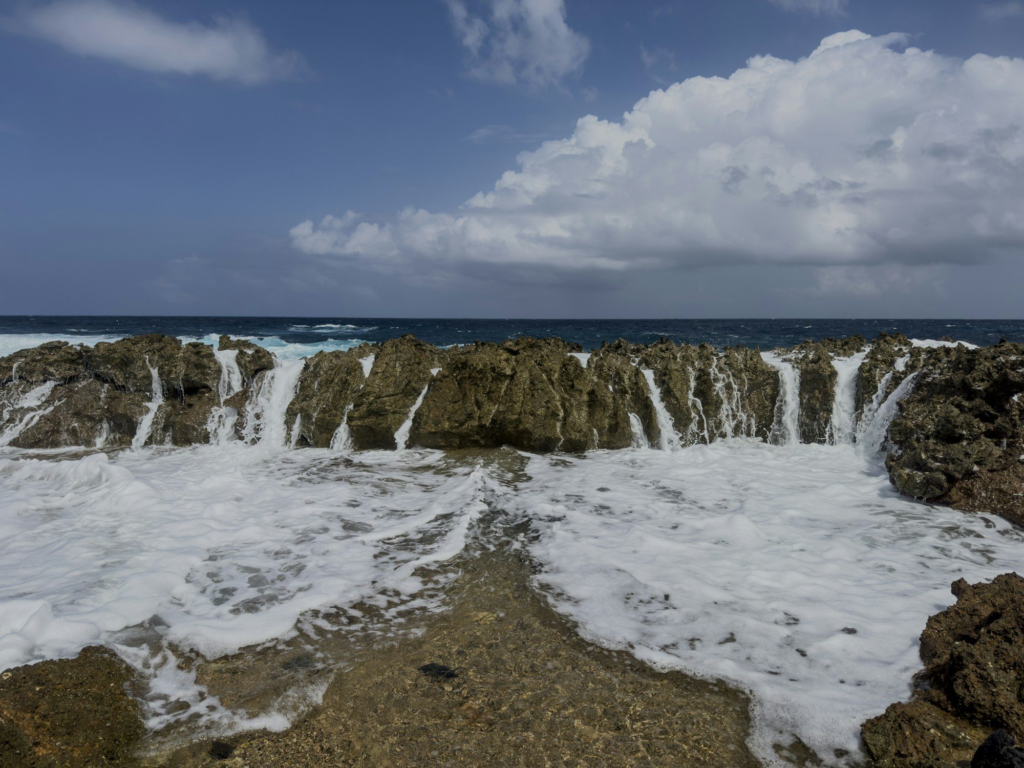
On the windward coast, Boca Prins has white sand dunes and wooden stairs down to the beach. Because of a constant undertow, a sign at the beach tells visitors to keep out of the sea. Nearby Dos Playa is two neighboring limestone coves, one of them popular with local surfers. The tourism authority warns of rough water and strong undertow there too, and says it isn’t suited to inexperienced swimmers. Lonely Planet notes that leatherback and green sea turtles nest at Dos Playa at certain times of year. Enjoy both from the sand. Neither is a swimming beach.
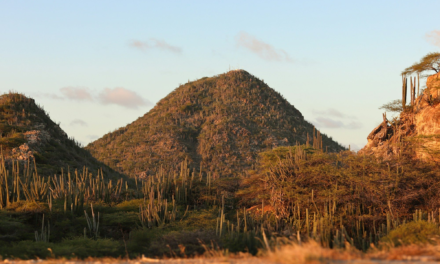
Jamanota and Arikok hills
Jamanota is Aruba’s highest point at 188 m (617 ft), according to ACF. Arikok Hill, which gave the park its name, is the second tallest at 185 m (606 ft), per Lonely Planet. Both give wide views over the island’s dry interior.
Miralamar gold mine ruins
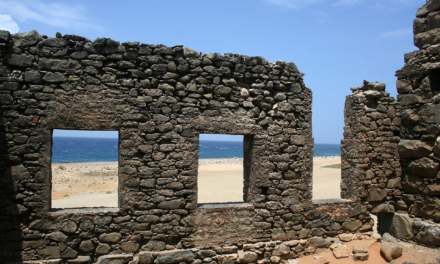
ACF runs a guided hike to the Miralamar Gold Mine Ruins, a reminder of the island’s gold-mining past. The same history appears at Bushiribana on the north coast.
Trails and ranger-guided hikes
ACF lists ranger-led hikes for groups of up to 10 people, booked through the foundation. As of October 2026, its Experiences page showed:
| Hike | Distance | Duration | Level | Price |
|---|---|---|---|---|
| Miralamar | 2 km / 1.2 mi | 1.5 hr | Easy | $25 |
| Cunucu Arikok | 5 km / 3.1 mi | 1.5 hr | Easy | $25 |
| Jamanota Hill | 4.8 km / 2.9 mi | 2 hr | Hard | $25 |
| Rooi Tambu & Dos Playa | 7.5 km / 4.6 mi | 3.5 hr | Hard | $25 |
The Rooi Tambu hike follows one of the island’s largest gullies down to Dos Playa, which ACF calls an important turtle nesting site. If you’d rather go on your own, Nomadic Niko describes Hofi Shon Shoco as a short, easy loop beside the visitor center with native plants. Our hiking in Aruba guide has more routes and timing advice.
Wildlife to look for
ACF lists several species here, including three it calls endemic and endangered: the shoco (Aruban burrowing owl), the prikichi and the cascabel (Aruban rattlesnake). The blue cododo also lives in the park, as does the rare Hummelinck’s vesper mouse. Keep your distance, never feed animals, and remember that collecting anything is prohibited. Our Aruba wildlife guide covers where else to see them.
A sample one-day plan
- 8:00 am: arrive at San Fuego when it opens. Buy your pass and pick up trail information.
- Morning: head north by 4×4 (or join a jeep tour) to the Natural Pool while the water is calmer.
- Late morning: drive to the caves. Visit Quadirikiri, then Fontein.
- Midday: walk out to the Boca Prins dunes and look over Dos Playa.
- Afternoon: exit via Vader Piet and carry on south to Baby Beach for a calm-water swim.
What to bring
- Lots of water. There’s little shade, and the interior heats up fast.
- Oxybenzone-free, reef-safe sunscreen. Aruba has penalized the import, sale and production of sunscreen with oxybenzone since July 2020 (VisitAruba).
- A hat, sunglasses and sturdy closed-toe shoes, plus water shoes for the Natural Pool.
- Light, airy clothing for the hot, humid caves.
- Payment for the pass, and offline maps.
FAQ
How much does it cost to enter Arikok National Park?
As of October 2026, the Aruba Conservation Foundation lists the conservation pass at USD 22 per adult, with children under 17 free and a discount for residents of Aruba, Bonaire and Curaçao.
What are Arikok National Park’s opening hours?
ACF lists the San Fuego visitor center as open daily from 8:00 am to 3:30 pm, and the Vader Piet entrance closes at 3:00 pm. Check before you go, and leave before dark, because the park has no lighting.
Can I drive my rental car in Arikok National Park?
A regular car can reach some areas, but the north zone with the Natural Pool needs a 4×4. Check your rental agreement, keep to 20 km/h and stay on park roads. ATVs, UTVs and motorbikes aren’t allowed.
How much time do I need in Arikok?
A half day covers the caves and a viewpoint or two. Plan a full day if you want to add the Natural Pool, the dunes and a hike.
Can you swim in Arikok National Park?
Only at the Natural Pool, and only when the sea is calm. The tourism authority warns of strong undertow at Boca Prins, where a sign advises staying out of the water, and at Dos Playa, which it says isn’t suited to inexperienced swimmers.
Are there guided hikes in Arikok?
Yes. ACF offers ranger-guided hikes for up to 10 people, priced at $25 as of October 2026. They range from the easy Miralamar walk to the hard Rooi Tambu and Dos Playa route.
Sources
- Experiences – Aruba Conservation Foundation
- Aruba Conservation Foundation – Home
- Nature & Conservation – Aruba Conservation Foundation
- Rules & Regulations, Parke Nacional Arikok – ACF (PDF)
- Arikok National Park – Aruba Tourism Authority
- Fontein Cave – Aruba Tourism Authority
- Quadirikiri Cave – Aruba Tourism Authority
- Boca Prins – Aruba Tourism Authority
- Dos Playa – Aruba Tourism Authority
- Guide to Arikok National Park – Lonely Planet
- Arikok National Park – VisitAruba
- Arikok National Park: Aruba’s Rugged Natural Landscape – Nomadic Niko
- Adventure in Aruba: How to Visit Natural Pool – Earth Trekkers
- Aruba Officially Bans Plastics and Oxybenzone – VisitAruba News