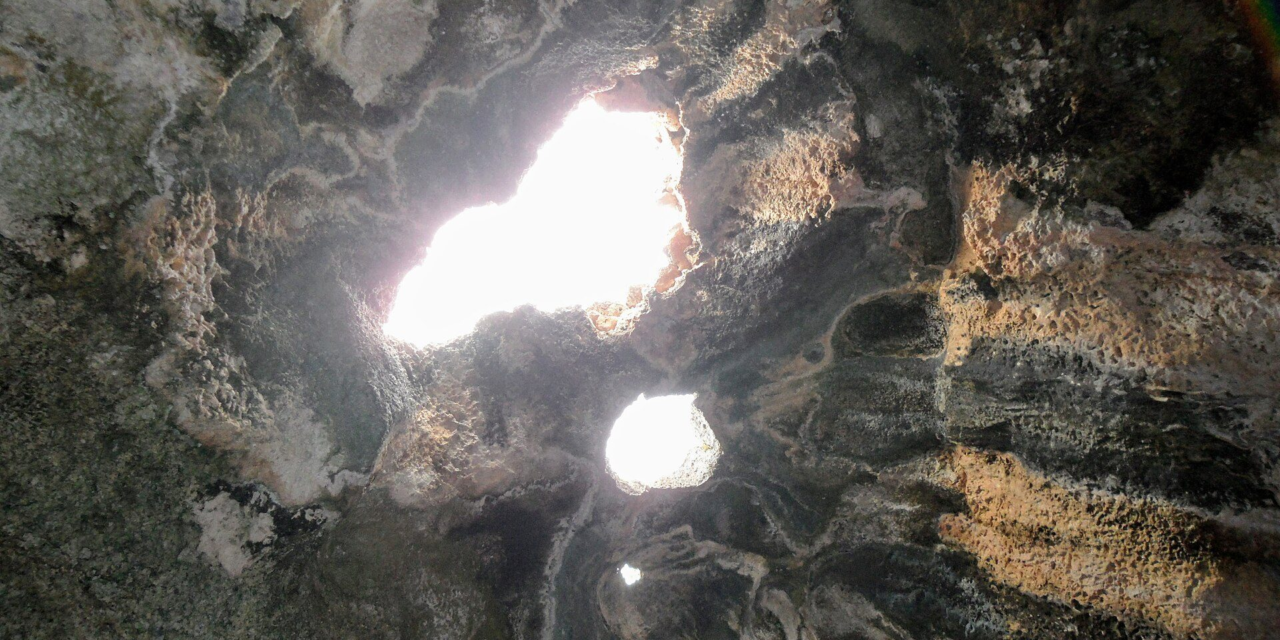
Aruba’s caves are some of the island’s most interesting stops. The two famous ones are both inside Arikok National Park, close to the wild northeast coast. Fontein Cave is known for its Amerindian rock drawings. Quadirikiri Cave has chambers lit by sunlight coming through holes in the roof. This guide explains each cave, what you’ll see, the park fee and hours, and how to visit without disturbing the bats.
Aruba caves: quick answer
- Main caves: Fontein Cave and Quadirikiri Cave, both in Arikok National Park.
- Fontein: low and shallow, with red-brown Amerindian pictographs. Only the entrance area is open, and rangers are often there.
- Quadirikiri (also spelled Guadirikiri): sunlit chambers, a dark inner section and roosting bats.
- Entry: Arikok conservation pass, USD 22 per adult, free under 17 (as of October 2026, per ACF).
- Bring: light clothing, closed shoes and water. Leave the flashlight off near the bats.
Where the caves are
Both caves sit in Arikok National Park, which covers about 34 square kilometers in the northeast of the island according to the Aruba Conservation Foundation (ACF), the park’s manager. The Aruba Tourism Authority describes them as limestone caves along the park’s northern shore. Lonely Planet places Fontein near Boca Prins, due east of the main park entrance. It places Quadirikiri south of Boca Prins, near the park’s southern entrance. You can visit both in the same morning.
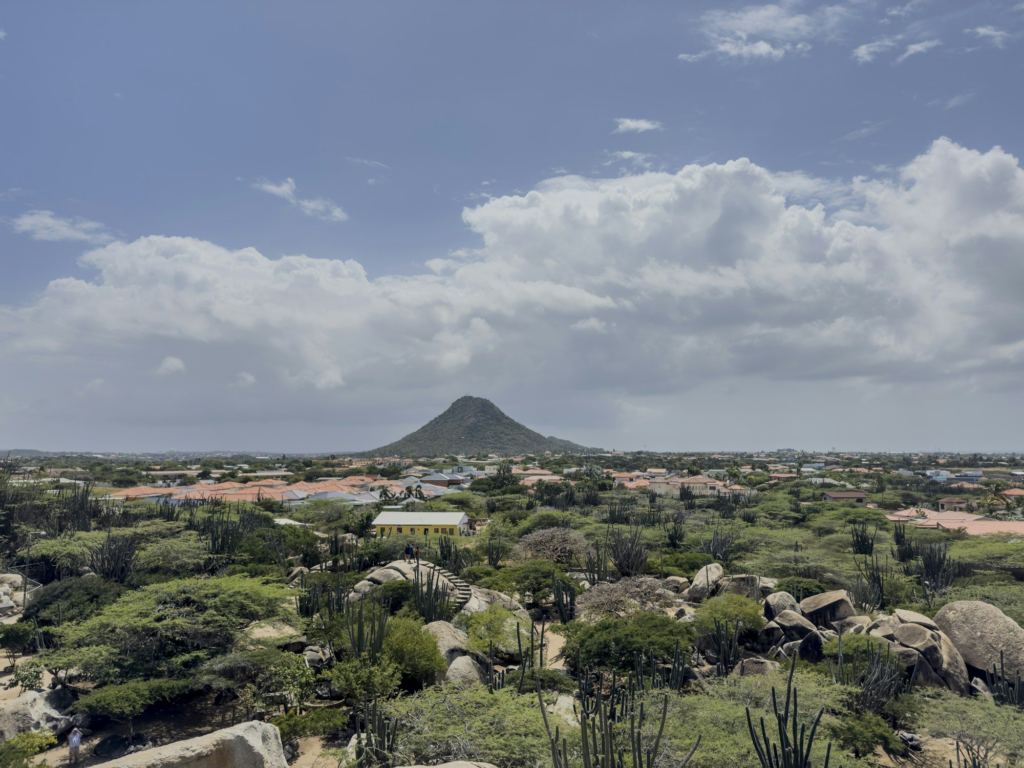
Fontein Cave: Aruba’s rock art cave
Fontein is the cave to visit if you’re interested in history. It runs about 95 meters (312 feet), per the tourism authority, and it’s a tight fit, so expect to stoop or crawl in spots. Inside it’s hot and muggy, with stalactites overhead and algae staining the rock in shades of yellow and green.
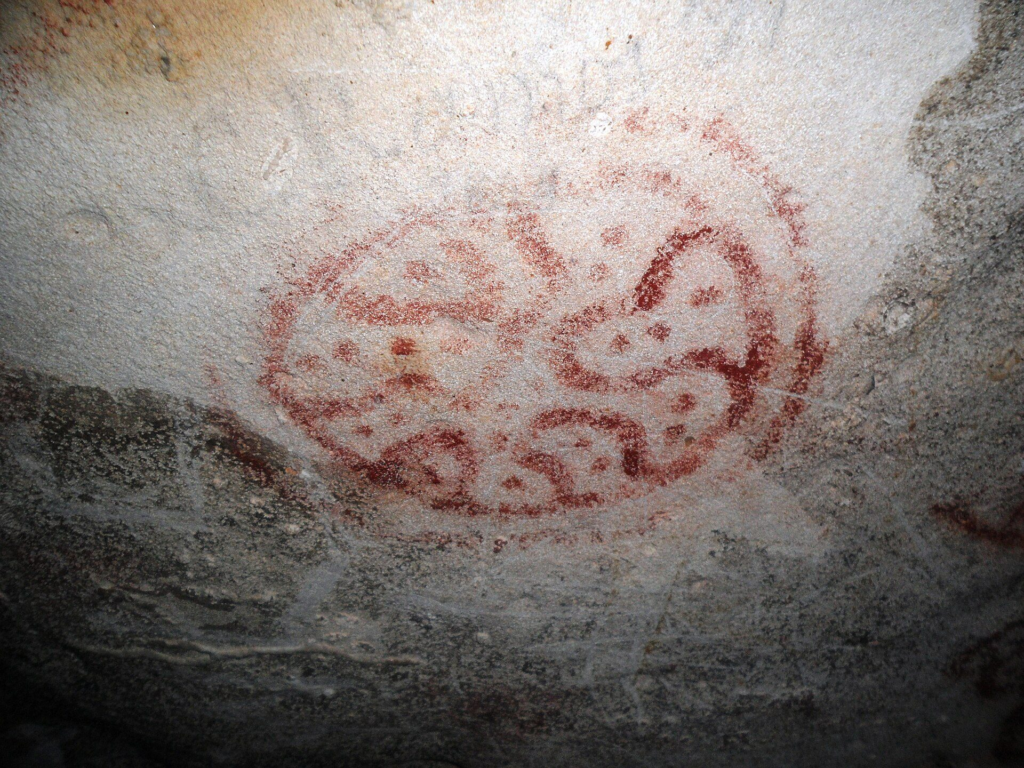
The main draw is the red-brown pictographs on the walls and ceiling. Lonely Planet attributes them to the Caquetío, a branch of the Arawak people, and dates them to roughly 1,000 years ago. The tourism authority’s caves page calls Fontein the most popular cave and the only one with Arawak drawings on its ceiling. According to Wikipedia, the cave also has later drawings left by early European settlers.
Access is limited. Lonely Planet says only the entrance hall is open to visitors. Wikipedia notes that the cave is gated and locked and can be entered only with park staff. Lonely Planet says rangers are on site to give a short tour and answer questions, so plan to go with one.
Quadirikiri Cave
The tourism authority calls Quadirikiri the most visited of the park’s caves. Light pours in through holes in the limestone roof. According to Wikipedia, the name comes from the Arawak language. Other spellings turn up on maps and tour descriptions, but they all mean this cave.
What’s inside
- Sunlit chambers: Wikipedia says the main cave’s first two chambers get natural light through ceiling openings. The third chamber is dark and damp, often with bat guano.
- Length: Wikipedia and the tourism authority’s Quadirikiri page both give about 150 m (490 ft). The tourism authority’s general caves page says about 100 feet, so figures differ.
- Rock art: Wikipedia mentions Amerindian petroglyphs, especially in a smaller cave east of the main one.
- Bats: the tourism authority says bats live in the darker sections. Lonely Planet says several bat species roost there.
The legend
The cave has a well-known love story. In Lonely Planet’s version, the cave takes its name from Wadirikiri, the daughter of a Caquetío chief. Her father imprisoned her there after she fell for an outsider called White Feather. Wikipedia’s version says her lover was held in Huliba Cave, nicknamed the “Tunnel of Love.” The two met underground and died, and their spirits rose through the holes in the cave roof.
Fontein vs. Quadirikiri at a glance
| Fontein Cave | Quadirikiri | |
|---|---|---|
| Known for | Amerindian pictographs | Sunbeams through roof openings |
| Size | About 95 m (312 ft) | About 150 m (490 ft) |
| Access | Entrance area only, with park staff | Walk through the lit chambers |
| Bats | Yes | Yes, several species |
| Location | Near Boca Prins, east of the main entrance | South of Boca Prins, near the southern entrance |
| Best for | History and rock art | Photos and families |
What about Huliba (the Tunnel of Love)?
Huliba Cave shows up in the Quadirikiri legend and on some older maps and lists. We couldn’t find a current official source on access or conditions there, so ask locally before you plan around it. Fontein and Quadirikiri are the two caves the tourism authority currently promotes.
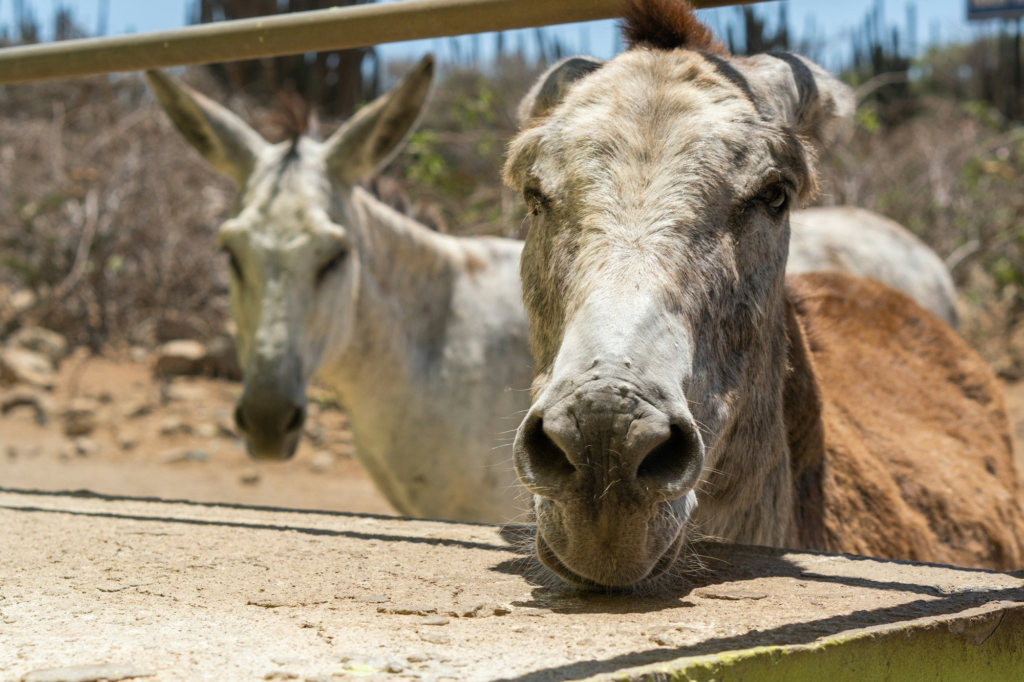
Visiting the caves: fees, hours and rules
- Park pass: both caves are inside Arikok, so you need a conservation pass. It costs USD 22 per adult, and under-17s are free (as of October 2026, ACF). Passes are sold at the San Fuego visitor center and the Vader Piet booth.
- Hours: ACF lists San Fuego as open daily from 8:00 a.m. to 3:30 p.m. Arrive with time to spare before closing.
- Getting there: park roads are rough. ACF prohibits ATVs, UTVs and motorbikes in protected nature areas. Most visitors come in a 4×4 or on a guided jeep tour, since UTVs and ATVs aren’t allowed in the park. Tour listings we reviewed (October 2026) show that jeep excursions often stop at Quadirikiri.
- Rules: under ACF’s park rules, you can’t disturb or collect animals, plants or other objects. Drones aren’t allowed, and some areas have limited access. Stay out of closed sections.
If you’d rather not drive the park roads yourself, a guided jeep tour is the easiest way to fit the caves in with the Natural Pool and the north coast in one day. Our jeep vs. UTV guide explains the difference, and our Arikok National Park guide covers the rest of the park.
Tips for visiting the caves
- Protect the bats: Lonely Planet says flashlights aren’t allowed in Quadirikiri because they disturb the bats. Let the natural light do the work, and keep your voice down.
- Don’t touch the art: the pictographs are centuries old. Look but don’t touch, and follow the ranger’s lead.
- Dress for heat: the tourism authority describes both caves as hot and humid. Wear light clothing and closed shoes for the uneven floors.
- Watch your head: Fontein is low in places.
- Go early: mornings are cooler. Visitor center hours start at 8:00 a.m.
Are the caves good for kids?
Quadirikiri is usually the easier pick for families. Its main chambers are lit by daylight, though the tourism authority notes some passages are low and narrow. Bats are part of the fun if kids stay quiet. Fontein’s low ceilings and fragile art make it better for older children who can follow instructions. For more family ideas, see our guide to Aruba tours for families or our island tour guide.
FAQ
Where are the caves in Aruba?
Both main caves are in Arikok National Park. Lonely Planet places Fontein near Boca Prins, east of the main entrance, and Quadirikiri south of Boca Prins, near the southern entrance.
Do you need a ticket to visit the caves in Aruba?
Yes. Both caves are inside Arikok National Park, which needs a conservation pass. As of October 2026, it costs USD 22 per adult, and children under 17 are free.
Are there bats in Aruba’s caves?
Yes. Bats roost in the darker parts of both caves. They’re harmless, but you shouldn’t disturb them, so skip the flashlight.
Can you go inside Fontein Cave?
Only the entrance area is open, and the cave is gated. Park staff can let you in and explain the drawings.
How old are the drawings in Fontein Cave?
Lonely Planet dates the Caquetío drawings to roughly 1,000 years ago. Some later drawings were added by early European settlers.
Which Aruba cave is best for photos?
Quadirikiri. Sunlight streams through holes in its roof and lights up the chambers.
Sources
- Fontein Cave – Aruba.com
- Quadirikiri Cave – Aruba.com
- Caves – Aruba.com
- Experiences – Aruba Conservation Foundation
- Parke Nacional Arikok Rules & Regulations – Aruba Conservation Foundation (PDF)
- Quadiriki Caves – Wikipedia
- Arikok National Park – Wikipedia
- Fontein Cave – Lonely Planet
- Quadirikiri Cave – Lonely Planet