This page contains affiliate links; we may earn a commission from bookings. Ratings from Viator & Tripadvisor.
A palapa in Aruba is a thatched shade hut planted in the sand, and on the public beaches most of them are free to use. On a busy morning they are often the first thing to go. This guide explains what a palapa is and where the word comes from, then which beaches have public huts and how the new 2026 beach guidelines treat hotel palapas. It also covers how early people tend to show up, and what to do when your hotel’s palapas are all taken.
Palapas in Aruba: quick answer
- What: An open-sided shade hut with a roof of dried palm leaves, set in the sand.
- Free or not: Public palapas on public beaches are free and first come, first served. Hotel palapas are for that hotel’s guests.
- Where: Eagle Beach, Druif Beach, Arashi Beach, Boca Catalina, Mangel Halto and Baby Beach all have public huts; Malmok has a few.
- Timing: On busy days the free ones are often claimed very early, sometimes before sunrise.
- Plan B: Rent an umbrella and chairs, bring your own shade, or reserve a set that is already up when you arrive.
What is a palapa?
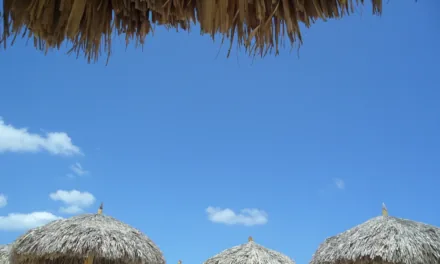
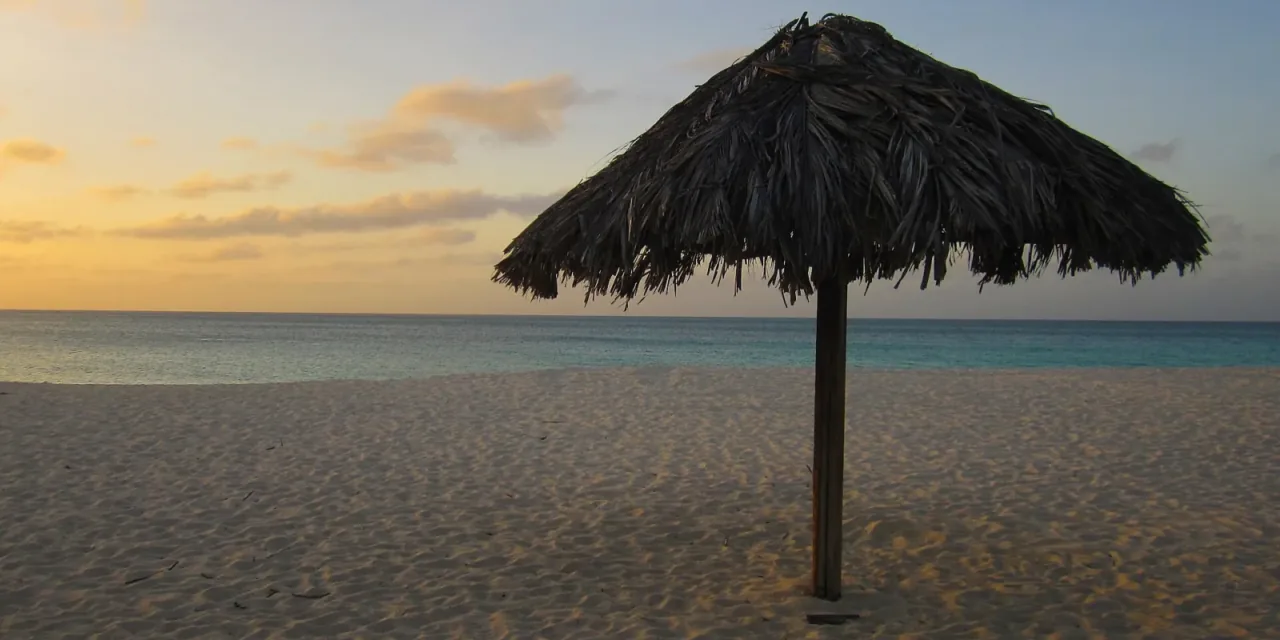
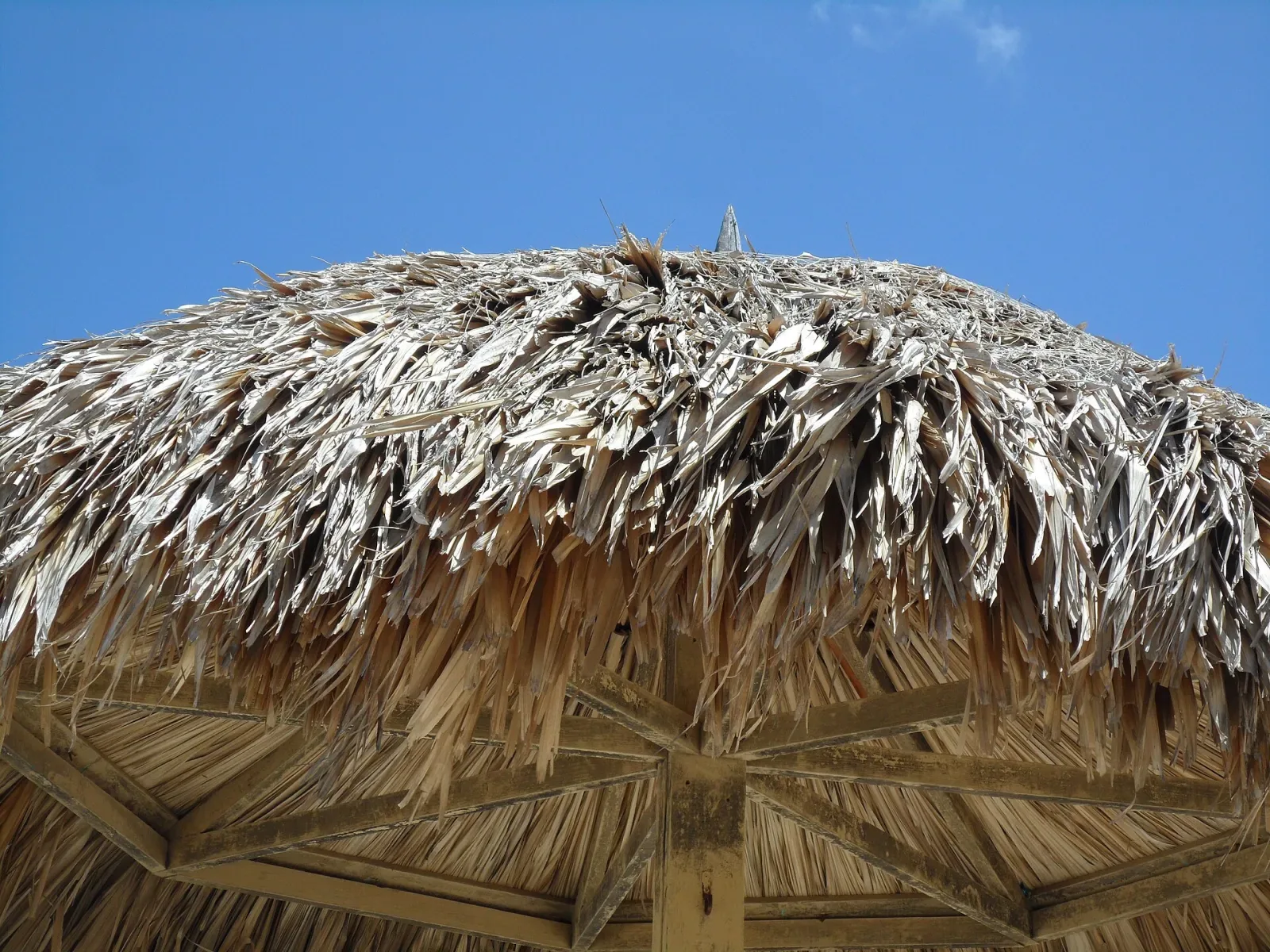
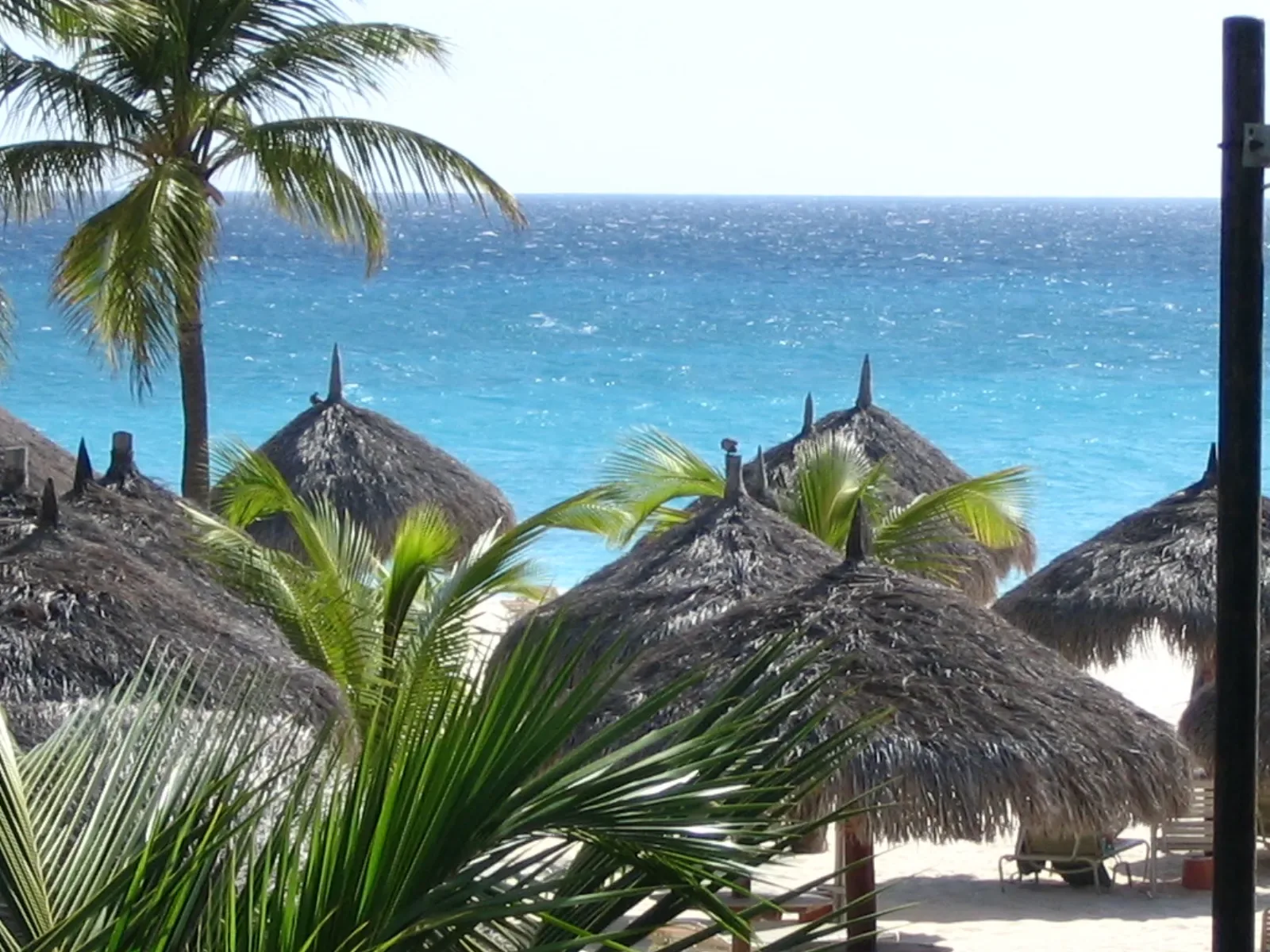
A palapa is an open-sided shelter topped with a roof of dried palm fronds. In Aruba you’ll see two main kinds on the sand. One is a single pole with a round thatched roof, like a big straw umbrella. The other is a wider hut on stone or wooden posts, sometimes with a built-in table or bench.
The word reached English through Spanish, mostly from Mexico, where the structure is common on hot coasts. Wikipedia and Wiktionary both trace it further back to Tagalog, the main language of the Philippines. There, palapa meant the rib or stem of a palm leaf. Wikipedia links the building style to the Philippine nipa hut, carried to Mexico on the Spanish Manila galleons. Some dictionaries simply list it as Mexican Spanish, so treat the Philippine route as the best-supported theory rather than settled fact.
Are palapas in Aruba free?
Every beach in Aruba is public. The government restated this in February 2026 when it announced a review of its beach rules. The tourism minister said no beach in Aruba will ever be owned by a hotel (Government of Aruba). Public palapas on public sand cost nothing to use.
Hotel palapas are a different matter. In April 2026 the Department of Infrastructure and Planning (DIP) issued temporary beach guidelines, published on aruba.com. In short:
- Palapas, loungers and umbrellas that a hotel has set up and assigned count as in use, even while the guest is off swimming or walking.
- If you are not staying at that hotel, don’t use or move those setups.
- Some beach sections carry official permits for hotel seating and shade, and some sit on hotel leasehold land meant for hotel guests only.
- Not sure whether a spot is public? Ask the hotel’s beach staff.
The guidelines stay in place while the wider Beach Policy is being rewritten, so check for updates before your trip.
Where to find public palapas
The official beach pages on aruba.com describe free huts or shaded areas at these beaches. Hotel palapas sit along the same stretches, so look for huts that are clearly away from a resort’s own rows.
| Beach | What official pages say about shade | Good to know |
|---|---|---|
| Eagle Beach | Shaded areas and some beach huts; public parking | The busiest place for free palapas; hotels across the road have their own rows |
| Druif Beach | Plenty of beach huts and chairs | Closer to Oranjestad, next to Eagle Beach |
| Arashi Beach | Complimentary shaded huts; arrive early to get one | Chairs and umbrellas also for rent; beach bar |
| Boca Catalina | Some makeshift beach huts | Small cove, reached by steps from a roadside lot |
| Mangel Halto | Public beach huts and shaded areas | A guide we reviewed calls the supply limited |
| Baby Beach | Complimentary huts throughout the beach | Beach beds and windscreens for rent; public restroom |
| Malmok | Not listed on aruba.com | A guide we reviewed lists a limited number |
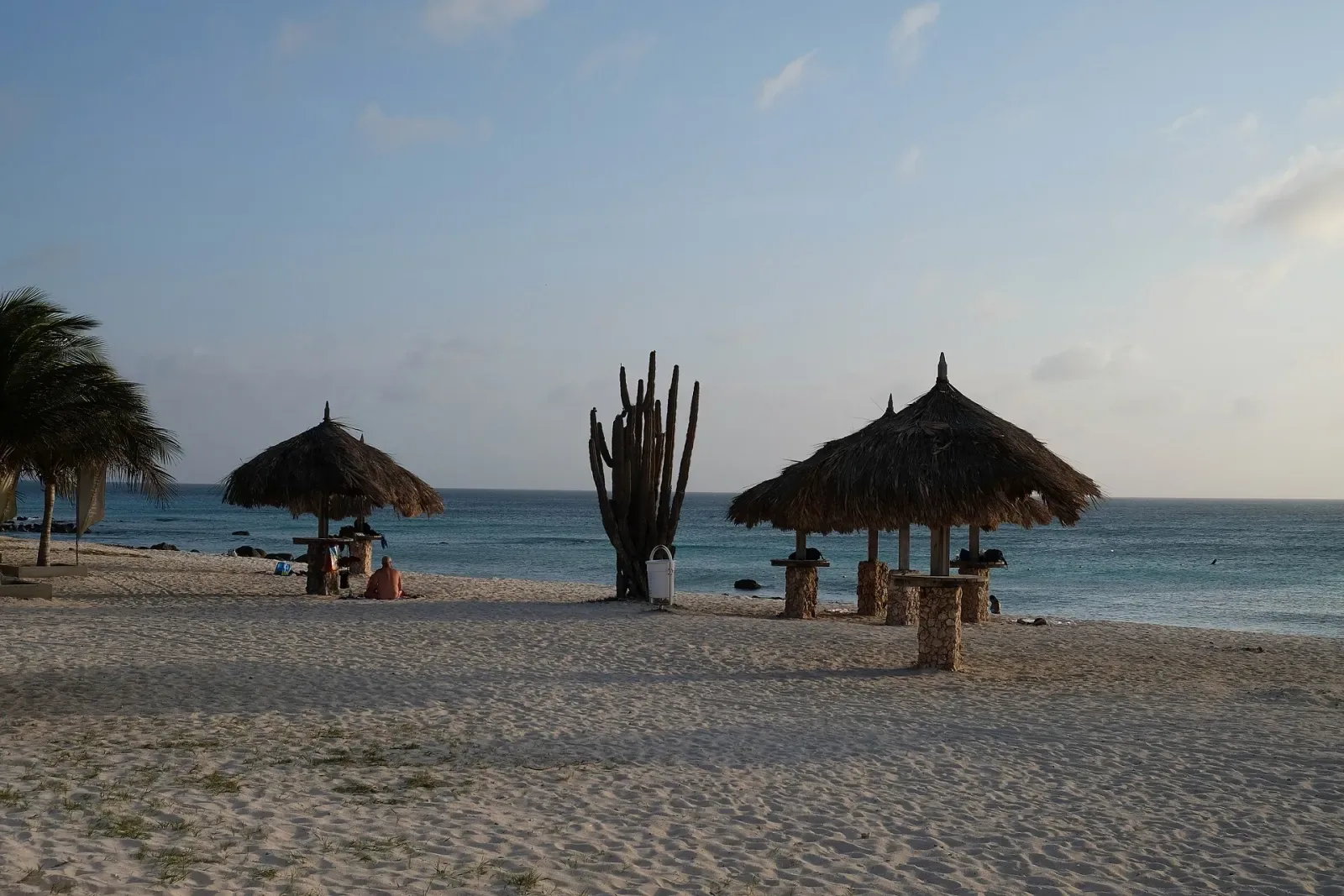
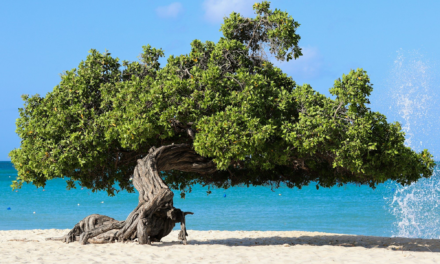
Eagle Beach gets the most attention, and our Eagle Beach guide covers the fofoti trees, parking and the bus there. For calmer, shallower water with huts close to the sand, the south tip is worth the drive; see our Baby Beach guide. To compare all the options, start with the best beaches in Aruba.
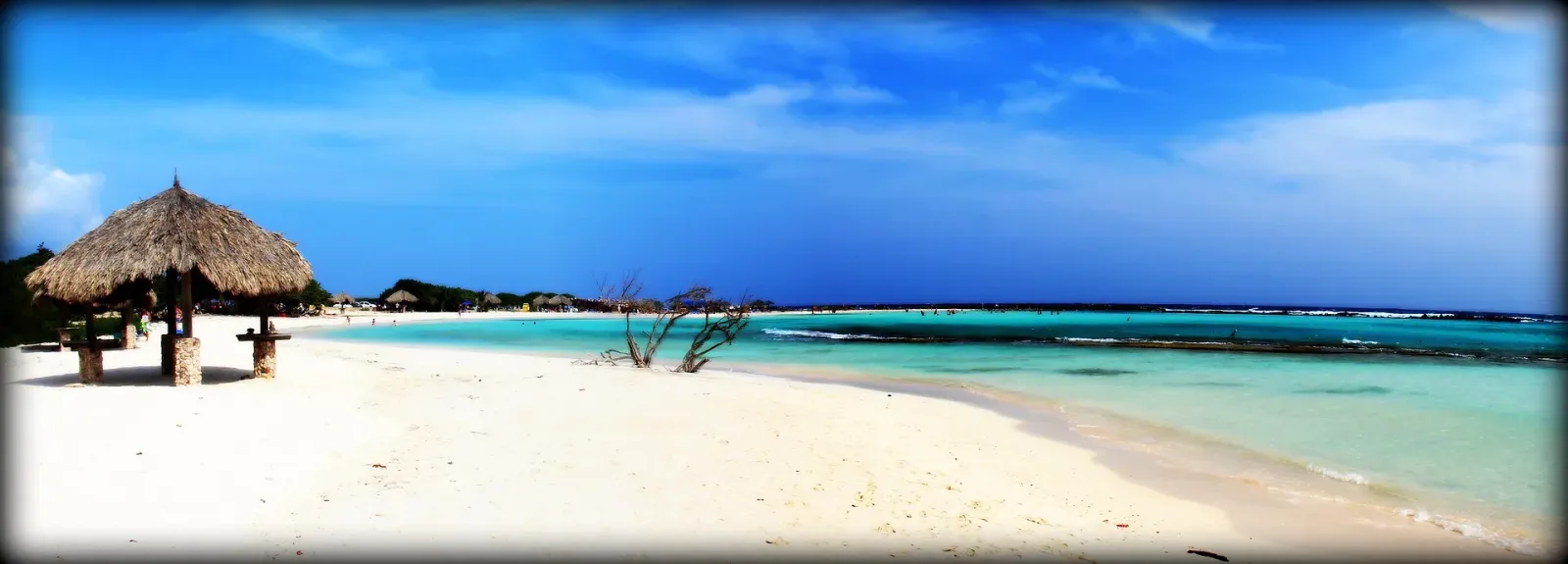
One Happy Palapa explains what an Aruba palapa is and how to plan your shade.
How early do the free palapas go?
Earlier than most visitors expect. The aruba.com Arashi page already advises arriving early for a hut. On busy days at Eagle Beach, people often claim the free palapas very early, sometimes before sunrise, and by breakfast time there may be nothing left. Aruba.com’s own tip for Eagle Beach is to avoid weekends if you want fewer crowds.
A few habits help if you want to try:
- Go at first light. The earlier you arrive, the better your odds.
- Aim for a weekday. Fewer people are competing for the same huts.
- Have a plan B. If every hut is taken, know where you will get shade instead before you set off.
Palapa etiquette
- Use it, don’t hoard it. VisitAruba’s etiquette guide asks people not to drop their belongings under a palapa to hold it. The 2026 guidelines also ask everyone to respect what others have already set up.
- Bring your own seat. A public palapa gives you the roof. The loungers next to it often belong to a hotel or a rental stand.
- Leave hotel setups alone. Assigned hotel palapas count as in use even when empty.
- Pack up at night. On turtle-nesting beaches, the tourism board warns that beach furniture and gear left on the sand can make nesting females abandon a nest. Nesting runs March through September.
When your hotel’s palapa is full
Hotel palapas are usually reserved for that hotel’s own guests, and each resort sets its own rules for booking them. Many take bookings in person at the resort’s beach or towel hut, some a day ahead and some further out, so ask at check-in. Even so, a full resort can run out. Here are your options.
Try a public hut on another beach
Staying on Eagle Beach or Palm Beach? Arashi, Boca Catalina and Druif are a short drive or bus ride away. You’ll need to go early, and you’ll be carrying your own chairs or sitting on a towel.
Rent an umbrella and chairs on the beach
Water-sports and rental huts on most of the bigger beaches rent loungers and umbrellas by the day. Availability is the catch: each location sets up only so many sets, and walk-ups get one only when a set is free.
Bring or rent your own umbrella
A beach umbrella from home or a store works, but Aruba’s trade winds are almost always present, according to the official weather page. On many afternoons the wind blows hard enough that a hand-planted umbrella can lift out of the sand. Delivery rentals typically bring the gear only; you still carry it, pick a spot and plant it yourself.
Reserve a set that is already up
This is the option we offer. You get one beach umbrella and two beach chairs, set up on Eagle Beach before you arrive. The set is held under your name from 9 AM to 5 PM. Nothing to carry or plant, and you can leave for lunch and come back to the same spot.
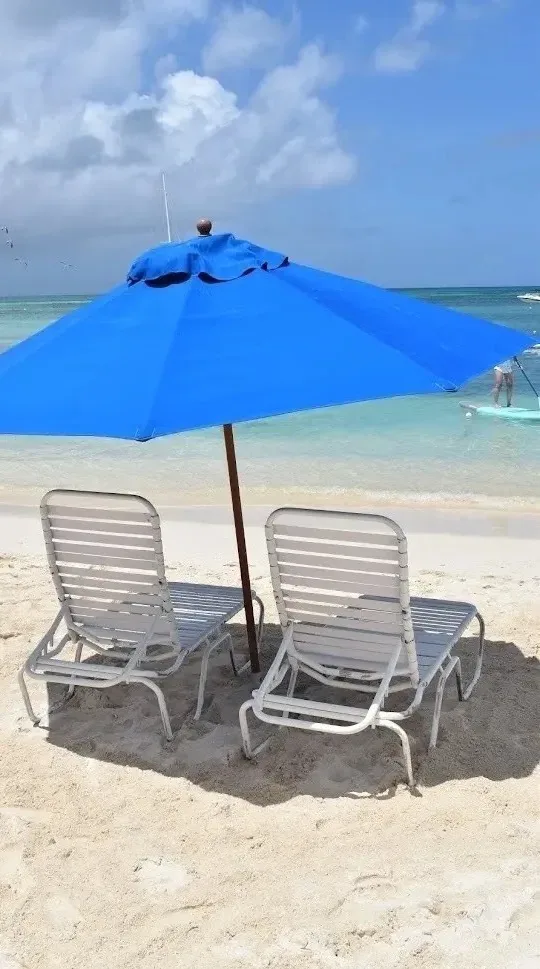
Hotel palapas booked out? Reserve an umbrella and chairs on Eagle Beach, set up from 9 AM, $120 a day, all in.
Shade is only half the plan. If you’d rather spend part of the day on the water, a snorkel trip or catamaran sail gets you out of the midday sun and into the breeze.
Want a side-by-side of every way to stay out of the sun, including what each one means on a windy afternoon? Read our guide to beach shade in Aruba, which compares palapas, umbrellas and rentals in one table. And don’t forget the basics in our Aruba packing list: oxybenzone-free sunscreen, a hat and plenty of water.
FAQ
Can anyone use a palapa in Aruba?
Yes, if it is a public palapa on a public beach. Palapas a hotel has set up and assigned to its guests are off-limits to non-guests under the 2026 beach guidelines.
Can you reserve a public palapa?
No. Public palapas are first come, first served. Only hotels take reservations, and only for their own palapas and their own guests.
What time should I get to Eagle Beach for a palapa?
As early as you can. On busy days the free huts are often claimed very early, sometimes before sunrise. If you’d rather sleep in, have another shade plan ready.
Which Aruba beaches have free palapas?
Aruba.com lists public huts or shaded areas at Eagle Beach, Druif Beach, Arashi Beach, Boca Catalina, Mangel Halto and Baby Beach. Malmok has a few.
Where does the word palapa come from?
It came into English from Mexican Spanish. Wikipedia and Wiktionary trace it to Tagalog, where palapa meant the stem or rib of a palm leaf.
What if my hotel’s palapas are all taken?
Try a public hut on another beach or rent an umbrella and chairs on the sand. You can also reserve an umbrella and two chairs on Eagle Beach, set up before you arrive.
Sources
- Aruba Beach Guidelines 2026: What to Know Before You Go, Aruba Tourism Authority
- The Government Announces the Modernization of the Beach Policy, Government of Aruba
- Aruba Tackles Overcrowded Beaches With New Policy, BES Reporter
- Eagle Beach, Aruba Tourism Authority
- Druif Beach, Aruba Tourism Authority
- Arashi Beach, Aruba Tourism Authority
- Boca Catalina, Aruba Tourism Authority
- Mangel Halto, Aruba Tourism Authority
- Baby Beach, Aruba Tourism Authority
- Weather and Climate, Aruba Tourism Authority
- How to Protect Our Sea Turtles During Your Vacation, Aruba Tourism Authority
- Aruba Beach Etiquette 101, VisitAruba
- Palapa (structure), Wikipedia
- palapa, Wiktionary